High-purity distillation and vacuum separation processes demand packing that delivers maximum efficiency without adding unnecessary pressure drop. This is exactly why so many engineers Choose Metal Gauze Structured Packing over conventional random packing or sheet metal alternatives, particularly when separating thermally sensitive compounds or achieving tight product specifications. Its fine woven structure and precise geometry give it a level of separation efficiency that few other packing types can match.
SKJ Overseas manufactures tower packing solutions as a specialized Ceramic and Tower Packing Exporter in Dubai, alongside its core identity as a dedicated Ceramic Manufacturers in Dubai serving process industries across the region. This guide explains what sets Metal Gauze Structured Packing apart, where it performs best, and how to choose the right configuration for your column.
What Is Metal Gauze Structured Packing?
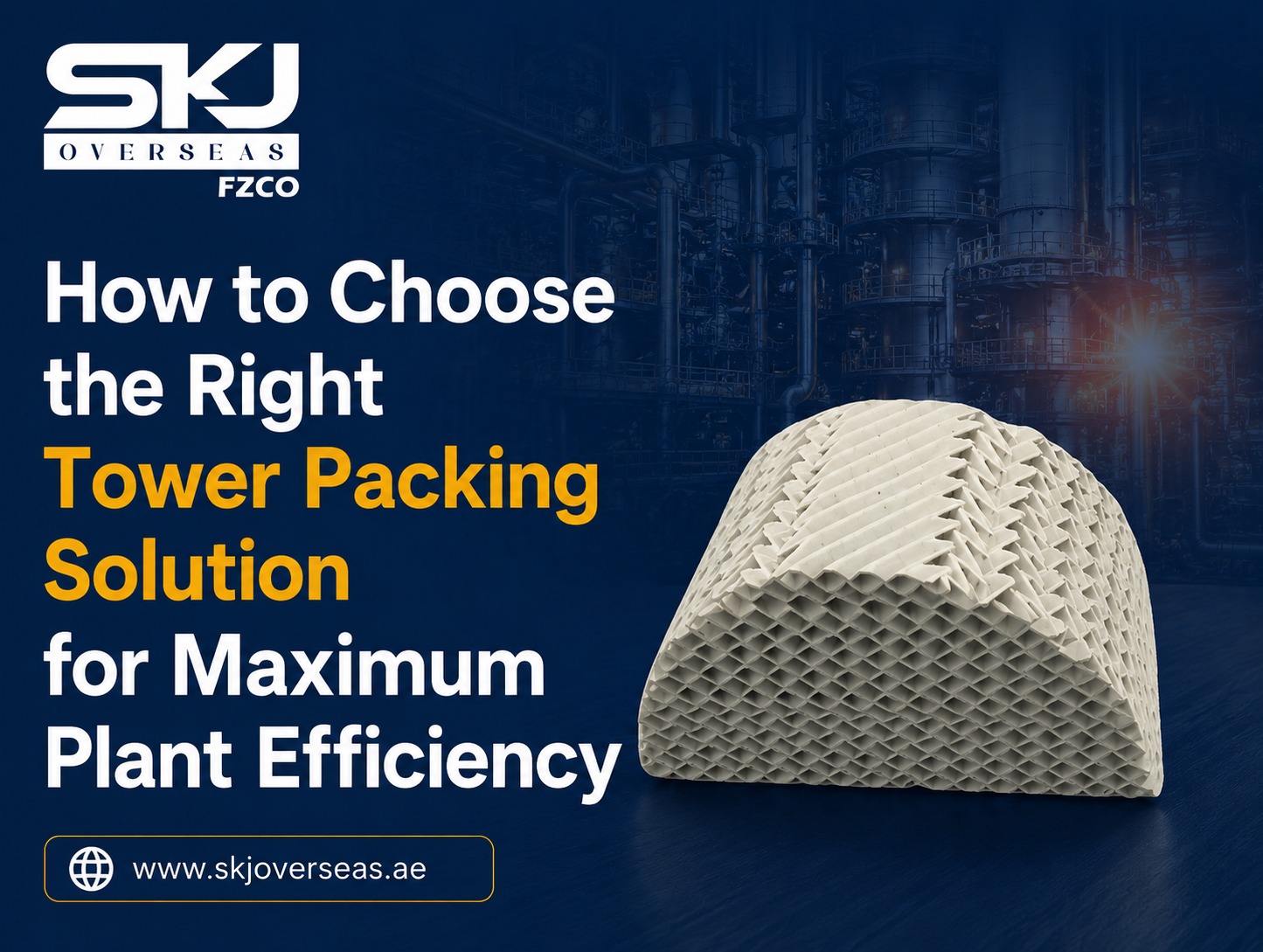
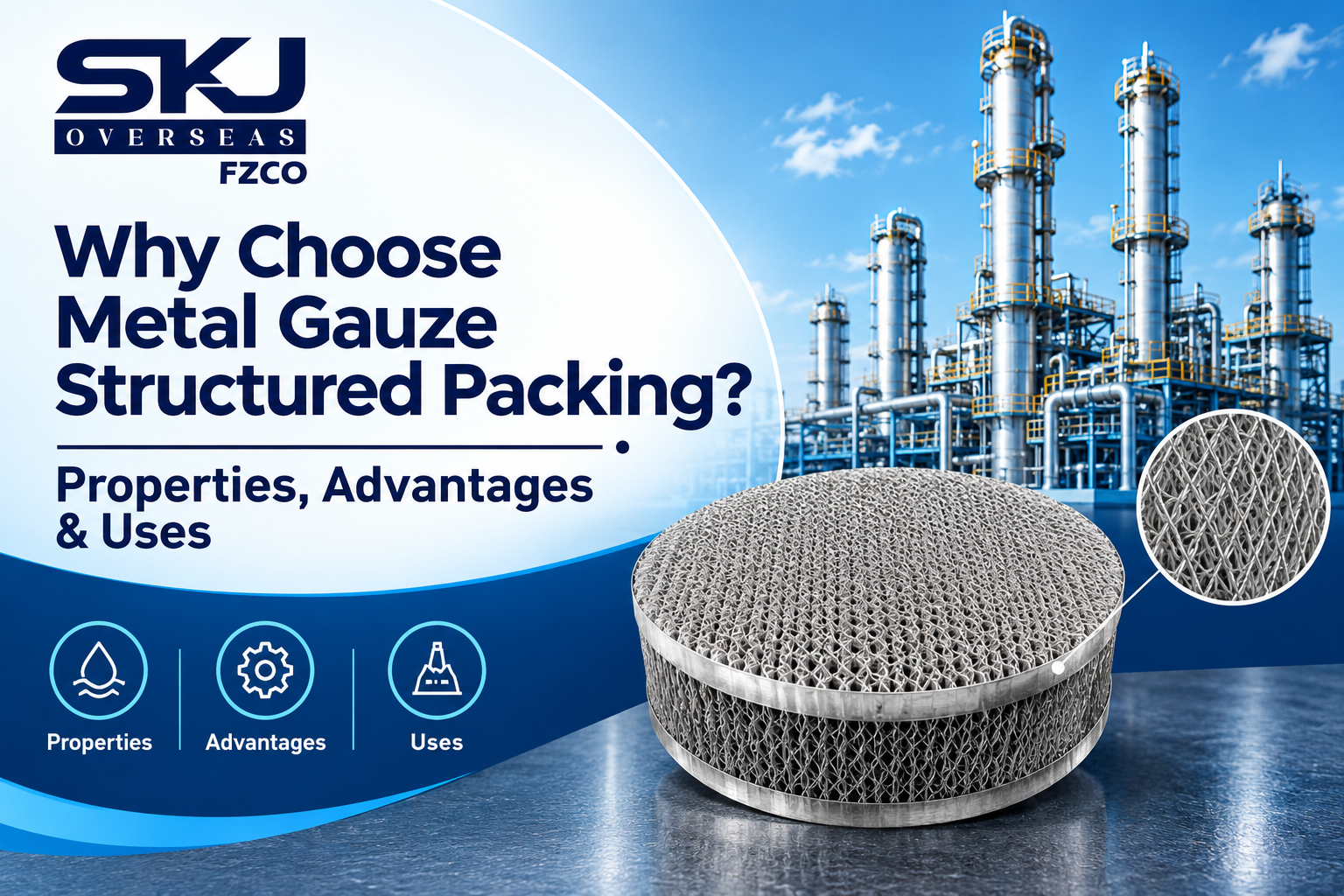
Metal Gauze Structured Packing consists of fine stainless steel or specialty alloy wire woven into a mesh, then formed into corrugated sheets arranged at a fixed angle, typically 30 or 45 degrees, and stacked in alternating layers inside the column. This precise, repeating geometry creates a predictable flow path for both vapor and liquid, unlike random packing that settles unpredictably once poured into a tower.
The woven gauze surface is the defining feature that separates this packing type from sheet metal structured packing. Fine wire mesh promotes capillary action, which spreads liquid evenly across the surface and compensates for uneven distribution at the top of the column, a property that smooth corrugated sheets cannot replicate to the same degree.
Typical technical specifications include:
- Specific surface area ranging from 125 m²/m³ up to 500 m²/m³, depending on model
- Void fraction typically between 92% and 99%, among the highest of any packing type
- Height equivalent to a theoretical plate (HETP) values ranging from 0.15 to 0.35 meters
- Standard construction in 304 or 316 stainless steel, with specialty alloys available for aggressive service
- Pressure ratings suitable for operation up to approximately 40 bar when properly supported
Why Engineers Choose Metal Gauze Structured Packing for Demanding Separations
1. Exceptional Separation Efficiency
Metal Gauze Structured Packing routinely achieves 95% to 98% efficiency per theoretical stage, compared to roughly 80% to 90% for conventional sheet metal structured packing and 60% to 75% for random packing types. This efficiency advantage comes directly from the fine mesh surface, which offers 15% to 25% lower HETP values than smooth structured packing of similar geometric area.
2. Very Low Pressure Drop
Structured packing in general offers a substantial pressure drop reduction compared to random packing, often in the range of 30% to 60% at equivalent separation duty. Metal Gauze Structured Packing extends this advantage further, making it the preferred choice for vacuum distillation, where minimizing pressure drop directly protects product quality in heat-sensitive separations.
3. Superior Performance at Low Liquid Loads
One of the standout reasons plants choose Metal Gauze Structured Packing is its ability to maintain high separation efficiency even when liquid flow rates are low. The fine wire structure continues to wet the surface effectively under conditions where sheet metal or random packing would begin to lose contact efficiency.
4. Excellent Liquid Distribution
The capillary action created by the woven mesh surface spreads liquid laterally across each sheet, helping correct minor maldistribution introduced by the column’s liquid distributor. This self-correcting property reduces the risk of channeling that can otherwise undermine separation performance in tall columns.
5. Suitability for Thermally Sensitive Products
Because Metal Gauze Structured Packing combines low pressure drop with low liquid holdup, it reduces the residence time and thermal exposure of sensitive compounds moving through the column. This makes it a standard choice for fine chemical, flavor and fragrance, and specialty pharmaceutical distillation processes where excess heat exposure can degrade the product.
Common Applications of Metal Gauze Structured Packing
Metal Gauze Structured Packing is specified across a range of high-value separation processes:
- Vacuum distillation in refinery and petrochemical fractionation units
- High-purity separation of specialty aromatics and olefins
- Isomer separation in fine chemical manufacturing
- Pharmaceutical active ingredient (API) distillation requiring strict purity control
- C4 and C5 hydrocarbon fractionation in petrochemical plants
- Air separation units requiring extremely low pressure drop performance
Metal Gauze Structured Packing vs Other Packing Types
| Feature | Random Packing | Sheet Metal Structured Packing | Metal Gauze Structured Packing |
| Separation efficiency per stage | 60% to 75% | 80% to 90% | 95% to 98% |
| Pressure drop | Higher | Lower | Lowest |
| Performance at low liquid loads | Weaker | Moderate | Strong |
| Installation complexity | Low | Moderate to high | High |
| Typical relative cost | Lowest | Moderate | Highest |
| Best use case | Standard duty towers | General high-efficiency separation | Vacuum, high-purity, thermally sensitive separations |
When Does the Investment in Metal Gauze Structured Packing Make Sense?
Metal Gauze Structured Packing typically costs two to three times more than conventional sheet metal structured packing, so the investment needs to match the separation challenge at hand. Plants running vacuum distillation, separating close-boiling components, or processing thermally sensitive materials generally see the clearest return, since the efficiency and low holdup directly protect product quality and yield.
For standard-duty towers without these specific demands, conventional structured packing or random packing may deliver comparable practical performance at a lower installed cost. Consulting with an experienced supplier before finalizing column design helps match the packing investment to the actual separation requirement rather than over-specifying the column.
How to Choose the Right Metal Gauze Structured Packing Configuration
Selecting the correct model depends on your column diameter, required theoretical stages, and operating pressure.
- Lower surface area models (125Y, 250Y): suit applications prioritizing lower pressure drop over maximum theoretical stages per meter
- Higher surface area models (350Y, 500X): deliver more theoretical stages per meter of bed height, useful where column height is limited
- Material grade selection: standard 304 or 316 stainless steel suits most hydrocarbon and chemical service, while specialty alloys handle more corrosive or high-temperature conditions
Working with an experienced manufacturer ensures the configuration selected matches your column’s specific separation target rather than relying on generic sizing assumptions.
Why Manufacturing Quality Affects Real-World Packing Performance
Not every Metal Gauze Structured Packing product on the market is woven and fabricated to the same standard, even when labeled with identical specifications. Mesh uniformity, weaving consistency, and precise corrugation angle all directly affect whether the packing achieves its rated HETP and pressure drop figures once installed.
When evaluating a Metal Gauze Structured Packing manufactures partner, plant engineers should confirm documented mesh uniformity testing, consistent sheet dimensions across production batches, and proper alloy certification for the intended service conditions. A well-regarded Metal Gauze Structured Packing supplier should be able to provide this documentation before the packing ships, not only after installation issues arise.
Sourcing Metal Gauze Structured Packing From a Verified Source in Dubai
Regional sourcing offers clear advantages for plants that need shorter lead times and local technical support during column design or a shutdown replacement. A dependable Metal Gauze Structured Packing in dubai source reduces shipping delays and gives engineers a nearby point of contact for troubleshooting performance questions once the packing is installed.
Working with an established Metal Gauze Structured Packing exporters partner also simplifies logistics for plants managing multiple sourcing requirements alongside their broader tower packing needs, reducing the number of vendors involved in a single column upgrade project.
Key Takeaways
- Engineers choose Metal Gauze Structured Packing for its exceptional separation efficiency, often reaching 95% to 98% per theoretical stage.
- Its fine woven mesh surface delivers lower pressure drop and better liquid distribution than sheet metal structured packing.
- The packing performs especially well in vacuum distillation and thermally sensitive separations due to low liquid holdup.
- Higher cost compared to conventional structured packing is best justified in demanding, high-purity separation duties.
- Sourcing from a manufacturer with documented mesh and weaving quality protects real-world performance after installation.
Frequently Asked Questions
1. Why is Metal Gauze Structured Packing more expensive than sheet metal structured packing?
The fine weaving process and precision required to achieve consistent mesh geometry make Metal Gauze Structured Packing more labor and material intensive to produce, typically costing two to three times more than conventional sheet metal structured packing.
2. Can existing distillation columns be retrofitted with Metal Gauze Structured Packing?
Yes. Many columns originally designed for random or sheet metal structured packing can be retrofitted, though the column’s liquid distributor and support structure should be evaluated to confirm compatibility with the new packing’s specifications.
3. What maintenance does Metal Gauze Structured Packing require during operation?
Properly installed Metal Gauze Structured Packing requires minimal routine maintenance, though periodic inspection for fouling or mechanical damage is recommended, particularly in services prone to polymerization or particulate buildup.
4. Is Metal Gauze Structured Packing suitable for fouling services?
It can handle some fouling service, but the fine mesh structure is generally more sensitive to blockage than sheet metal structured packing or random packing, so feed cleanliness should be carefully evaluated before specifying this packing type.
5. What pressure drop can I expect from Metal Gauze Structured Packing?
Pressure drop varies by model and operating conditions, but Metal Gauze Structured Packing typically delivers 30% to 60% lower pressure drop than random packing at equivalent separation efficiency, making it a strong fit for vacuum service.
Talk to SKJ Overseas About Metal Gauze Structured Packing
Choosing the right structured packing configuration can directly impact your column’s separation efficiency, energy consumption, and product quality. SKJ Overseas supplies Metal Gauze Structured Packing engineered for consistent mesh quality and reliable performance in demanding distillation applications.
Contact us to request a quote, a technical datasheet, or an engineering consultation for your column design.