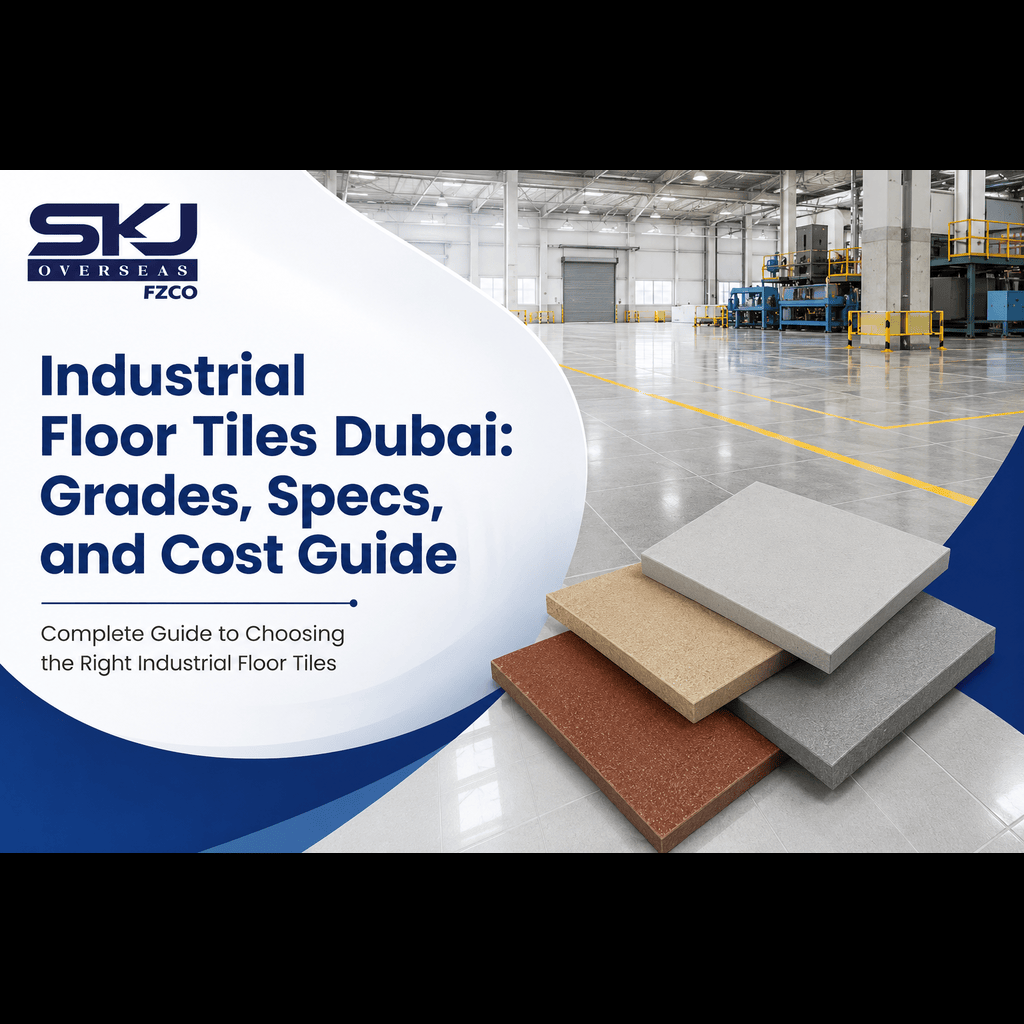
Industrial floor tiles in Dubai are graded primarily by PEI rating, water absorption, and compressive strength, with higher grades built for heavy machinery, chemical exposure, and constant foot traffic. Cost depends mainly on grade, size, and finish, with industrial-grade porcelain typically running higher than standard commercial tile due to its density and load capacity. This guide breaks down what each specification actually means before you commit to an order.
Why Grade Matters More Than Appearance in Industrial Settings
Facility managers often start with color and finish, but grade is what actually determines whether a floor survives daily operations. Industrial floor tiles Dubai projects typically specify by PEI (Porcelain Enamel Institute) rating, a scale from 1 to 5 that measures resistance to surface abrasion under foot and wheel traffic.
Lower PEI grades suit light residential use, while grade 4 and 5 tiles are built for continuous heavy traffic, machinery movement, and industrial wear. Choosing based on appearance alone, without checking this rating, is one of the most common and costly mistakes facility planners make.
- PEI 3: Suitable for light commercial areas with moderate foot traffic
- PEI 4: Handles heavy commercial and light industrial traffic reliably
- PEI 5: Built for continuous heavy-duty industrial and high-traffic use
Understanding Water Absorption and Compressive Strength Ratings
Beyond surface wear, two other specifications decide how a tile performs under real operating conditions. Water absorption rate tells you how porous the tile is, and porous tiles absorb spills, oils, and chemicals that weaken the surface and create hygiene risks over time.
Compressive strength, on the other hand, measures how much load the tile can bear before cracking. Facilities running forklifts, racking systems, or heavy equipment need tiles with high compressive ratings, since a floor that looks fine on day one can develop stress cracks within months under the wrong load.
- Fully vitrified tiles have water absorption below 0.5 percent, ideal for chemical and food processing zones
- Higher compressive strength ratings prevent cracking under point loads from machinery legs or racking
- Both specs should be confirmed with test data, not just a general product description
Matching Tile Type to Specific Industrial Applications
Not every industrial space has the same flooring demands, and matching the tile to the actual use case avoids over-specifying or under-specifying the floor.
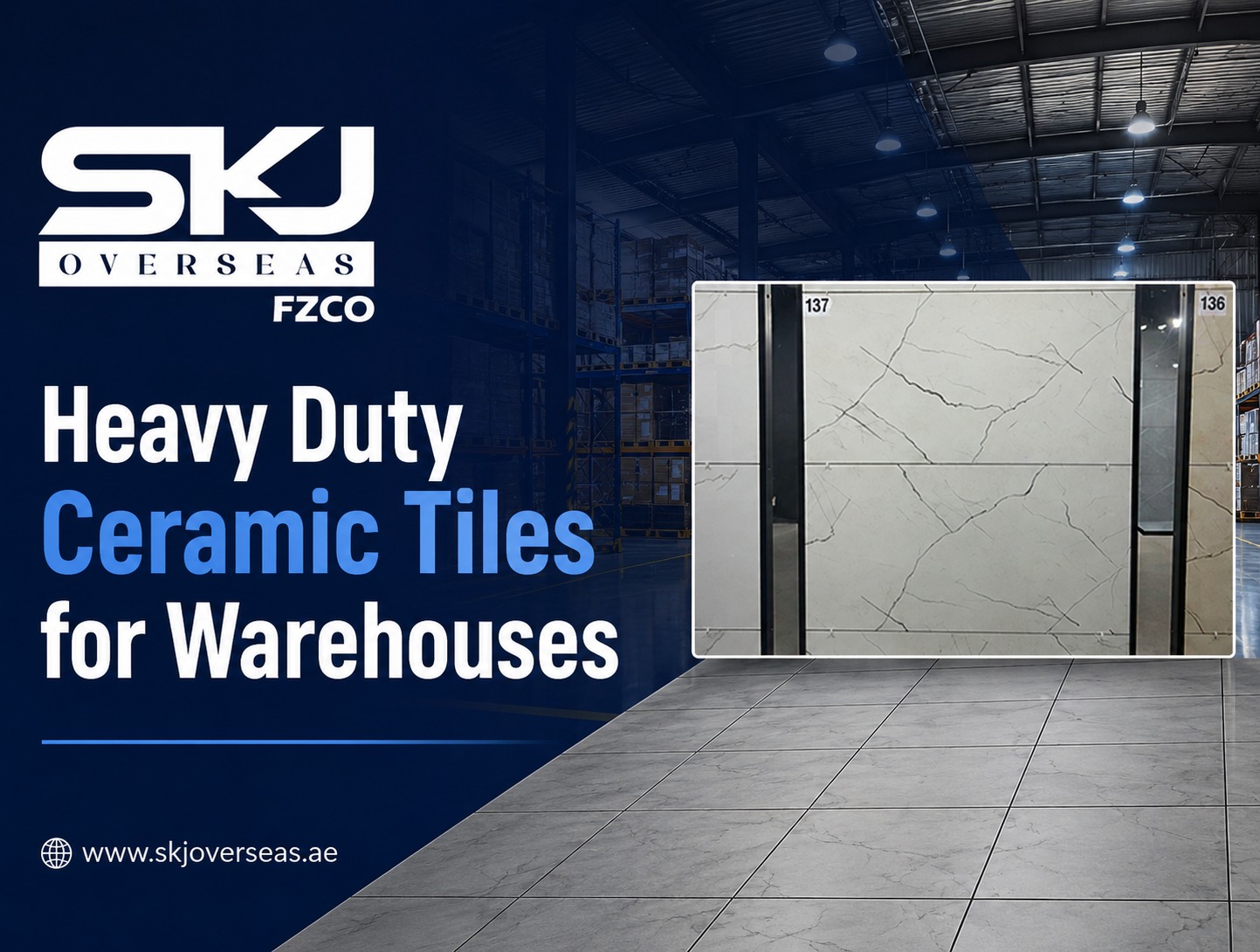
- Warehouses and logistics floors need high compressive strength and abrasion resistance for forklift and pallet traffic.
- Food and beverage processing areas require low porosity, non-porous glazing, and anti-slip finishes for hygiene and safety.
- Chemical and pharmaceutical facilities need chemical-resistant, fully vitrified tiles that resist staining and corrosion.
- Loading docks and outdoor industrial yards need weatherproof, frost-resistant tiles rated for direct sun and rain exposure.
Getting this match right at the specification stage avoids premature wear that shows up as cracking, staining, or surface degradation well before the floor’s expected service life.
What Actually Drives the Cost of Industrial Tiles
Cost varies more than people expect within what looks like a single product category, and a few factors consistently explain most of that variation.
Grade is the biggest driver, since PEI 5 tiles with high compressive strength and low porosity cost more to manufacture than standard commercial grades. Size and thickness also play a role, with larger format tiles and thicker profiles for heavy-load areas typically priced higher per square meter.
Finish adds another layer of cost, since anti-slip textures, custom colors, or specialized coatings for chemical resistance require additional processing during manufacturing. Order volume and lead time matter too, particularly for large commercial or industrial projects where batch consistency across thousands of square feet needs careful planning with the supplier.
Choosing a Manufacturer Who Understands Industrial Demands
Sourcing decisions affect performance just as much as the specification itself. Working with an established floor tiles manufacturer ensures the PEI rating, water absorption, and compressive strength printed on the datasheet actually hold true across every batch delivered to site, rather than varying between production runs.
This consistency becomes critical on large industrial projects, where uneven batches can create visible variation in appearance and, more importantly, inconsistent load performance across different sections of the same floor.
Sourcing Ceramic Tiles Locally for Faster, Reliable Delivery
Facilities operating on tight construction or renovation timelines benefit significantly from working with regional suppliers rather than importing from overseas. Sourcing ceramic tiles in Dubai locally means shorter lead times, easier logistics coordination, and products already engineered for the region’s climate and industrial conditions.
Local manufacturing also simplifies replacement orders down the line, since matching a new batch to an existing floor becomes far more practical when the original supplier is close by rather than months of shipping away.
Outdoor and Weather-Exposed Industrial Flooring Considerations
Loading docks, outdoor storage yards, and open-air processing areas need a different specification entirely from indoor industrial floors. Tiles exposed to direct sun, rain, and temperature swings need frost resistance and UV stability alongside the standard industrial ratings.
Working with experienced outdoor tile manufacturers ensures the tile has actually been tested for these conditions, rather than assuming an indoor industrial-grade tile will perform the same way once exposed to weather. Skipping this check is a common reason outdoor installations fail years earlier than expected.
Practical Checklist Before You Place an Order
A few final checks help avoid costly mistakes once tiles are already installed.
- Confirm PEI rating matches your actual traffic and machinery load
- Request water absorption and compressive strength test data, not just marketing claims
- Match tile finish to hygiene, safety, and chemical exposure requirements
- Clarify batch consistency guarantees for large-volume orders
- Confirm outdoor-rated specifications separately if any area is weather-exposed
At SKJ Overseas, we walk facility planners through exactly these checks before recommending a specification, since a tile that looks correct on a spec sheet can still underperform if even one of these factors gets overlooked. If you want a deeper look at why ceramic flooring holds up so well in demanding environments, our article on why ceramic tiles are the top choice for heavy-duty industrial flooring in Dubai covers the broader case in more detail.
Frequently Asked Questions
1. What PEI rating is needed for a warehouse floor?
Most warehouses handling forklift and pallet traffic need PEI grade 4 or 5, depending on the frequency and weight of the machinery moving across the floor.
2. How much do industrial floor tiles cost in Dubai?
Cost depends on grade, size, and finish, with higher PEI-rated, low-porosity industrial tiles typically priced above standard commercial grades due to their manufacturing requirements.
3. Can the same tile be used both indoors and outdoors in an industrial facility?
Not usually. Outdoor areas need frost resistance and UV stability that standard indoor industrial tiles are not tested for, so these should be specified separately.
4. How long do industrial-grade ceramic tiles typically last?
With correct specification and installation, industrial-grade tiles can last well over a decade, even in facilities with heavy daily traffic and chemical exposure.
5. Do all ceramic tile suppliers offer the same industrial grades?
No, grade availability and consistency vary by manufacturer, which is why checking test data and batch consistency matters more than relying on a general product listing.
Final Thoughts
Choosing industrial floor tiles in Dubai comes down to matching PEI rating, water absorption, and compressive strength to your facility’s actual traffic, load, and chemical exposure, not selecting based on appearance alone. Cost varies significantly across grades and finishes, so understanding these specifications upfront helps avoid both overspending and premature floor failure. Working with a manufacturer who tests and stands behind these ratings keeps the investment performing the way it should for years.
If you are specifying flooring for an upcoming industrial project, contact our team at SKJ Overseas. We will help you match the right tile grade and specification to your exact facility requirements.