Catalyst beds are one of the most expensive components in any refinery, petrochemical plant, or chemical reactor. Replacing or repairing a damaged catalyst bed costs enormous amounts of money and causes significant production downtime. Inert Ceramic Balls are the simple, cost-effective solution that sits around and beneath the catalyst to protect it from damage, contamination, and uneven flow. If your plant is sourcing Inert Ceramic Balls in Dubai or looking for a reliable global supplier, this guide explains exactly how they work and why they matter.
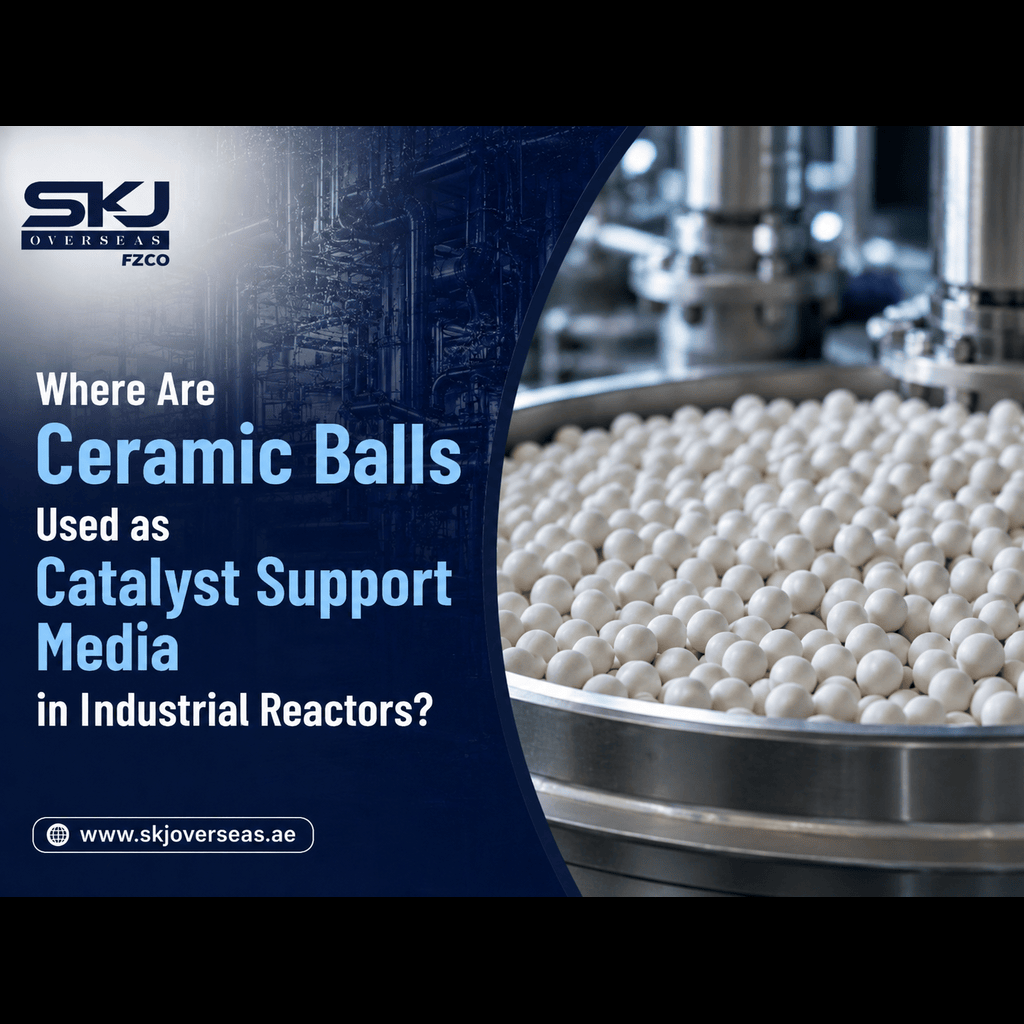
Inert Ceramic Balls do not take part in any chemical reaction. That is precisely what makes them so valuable. They sit inside the reactor vessel, support the catalyst, distribute the flow of gases and liquids evenly, and prevent the expensive catalyst material from moving, breaking, or getting contaminated. Without proper catalyst bed support, even the best catalyst underperforms and wears out far too quickly.
What Are Inert Ceramic Balls and What Makes Them Effective?
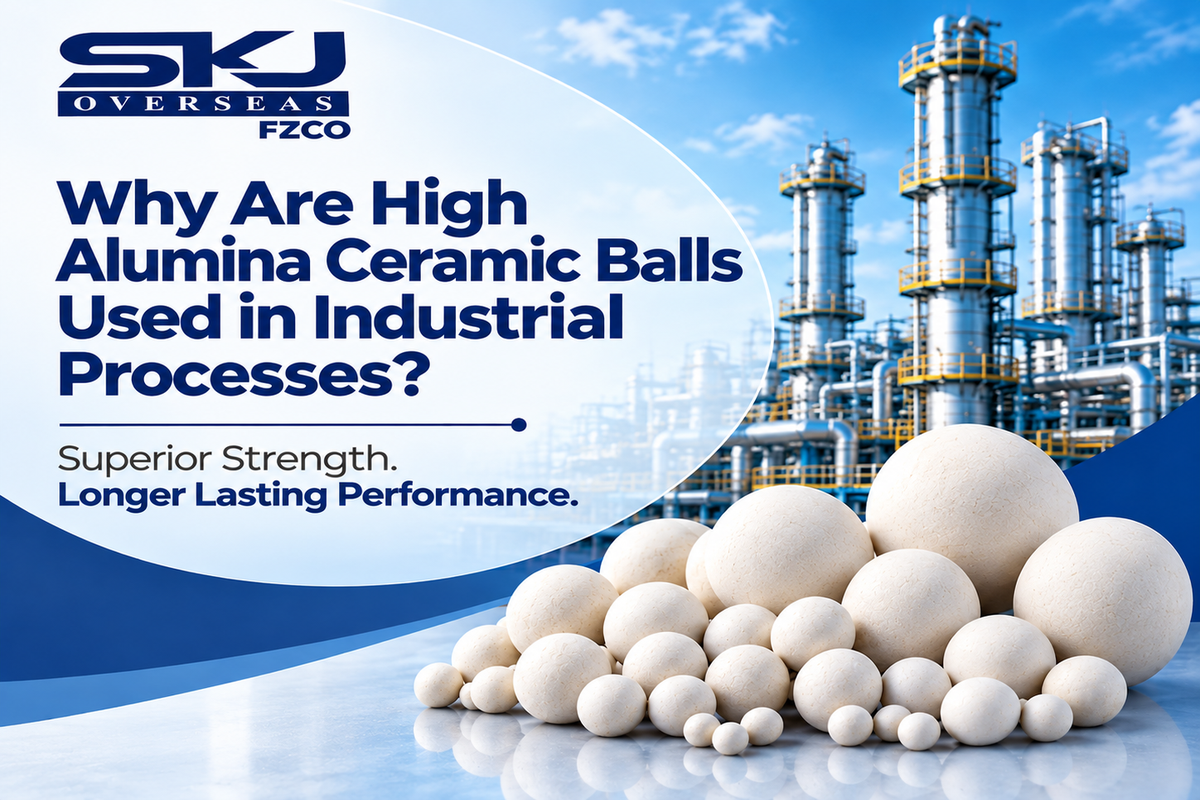
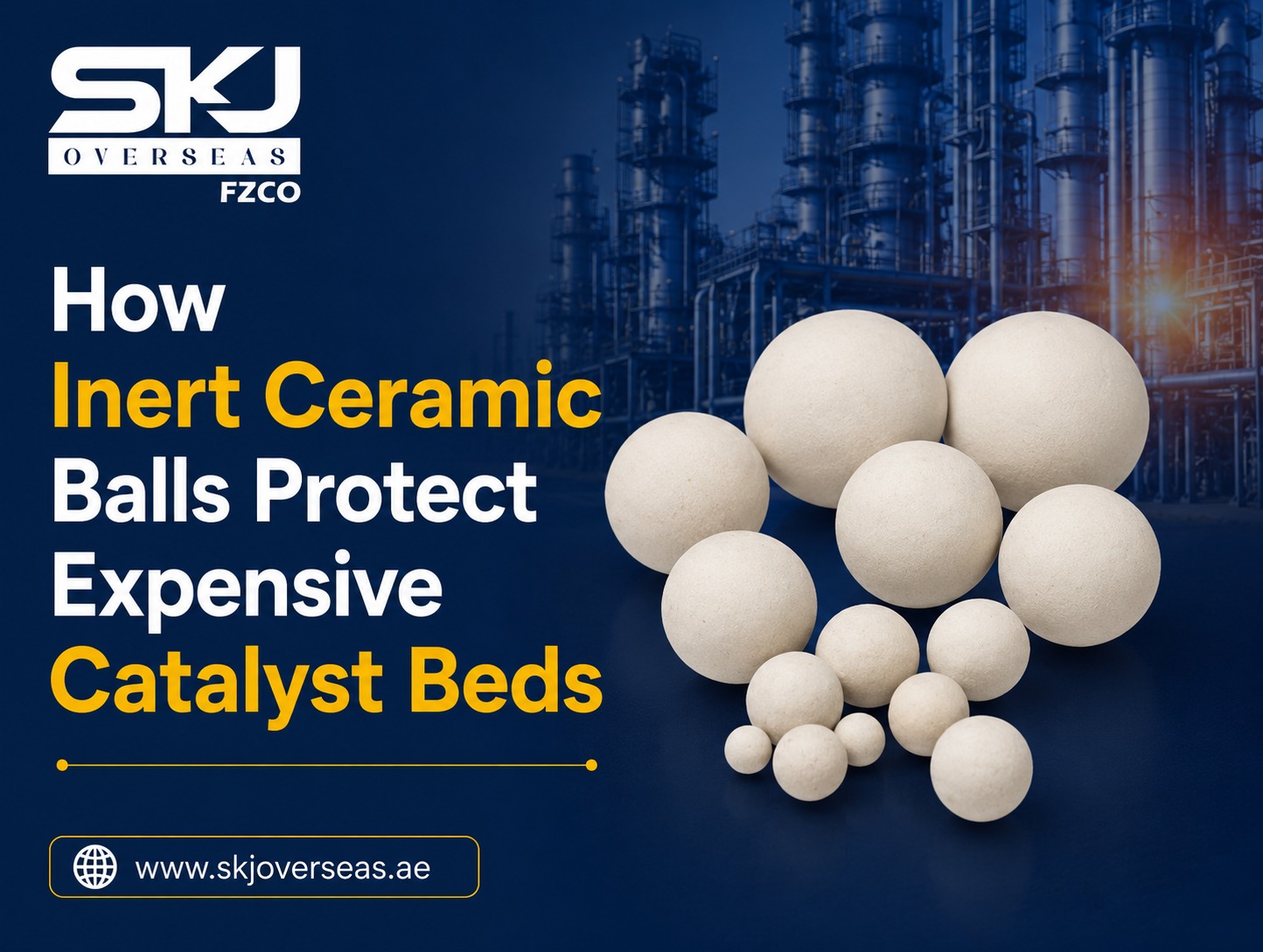
Inert Ceramic Balls are dense, smooth spheres made from high-purity ceramic materials, most commonly alumina. They are called inert because they do not react with the gases, liquids, or chemicals passing through the reactor.
Their effectiveness comes from a combination of properties:
- High compressive strength so they do not break under the weight of the catalyst bed above them
- Thermal stability so they maintain their shape and strength at very high operating temperatures
- Chemical resistance so they are not attacked by acids, alkalis, or process fluids
- Smooth, consistent surface so they allow even flow distribution without creating blockages
- Low porosity so they do not absorb process fluids or contaminants that could affect the catalyst
These properties are why Inert Ceramic Balls are the standard choice for catalyst bed protection in refineries, petrochemical plants, fertilizer units, and gas processing facilities around the world.
Why Catalyst Beds Need Protection
Catalysts are expensive. In large industrial reactors, a single catalyst charge can cost hundreds of thousands of dollars. Once contaminated, broken, or fluidized, it cannot simply be repaired. The entire charge often needs to be replaced.
Physical damage from feed material Feed gases and liquids entering a reactor at high velocity can physically disturb the top of the catalyst bed. This breaks catalyst pellets into smaller fragments that block the bed and increase pressure drop. A top layer of catalyst bed support balls absorbs the energy of the incoming feed and protects the catalyst surface beneath.
Uneven flow distribution When gas or liquid does not distribute evenly across the bed, some zones of the catalyst work harder than others. This creates hot spots, reduces conversion efficiency, and causes premature catalyst deactivation. Inert Ceramic Balls placed at the top and bottom of the bed act as a flow equalization layer.
Catalyst migration and fines generation Without a support layer at the bottom, catalyst particles can migrate downward through the reactor internals and into downstream equipment. This causes blockages and equipment damage. High alumina ceramic balls placed at the bottom of the bed act as a physical barrier that holds the catalyst in place.
Contamination from pipe scale and debris Feed streams often carry rust particles, pipe scale, and other debris that can poison the catalyst surface. A top bed of Inert Ceramic Balls acts as a pre-filter layer, capturing this debris before it reaches the expensive catalyst below.
Thermal shock at startup and shutdown Rapid temperature changes during reactor startup and shutdown create stress inside catalyst pellets and can cause them to crack. The surrounding ceramic media for reactors helps moderate temperature distribution and reduce the mechanical stress on catalyst particles.
How Inert Ceramic Balls Are Positioned in a Reactor
The placement of Inert Ceramic Balls inside a reactor follows a specific pattern designed to give maximum protection:
Top Layer (Inlet Protection Zone) The top layer of ceramic balls sits directly above the catalyst. Its job is to distribute incoming feed evenly, filter out physical contaminants, and protect the catalyst surface from the direct impact of the feed stream. Larger diameter balls are typically used here.
Catalyst Support Layer (Bottom Zone) Below the catalyst bed, a layer of catalyst support media holds the catalyst in place and allows treated process fluid to exit freely. This layer also supports the weight of the catalyst above and prevents it from settling into reactor outlet nozzles or screens.
Graded Layers In many reactor designs, ceramic balls are loaded in graded sizes from large at the bottom to smaller at the top of the support zone. This grading prevents smaller catalyst particles from falling through the gaps between larger support balls.
This layered approach is what makes Inert Ceramic Balls so effective for refinery catalyst protection and industrial reactor efficiency.
Inert Ceramic Balls Comparison
| Property | Standard Inert Ceramic Balls | High Alumina Ceramic Balls | Porcelain Balls | Alumina Catalyst Support |
| Alumina Content | 17 to 23% | 90 to 99% | 20 to 30% | 92 to 99% |
| Max Temperature | 1000°C | 1700°C | 1200°C | 1600°C |
| Crush Strength | Good | Excellent | Good | Excellent |
| Chemical Resistance | Good | Very High | Good | Very High |
| Cost | Low | Moderate | Low | Higher |
| Best Application | General reactor support | High-temperature reactors | Light duty support | Demanding refinery use |
| Porosity | Low | Very Low | Low | Very Low |
This table helps plant engineers choose the right grade of Inert Ceramic Balls based on their specific reactor temperature, chemical environment, and mechanical load requirements.
Key Benefits of Using Inert Ceramic Balls in Industrial Reactors
Using proper ceramic media for reactors delivers measurable benefits to plant operations:
- Extended catalyst life by protecting the catalyst from physical damage, contamination, and uneven flow
- Reduced pressure drop across the reactor because flow is well distributed and the bed does not become blocked with fines
- Lower maintenance costs because the catalyst bed stays in better condition between planned replacement cycles
- Improved product quality because even flow distribution leads to more consistent catalytic reactions across the whole bed
- Faster reactor startups because the bed structure remains intact between shutdowns
- Reduced risk of hot spots that can damage both the catalyst and the reactor vessel itself
For plants in petrochemical processing and refining, these benefits add up to significant savings over the life of a catalyst charge.
What to Look for in an Inert Ceramic Balls Supplier
Choosing the right Inert Ceramic Balls supplier is just as important as choosing the right product. Here is what to evaluate:
Alumina content and material grade The alumina content determines the temperature resistance and crush strength of the balls. For high-temperature applications, choose high alumina ceramic balls with 90% or higher alumina content. For standard reactor applications, lower-grade ceramic is usually sufficient and more economical.
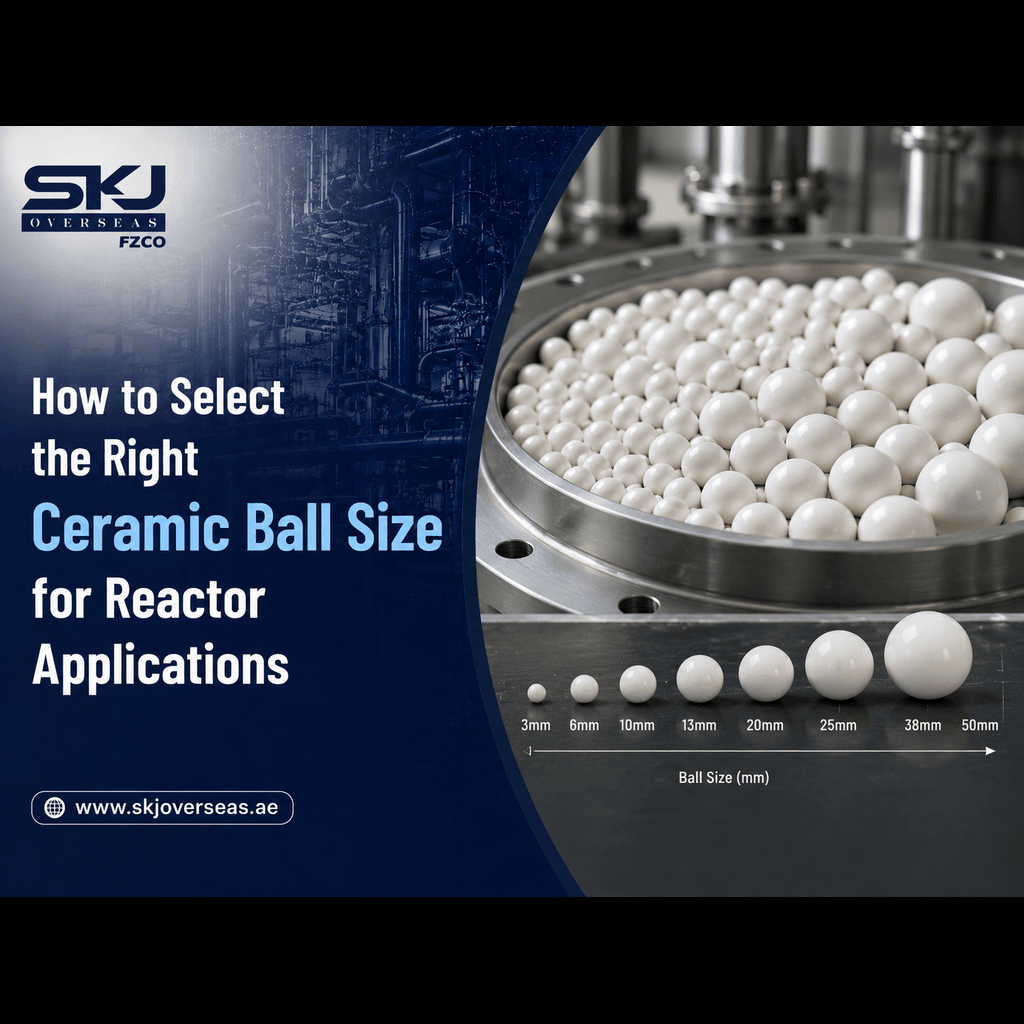
Size range availability Reactors use multiple ball sizes in layered configurations. A good Inert Ceramic Balls manufacturer offers sizes from 6mm to 50mm or more to cover all zones of a reactor loading.
Crush strength data Ask for crush strength test results in Newtons per ball or kilograms per ball. This data tells you whether the balls can support the weight of the catalyst bed above them without breaking.
Consistency between batches Inconsistent sizing or variable crush strength between batches creates problems during reactor loading. A reliable Inert Ceramic Balls manufacturer provides documented test data for every production batch.
Export capability If you are sourcing Inert Ceramic Balls in Dubai or another international location, confirm that the supplier handles proper packaging, fragile goods logistics, and full export documentation. Inert Ceramic Balls exporters with established international shipping experience are far less likely to deliver product damaged in transit.
Common Mistakes When Using Inert Ceramic Balls in Reactors
Even experienced plant teams make these errors. Avoid them to get the most out of your catalyst support media:
- Loading the wrong size for the position – using small balls at the bottom support layer allows catalyst fines to fall through
- Skipping graded loading – a single ball size throughout does not distribute flow as effectively as a graded layer system
- Using ceramic balls with inadequate crush strength – balls that break under load create fines that increase pressure drop and contaminate the catalyst
- Ignoring chemical compatibility – in highly acidic or alkaline environments, standard ceramic may degrade; high alumina ceramic balls are better suited
- Reusing damaged balls after a catalyst change – inspect and replace any cracked or chipped balls before each new catalyst loading
Why SJK Overseas Is a Trusted Inert Ceramic Balls Manufacturer
SJK Overseas has manufactured and exported Inert Ceramic Balls for industrial reactor and refinery applications for over two decades. Our products are used in catalyst beds across the Middle East, Southeast Asia, Europe, and beyond.
What sets SJK Overseas apart:
- In-house manufacturing with full quality control at every production stage
- Full range of ball sizes from 6mm to 50mm in standard and high alumina grades
- Detailed batch test certificates including crush strength, alumina content, bulk density, and water absorption
- ISO-certified quality management system
- Established Inert Ceramic Balls exporter with proven packaging and logistics for international shipments to Dubai and the Gulf region
- Technical team available for reactor loading design, size selection, and application support
As a trusted Inert Ceramic Balls manufacturer, SJK Overseas works directly with plant engineers, turnaround teams, and procurement professionals to deliver the right product for every reactor application.
Case Study: Catalyst Bed Protection Upgrade at a Gulf Region Refinery
Plant: A medium-scale petroleum refinery in the Gulf region
Challenge: The refinery was experiencing frequent pressure drop increases across one of their hydrotreating reactors. Investigations during a planned shutdown found that the catalyst bed was heavily contaminated with pipe scale and rust particles from the feed line. Catalyst fines had also migrated to the bottom support screen, partially blocking it. The catalyst charge had to be replaced earlier than planned at significant cost.
Solution: SJK Overseas was contacted to supply a revised catalyst bed support system for the next catalyst loading. Our technical team reviewed the reactor dimensions, feed conditions, and the previous loading configuration. We recommended a three-layer system at the top using Inert Ceramic Balls in 25mm, 19mm, and 13mm sizes to filter feed contaminants progressively. A graded support system at the bottom used 50mm, 38mm, and 25mm balls to prevent catalyst migration.
Results after the next operating cycle:
- No significant pressure drop increase observed across the reactor for 18 months of continuous operation
- No catalyst fines found at the bottom support screen during the next planned inspection
- Feed contaminant buildup was concentrated in the top ceramic layer, which was replaced at low cost during the turnaround
- Catalyst bed remained in good physical condition with no signs of contamination damage
- The catalyst charge ran for its full planned life of 24 months before replacement, compared to the previous cycle of only 14 months
This case demonstrates how the correct selection and layered loading of Inert Ceramic Balls protects expensive catalysts, extends its useful life, and delivers real cost savings for the plant.
FAQs About Inert Ceramic Balls
Q1. What are Inert Ceramic Balls used for in reactors?
Inert Ceramic Balls are used to protect catalyst beds inside industrial reactors. They filter feed contaminants, distribute gas and liquid flow evenly across the bed, and physically support the catalyst to prevent it from migrating or breaking. This protection extends catalyst life and keeps the reactor operating efficiently between planned maintenance cycles.
Q2. What size of Inert Ceramic Balls should I use in my reactor?
Size selection depends on your reactor diameter, the size of your catalyst pellets, and where in the reactor the balls will be placed. Top layers typically use smaller sizes like 13mm to 25mm for better filtration. Bottom support layers use larger sizes like 38mm to 50mm. An experienced Inert Ceramic Balls supplier can design a graded loading plan for your specific reactor.
Q3. What is the difference between standard ceramic balls and high alumina ceramic balls?
Standard Inert Ceramic Balls contain around 17 to 23% alumina and suit most general reactor applications at temperatures up to 1000°C. High alumina ceramic balls contain 90% or more alumina and handle temperatures up to 1700°C with superior crush strength and chemical resistance. High alumina grades are recommended for demanding petrochemical processing and high-temperature refinery reactors.
Q4. How long do Inert Ceramic Balls last in a reactor?
With correct selection and loading, Inert Ceramic Balls can last through multiple catalyst cycles without replacement. In most plants, the ceramic support balls at the bottom of the bed last 10 years or more. The top filtering layer may be replaced at each catalyst change because it accumulates feed contaminants. Inspect all balls for cracking or chipping during each turnaround.
Q5. Can Inert Ceramic Balls be cleaned and reused?
Yes. Bottom support layers of Inert Ceramic Balls that show no physical damage can be cleaned, inspected, and reloaded in the next catalyst charge. Top filtering layers that have captured heavy contamination are usually replaced because cleaning may not fully restore their original condition. Always inspect before reuse and replace any cracked or undersized balls.
Q6. Are Inert Ceramic Balls available for export to Dubai and the Middle East?
Yes. SJK Overseas is an experienced Inert Ceramic Balls exporter with a strong track record supplying Inert Ceramic Balls in Dubai, UAE, Saudi Arabia, Kuwait, and across the Gulf region. We handle proper heavy-duty packaging, full export documentation, and reliable logistics to ensure the product arrives undamaged and ready for immediate reactor loading.
Q7. What alumina content should I specify for high-temperature reactor applications?
For reactors operating above 1200°C or in highly corrosive chemical environments, specify high alumina ceramic balls with a minimum alumina content of 90%. For standard hydrotreating or reforming reactors operating below 1000°C, ceramic balls with 17 to 23% alumina content are usually sufficient and more economical for refinery catalyst protection applications.
Q8. How do Inert Ceramic Balls improve industrial reactor efficiency?
They improve industrial reactor efficiency by ensuring even distribution of feed gases and liquids across the entire catalyst bed. When flow is evenly distributed, the whole catalyst bed works consistently instead of creating overloaded zones that degrade faster. This leads to more consistent product output, lower pressure drop, reduced energy consumption, and longer intervals between costly catalyst replacements.
Conclusion
Catalyst beds represent one of the largest single material investments in any refinery or chemical processing plant. Protecting that investment with the right catalyst support media is not an optional extra. It is a fundamental part of good reactor engineering and plant economics.
Inert Ceramic Balls are simple, durable, and cost-effective. They do not react with process fluids. They do not contaminate the catalyst. They simply do their job, cycle after cycle, protecting the expensive material above and below them from physical damage, contamination, and flow problems.
For plants sourcing Inert Ceramic Balls in Dubai or across the Gulf region, the choice of manufacturer matters. A supplier who provides documented crush strength data, consistent sizing, high-purity materials, and proper export packaging is a supplier who helps you avoid expensive catalyst damage. A low-cost supplier with no documentation is a risk that shows up at the worst possible time, during a reactor shutdown investigation.
SJK Overseas brings together manufacturing quality, technical expertise, and proven export capability to support every ceramic media for reactor requirements. Whether you are loading a new reactor for the first time or upgrading an existing catalyst protection system, our team is ready to help you choose the right product, design the right loading configuration, and deliver the right material to your plant on time.