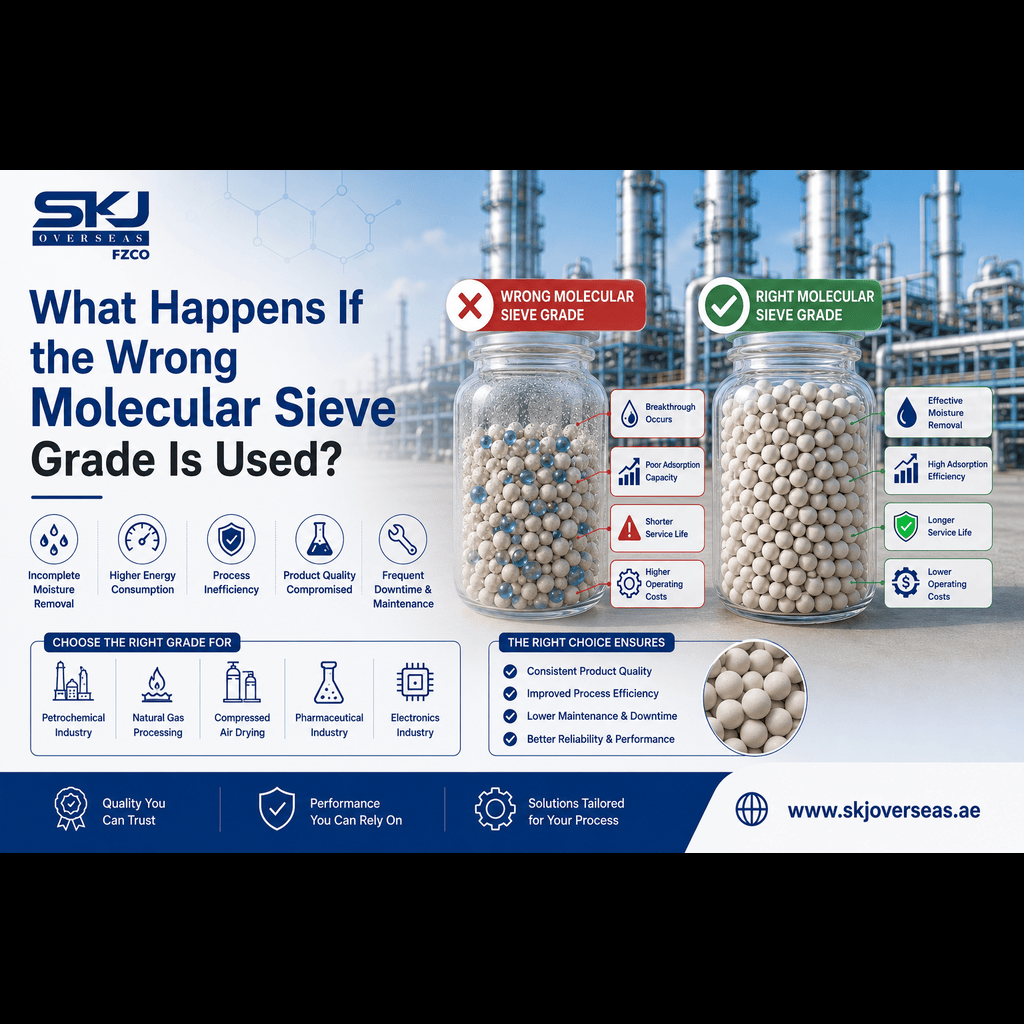
Picking the wrong molecular sieve grade rarely causes an immediate, obvious failure. Instead, it shows up quietly, a stream that never quite reaches the moisture spec it should, a bed that regenerates less efficiently than expected, or a product that picks up an unexpected contaminant somewhere along the process. By the time someone traces it back to the sieve grade, the plant has usually been running below its actual capability for months.
At SKJ Overseas, we get asked about this more often than people expect, usually after a plant has already swapped out a batch once and still sees the same problem. This article looks at what actually goes wrong when the grade does not match the application, and how to avoid that mismatch from the start.
Why Pore Size Mismatches Cause More Damage Than People Expect
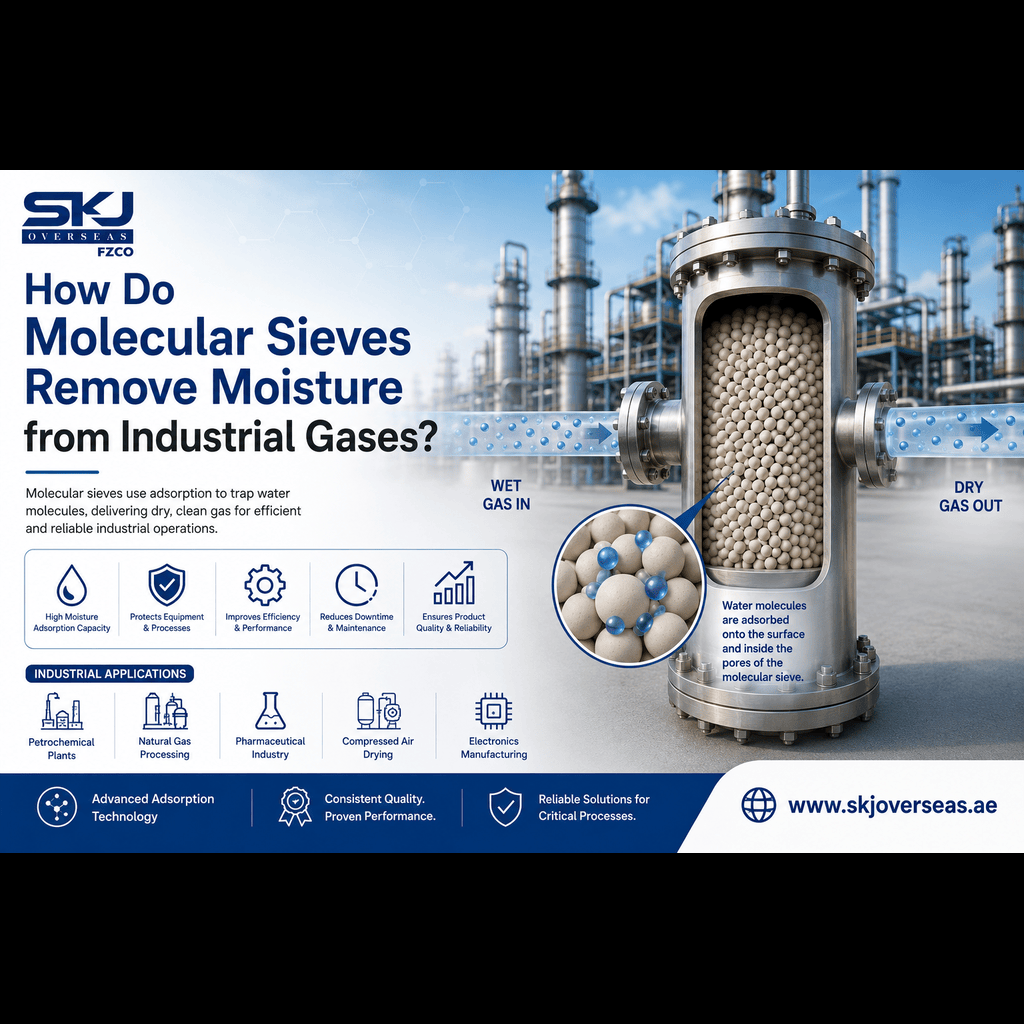
Every molecular sieve grade is defined by its pore size, and that single dimension decides exactly which molecules get trapped and which pass through untouched. When the wrong grade goes into a system, the pore size either lets too much through or captures more than it should, and both outcomes create problems.
- A pore size too small fails to adsorb everything it needs to, leaving moisture or contaminants in the treated stream.
- A pore size too large adsorbs the product itself along with the target contaminant, wasting capacity and altering stream composition.
- Either mismatch reduces the effective service life of the bed, since capacity gets consumed by the wrong molecules.
What Happens When Solvent Drying Uses the Wrong Grade
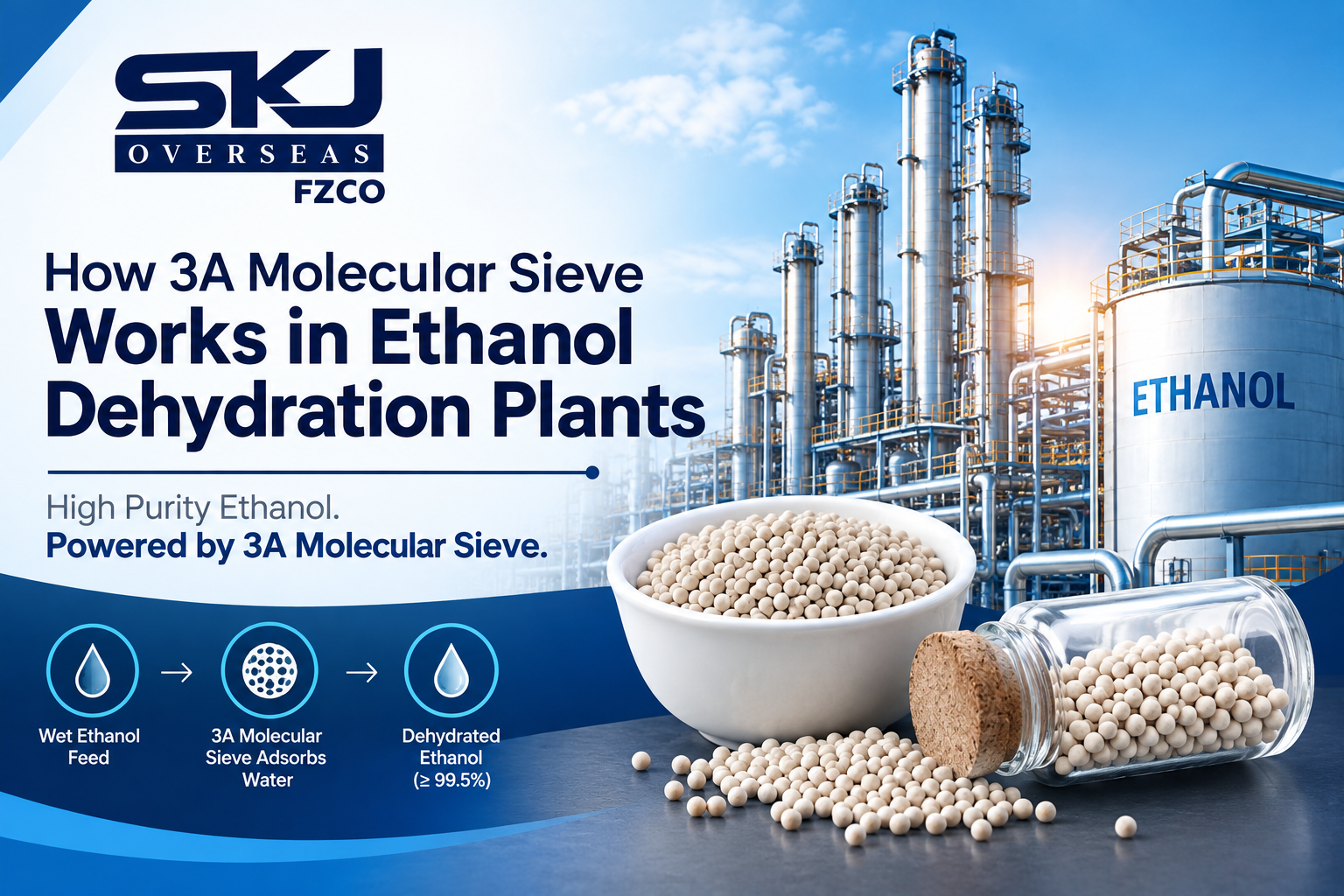
This is one of the clearest examples of a costly mismatch. If a 4A grade sieve is used to dry ethanol or methanol instead of a smaller pore grade, the sieve adsorbs the solvent molecules right alongside the water, since the pores are large enough to capture both.
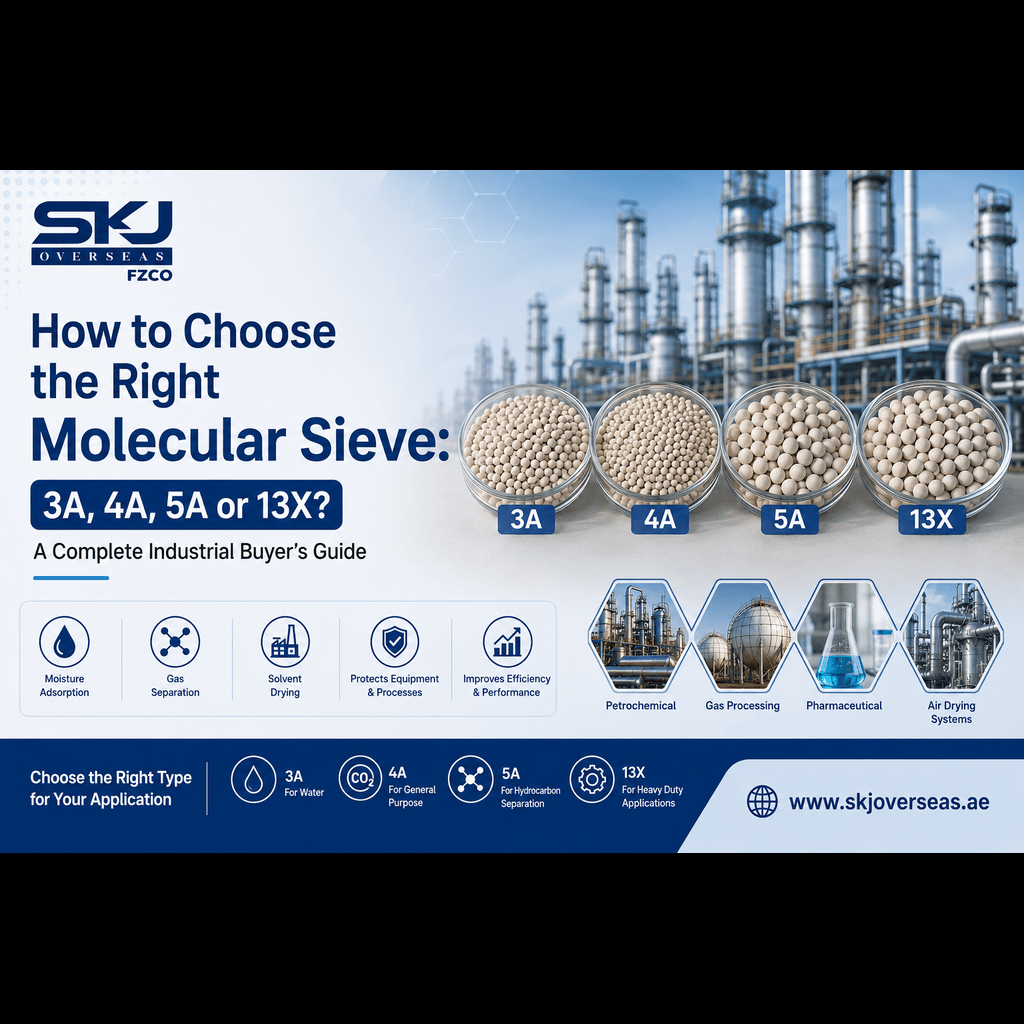
Working with experienced 3A molecular sieve suppliers for these applications avoids this exact problem, since the smaller pore structure excludes the solvent while still removing moisture effectively. Getting this choice right at the sourcing stage prevents a quiet but steady loss of product and drying capacity that often goes unnoticed until someone checks the numbers closely.
The Risk of Using a General Grade for Combined Gas Purification
Some applications need more than simple moisture removal. Natural gas sweetening and air separation units often need to remove carbon dioxide or hydrogen sulfide alongside water, and using a grade that only handles moisture leaves these contaminants untouched.
This is where molecular sieve type 13X is specifically suited, since its larger pore structure adsorbs water, CO2, and H2S together in a single step. Using a smaller pore grade instead, thinking it will simplify the process, actually leaves the plant needing a separate purification step it did not plan for, adding cost and complexity rather than reducing it.
How Wrong Grade Selection Shortens Bed Life and Increases Costs
Beyond the immediate performance issue, using the wrong grade tends to shorten how long a bed lasts before it needs replacing. Capacity gets consumed faster than expected, either because the wrong molecules are being adsorbed or because the bed cannot fully do its intended job and needs more frequent regeneration cycles to compensate.
- More frequent regeneration cycles increase energy costs and reduce equipment lifespan
- Faster capacity loss means earlier and more frequent sieve replacement
- Unexpected downstream contamination can trigger additional purification steps
None of these costs show up on the original purchase order, but they accumulate steadily over the life of the system.
Why Manufacturing Quality Compounds a Grade Mismatch
Even when the correct grade is chosen, inconsistent manufacturing can create similar problems. Pellet strength, pore uniformity, and moisture content on arrival all affect how well a sieve performs, and a poorly made batch can underperform even within the right grade category.
Working with experienced 13X molecular sieve manufacturers helps avoid this compounding issue, since consistent pellet quality ensures the grade performs the way its specification promises, rather than falling short due to manufacturing variability layered on top of a correct grade choice.
How to Avoid Grade Selection Mistakes From the Start
A few practical steps help plants avoid this mismatch before it becomes a recurring cost.
- Confirm exactly what needs to be removed from the stream, not just moisture, but any accompanying contaminants like CO2 or H2S
- Check whether the process involves solvents or hydrocarbons sensitive to larger pore sizes
- Request pore size tolerance data rather than relying on the nominal grade name alone
- Work with a supplier who asks about your process conditions rather than recommending a generic option
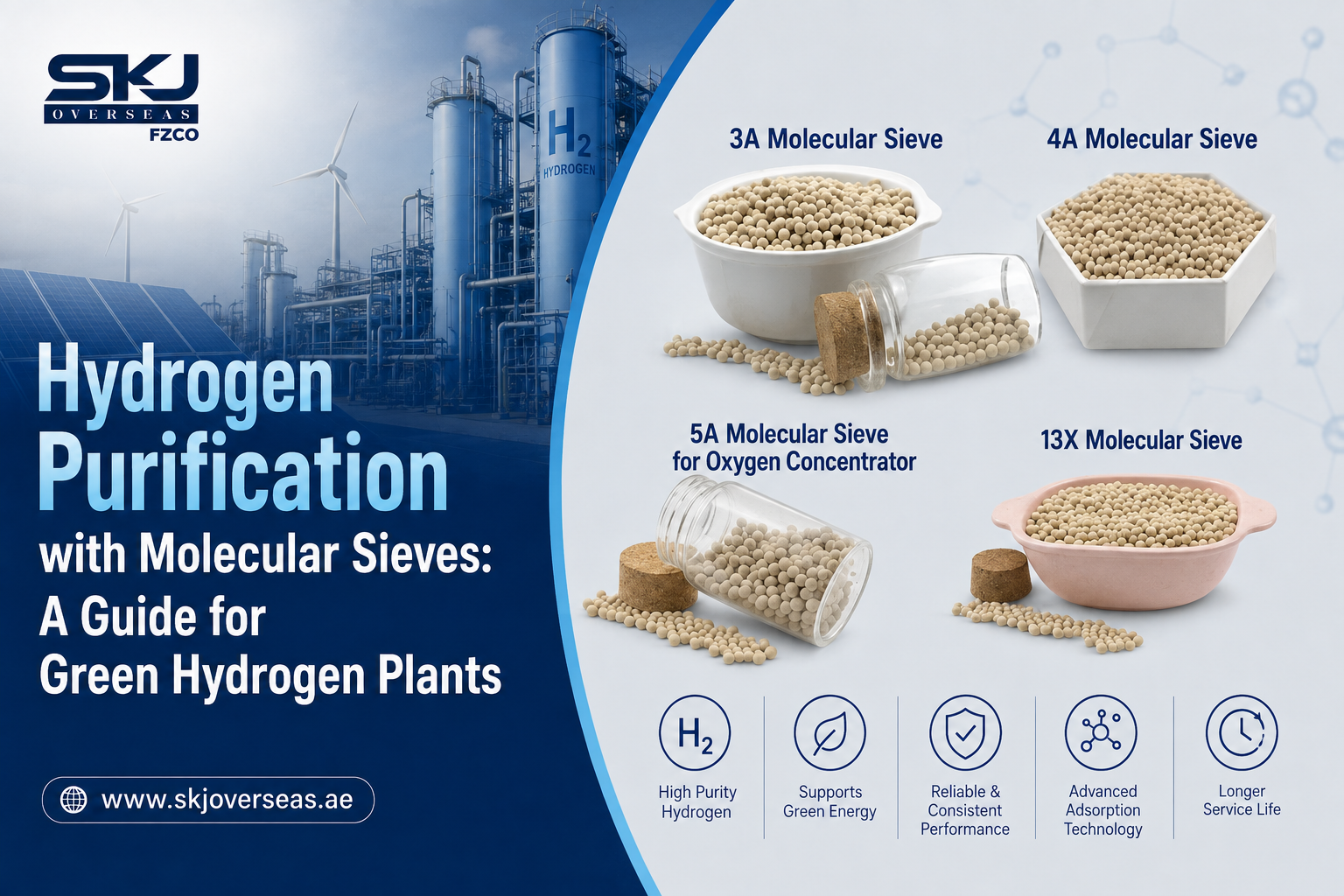
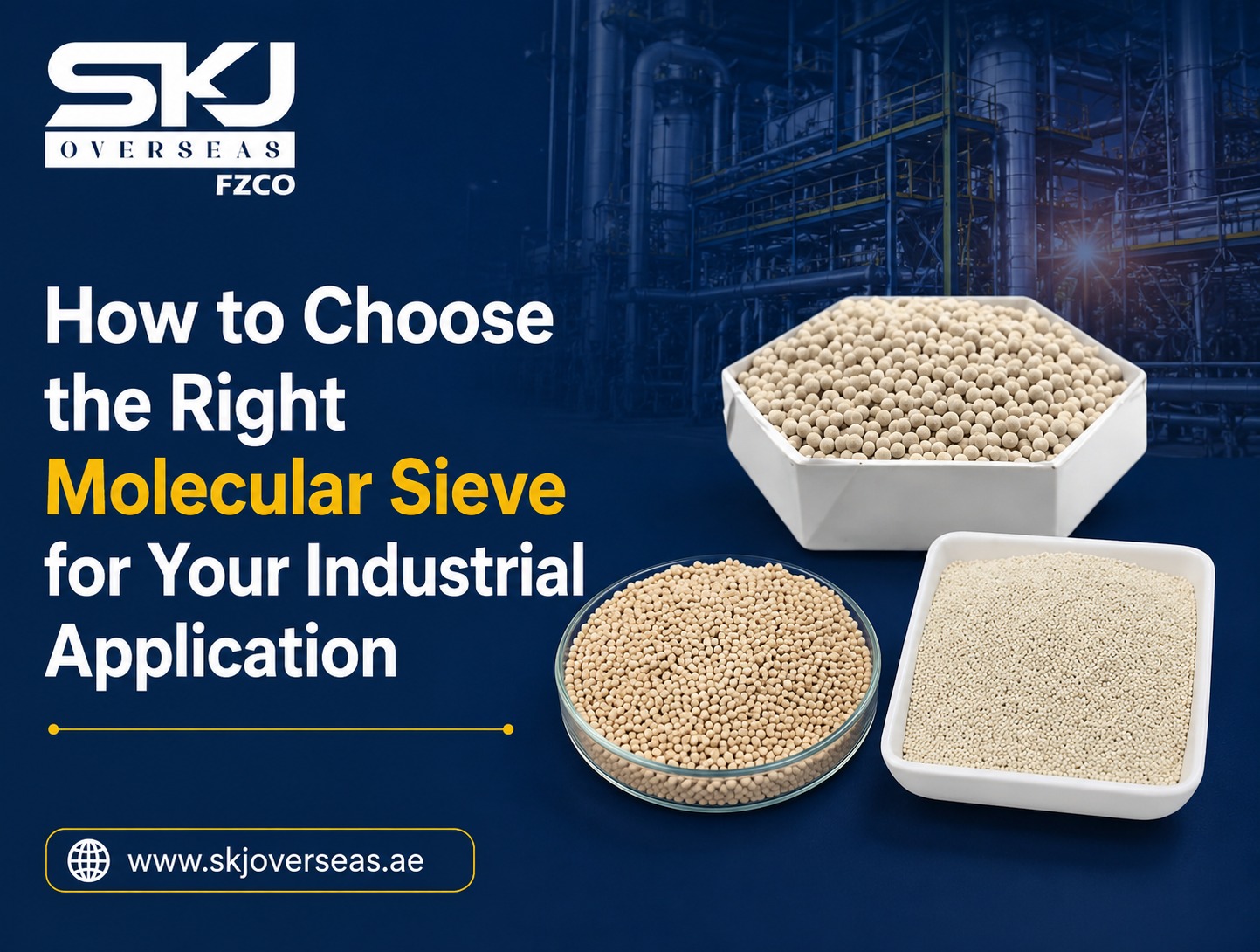
At SKJ Overseas, we supply 3A, 4A, 5A, and 13X molecular sieve grades, and we walk through these questions with plant teams before recommending a specification. If you are still working out which grade fits your process, our guide on how to choose the right molecular sieve between 3A, 4A, 5A, and 13X breaks down the differences in more detail.
FAQs
1. Can using the wrong molecular sieve grade damage equipment?
Not usually directly, but it can lead to unexpected contamination downstream or reduced drying performance, which puts additional strain on associated equipment over time.
2. How quickly would I notice if the wrong grade was installed?
It varies. Some mismatches show up within the first few operating cycles as reduced moisture removal, while others take months to become obvious through gradual capacity loss.
3. Is it possible to correct a wrong grade selection without replacing the entire bed?
In most cases, the incorrect grade needs to be removed and replaced with the correct one, since pore size cannot be adjusted after manufacturing.
4. Does using a larger pore grade than necessary always cause problems?
Yes, in most applications, since it adsorbs additional molecules beyond the intended target, reducing both efficiency and effective bed life.
5. Why do some plants end up using the wrong sieve grade in the first place?
It often comes down to selecting based on price or availability rather than matching the grade to the specific molecules present in the process stream.
Final Thoughts
Using the wrong molecular sieve grade rarely causes a dramatic failure, but it quietly costs plants in reduced efficiency, shortened bed life, and unexpected downstream contamination. Matching the grade to your actual process conditions, and sourcing consistent material from a reliable partner, prevents these costs from building up unnoticed.
If you are unsure whether your current sieve grade matches your process needs, contact our team at SKJ Overseas. We will help you confirm the right grade for your exact application.