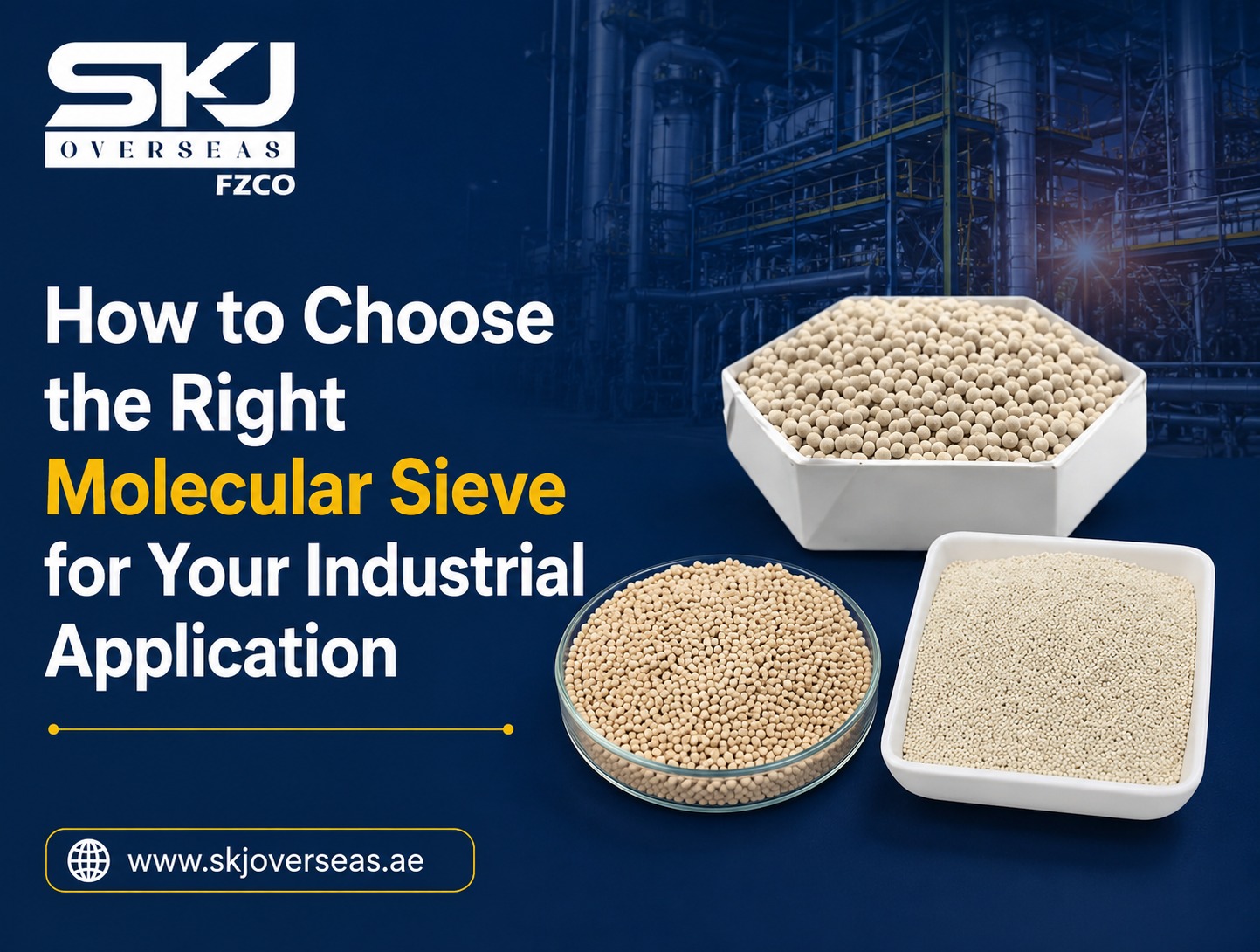
Picking the wrong molecular sieve for your process is a costly mistake. It leads to poor drying results, shorter bed life, and unexpected downtime. If your plant is sourcing Molecular Sieve in Dubai or planning to buy internationally, this guide will help you understand the key differences between the main types and choose the right one for your specific industrial application.
Molecular sieves are synthetic zeolite materials with precisely sized pores that trap certain molecules while letting others pass through. They are used for drying, purification, and gas separation in industries ranging from petrochemicals and pharmaceuticals to air separation and natural gas processing. The type you choose determines what your sieve can and cannot remove from your process stream.
What Is a Molecular Sieve and How Does It Work?
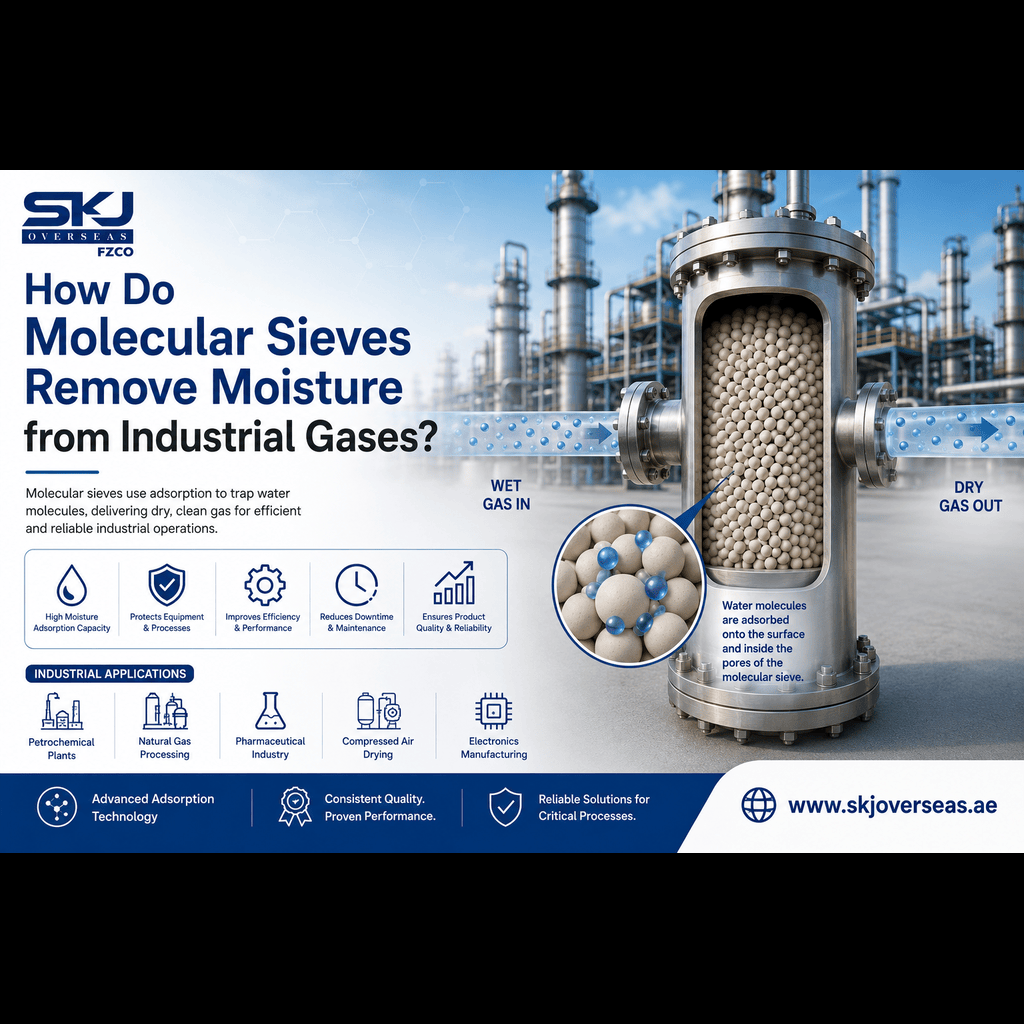
A molecular sieve is a porous crystalline material, usually a synthetic zeolite adsorbent, with uniform pore openings measured in angstroms. Molecules small enough to fit through the pores are captured inside. Molecules too large to enter pass straight through.
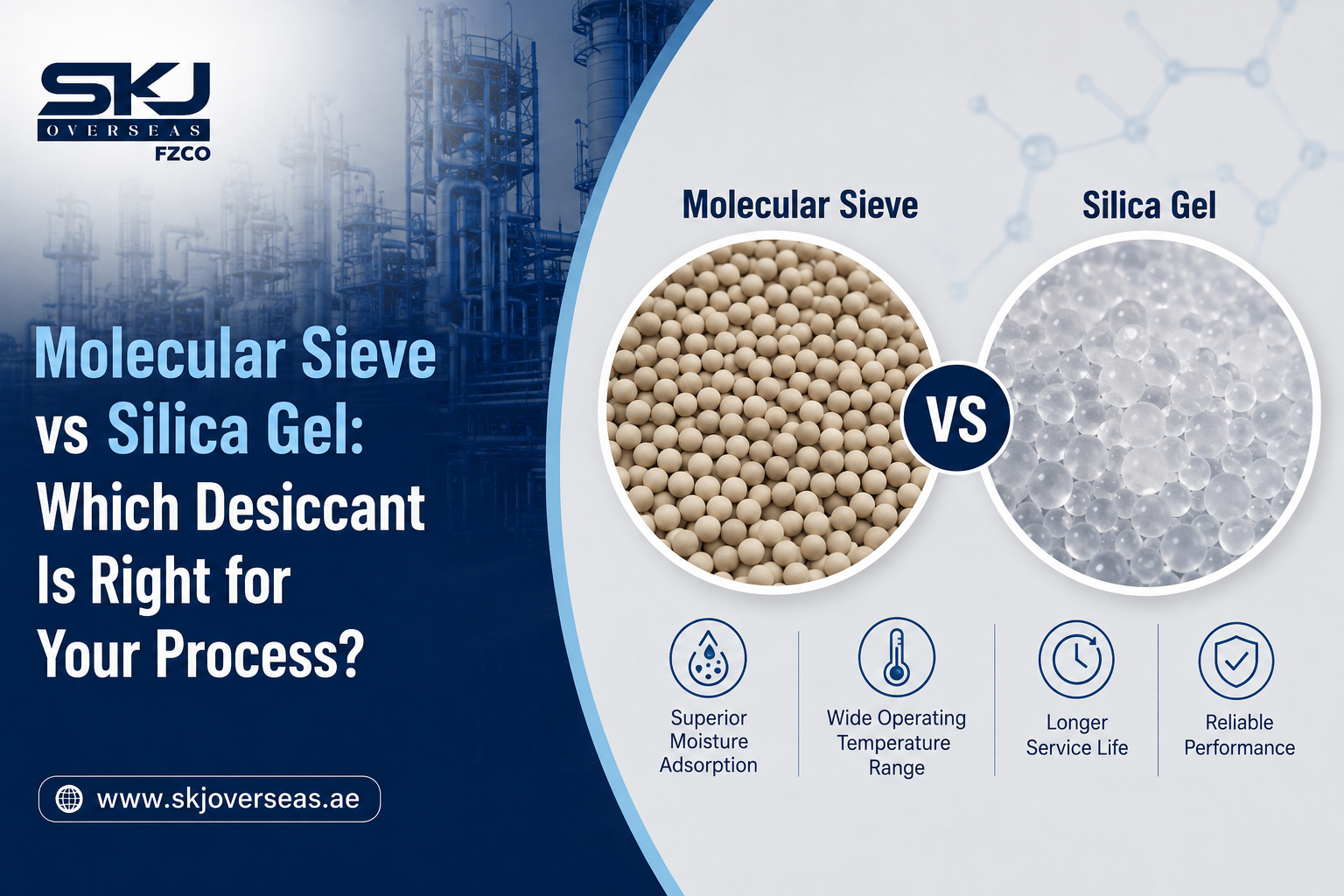
This size-selective adsorption is what makes molecular sieves so precise and effective compared to general desiccants like silica gel or activated alumina. Silica gel adsorbs anything polar. A molecular sieve only adsorbs molecules that fit its specific pore size.
After the sieve reaches its capacity, it is regenerated by heating or pressure reduction, which drives the adsorbed molecules out and restores the material to near-original performance. This regeneration capability makes molecular sieves a long-term, cost-effective solution for industrial adsorption solutions across many process industries.
The Main Types of Molecular Sieve and Their Pore Sizes
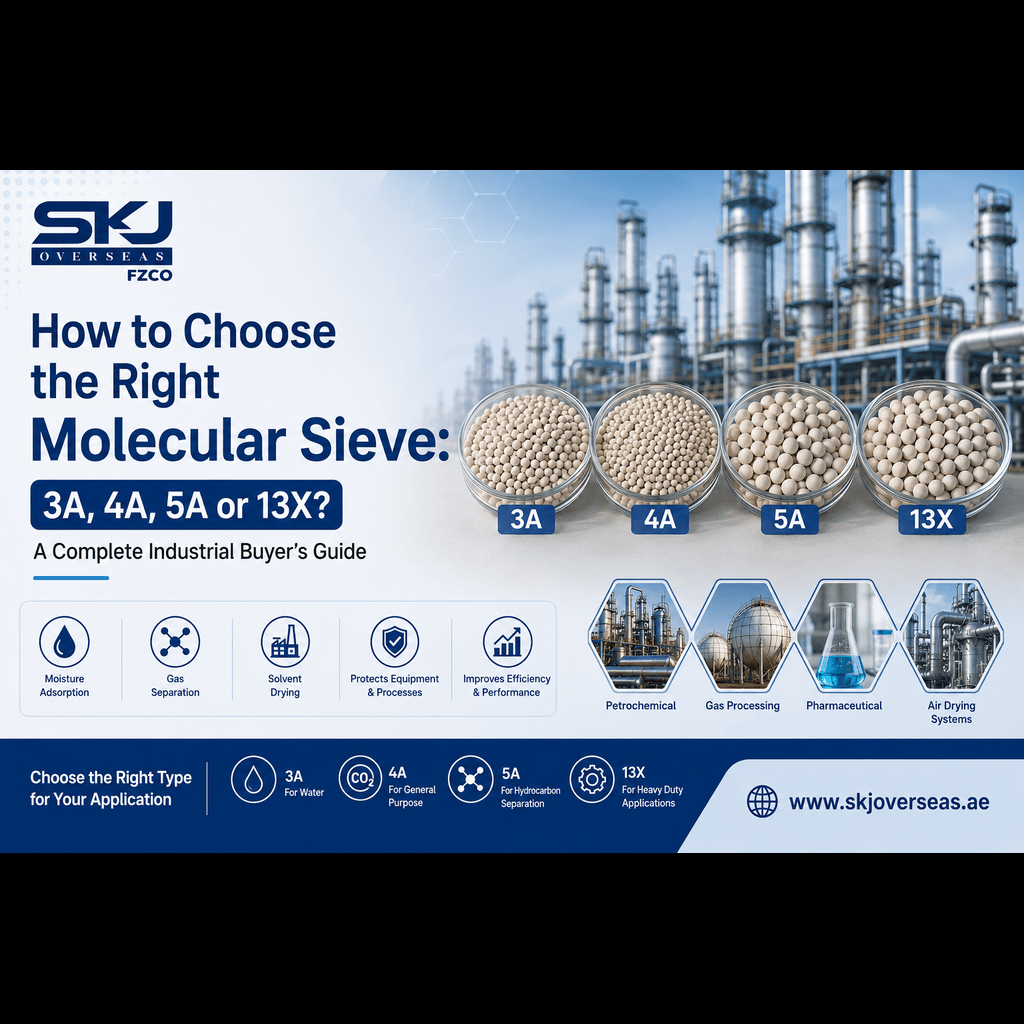
There are four main types used in industrial applications. Each has a different pore size and therefore a different range of molecules it can adsorb.
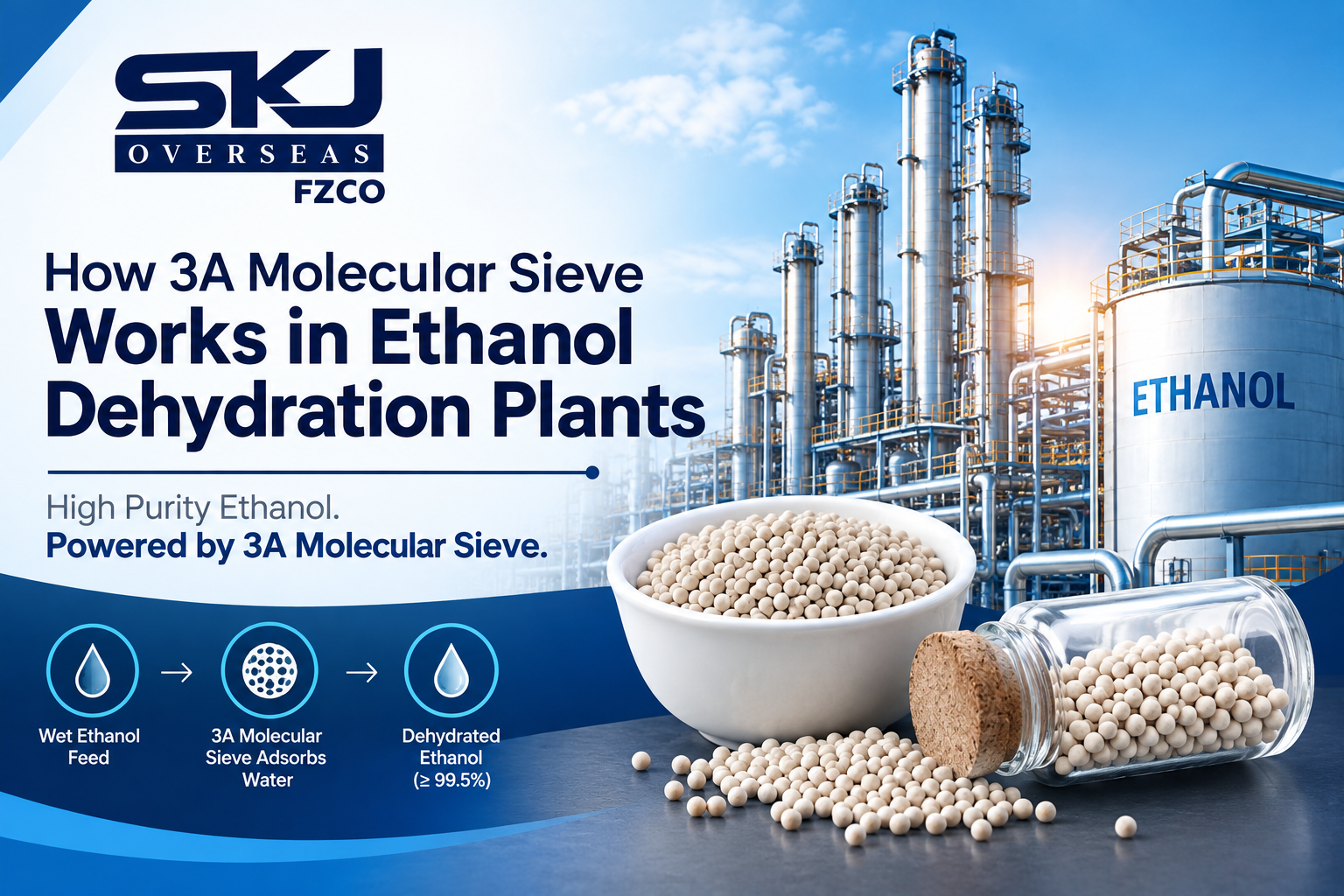
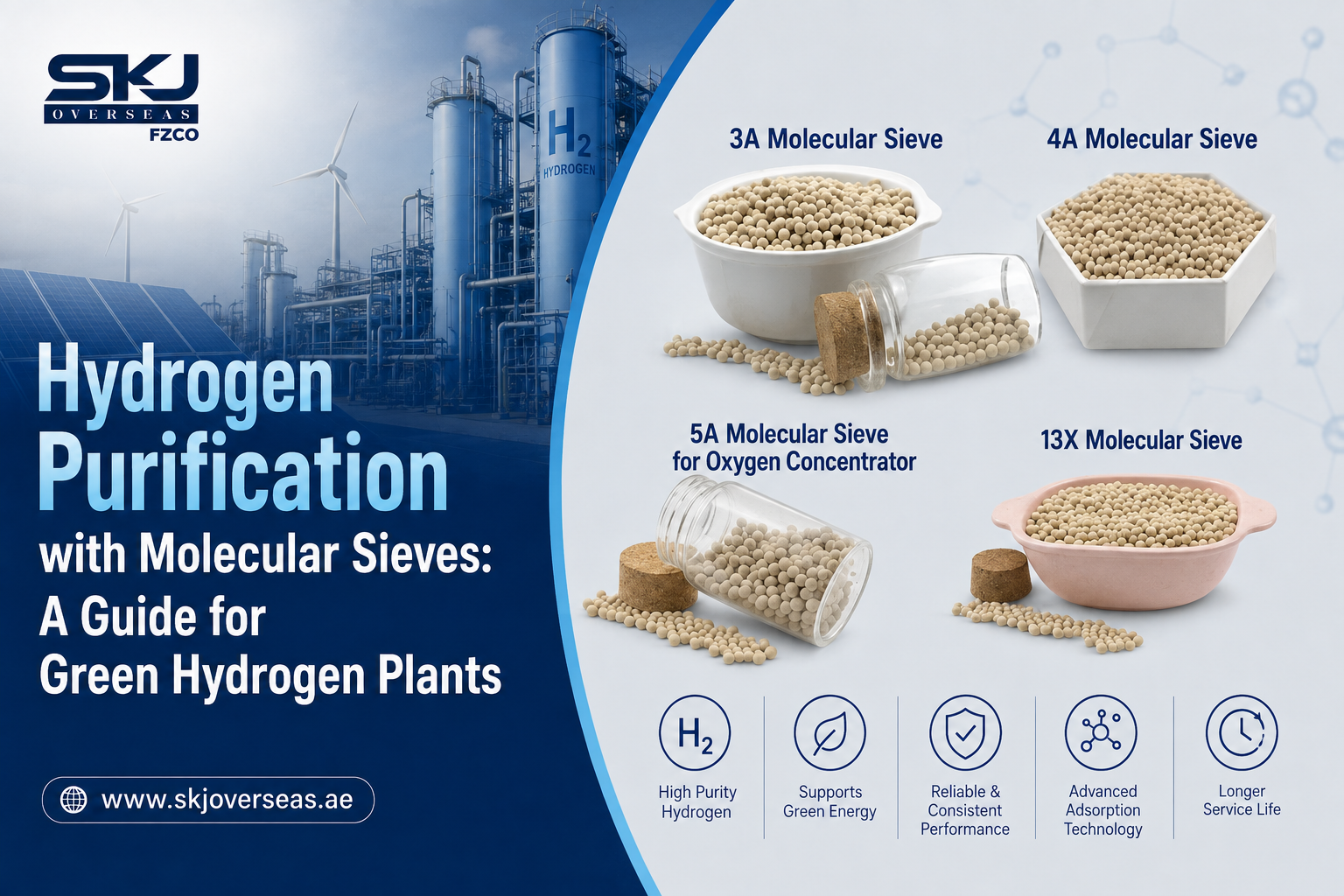
3A Molecular Sieve Pore size: 3 angstroms The 3A Molecular Sieve adsorbs water molecules and excludes most other molecules including ethylene, propylene, and methanol. This selectivity makes it ideal for drying reactive gases and liquids where you only want to remove water and nothing else.
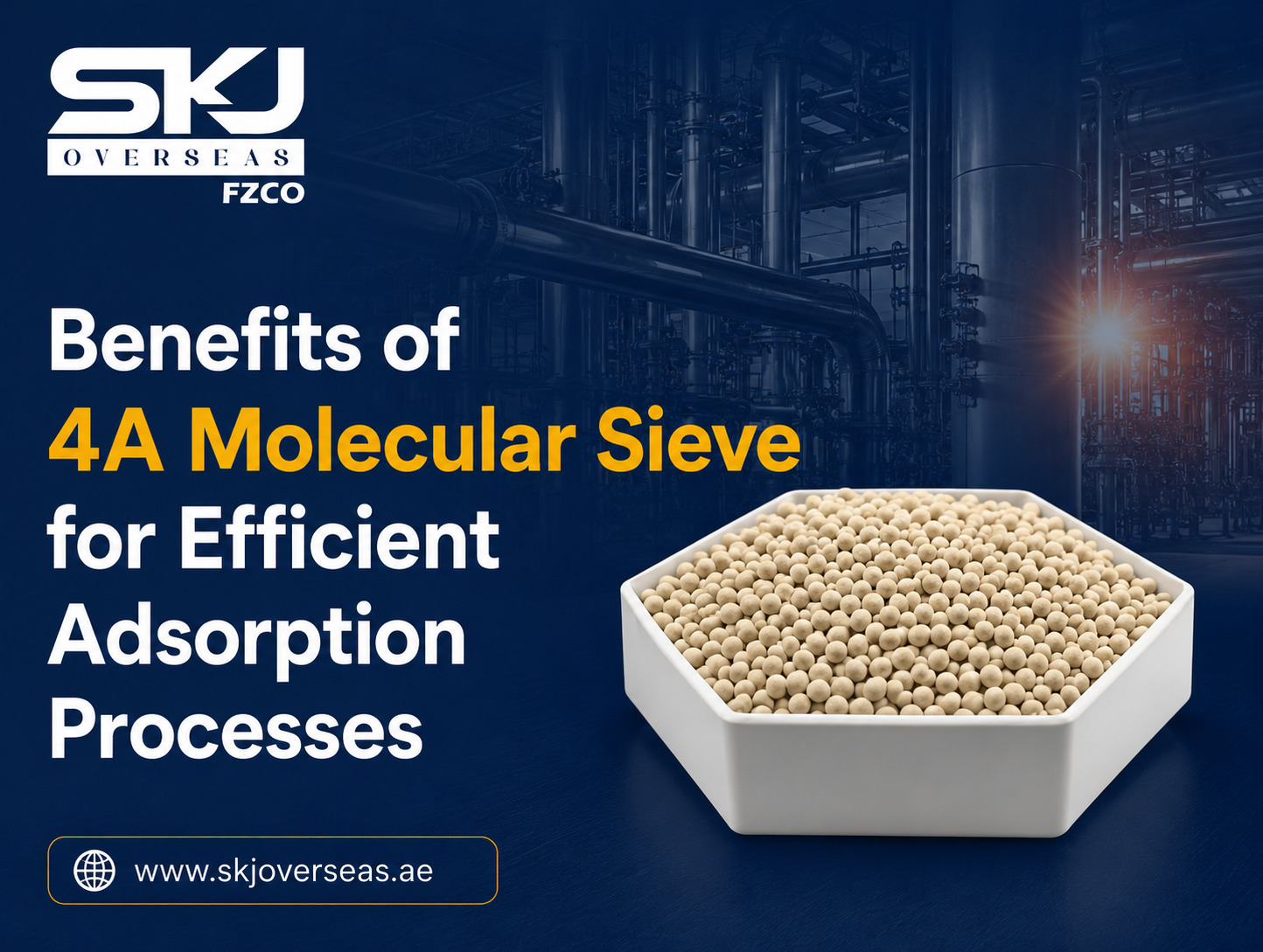
4A Molecular Sieve Pore size: 4 angstroms The 4A Molecular Sieve adsorbs water, carbon dioxide, hydrogen sulfide, sulfur dioxide, and other small molecules. It is the most widely used molecular sieve type for general drying of gases, liquids, and air systems.
5A Molecular Sieve Pore size: 5 angstroms The 5A Molecular Sieve adsorbs water, carbon dioxide, and larger molecules including normal paraffins and some branched hydrocarbons. It is widely used for gas separation, hydrogen purification, and natural gas sweetening.
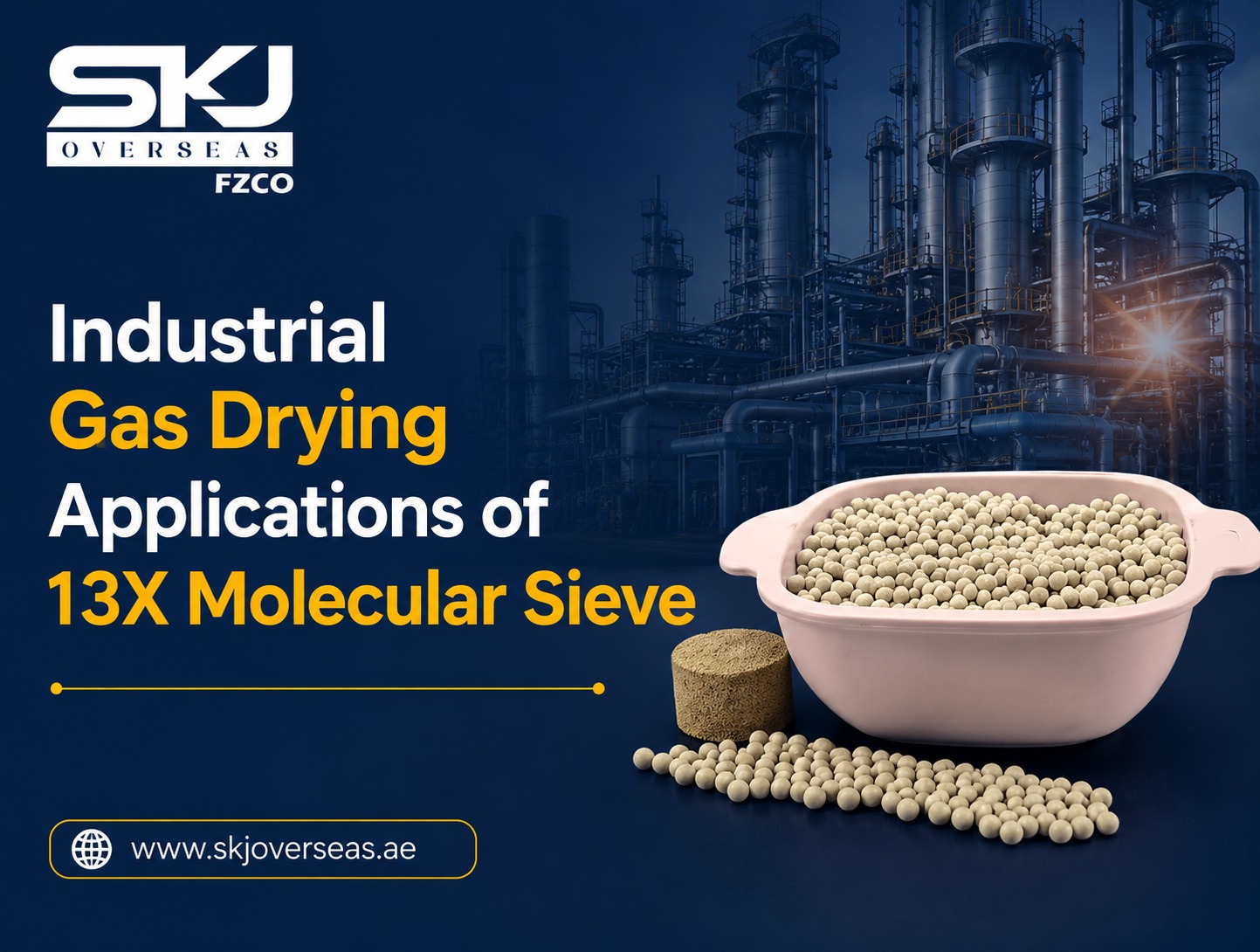
13X Molecular Sieve Pore size: 10 angstroms The 13X Molecular Sieve adsorbs the widest range of molecules including water, carbon dioxide, mercaptans, and aromatic compounds. It is the preferred choice for air pre-purification, deep drying, and simultaneous removal of multiple contaminants in a single bed.
Understanding which pore size matches your target molecule is the single most important step in choosing the right molecular sieve for industrial drying and purification applications.
3A vs 4A vs 5A vs 13X Molecular Sieve: A Direct Comparison
| Feature | 3A | 4A | 5A | 13X |
| Pore Size | 3 Angstroms | 4 Angstroms | 5 Angstroms | 10 Angstroms |
| Water Adsorption | Yes | Yes | Yes | Yes |
| CO2 Adsorption | No | Yes | Yes | Yes |
| H2S Removal | No | Yes | Yes | Yes |
| Normal Paraffin Separation | No | No | Yes | Yes |
| Aromatic Removal | No | No | No | Yes |
| Best For | Reactive gas drying | General drying | Gas separation | Deep purification |
| Common Industries | Pharma, cracking gas | Air drying, refrigerants | Natural gas, hydrogen | Air separation, LNG |
| Min Dew Point | Below -40°C | Below -40°C | Below -60°C | Below -70°C |
This comparison table gives you a clear starting point for selecting molecular sieves for your industrial process based on what molecules you need to remove.
How to Choose the Right Molecular Sieve: Step by Step
Follow these steps to make the right selection for your application:
Step 1: Identify what you need to remove. List the contaminants in your process stream. Is it only water? Water and CO2? Sulfur compounds? The molecules you need to remove determine the minimum pore size you need.
Step 2: Check for molecules you must not adsorb. In some processes, the gas or liquid you are treating contains valuable components you do not want the sieve to trap. The 3A Molecular Sieve is popular for drying cracked gas and ethylene because it does not absorb the hydrocarbons in the stream, only the water.
Step 3: Determine your required dew point. How dry does your product need to be? If you need a dew point below minus 60°C, you need a 5A Molecular Sieve or 13X Molecular Sieve. For moderate drying requirements, a 4A Molecular Sieve is usually sufficient.
Step 4: Consider your operating pressure and temperature. Molecular sieves work across a wide range of pressures and temperatures. However, very high temperatures reduce adsorption capacity. Check the operating envelope with your supplier to confirm the sieve will perform under your actual plant conditions.
Step 5: Choose bead or pellet form. Molecular sieves come in bead and pellet formats. Beads handle higher flow rates with less pressure drop. Pellets offer slightly higher surface area. The choice depends on your column design and flow requirements.
Step 6: Confirm regeneration conditions. Different sieve types require different regeneration temperatures. 3A Molecular Sieve regenerates at around 200°C. 13X Molecular Sieve may need up to 300°C. Confirm your system can reach the required temperature before finalizing your choice.
Where Each Molecular Sieve Type Is Used in Industry
3A Molecular Sieve Applications
- Drying of cracked gas, ethylene, and propylene in petrochemical plants
- Drying of polar solvents such as methanol and ethanol in pharmaceutical manufacturing
- Pre-drying of refrigerant gases before compression
- Drying of natural gas where heavier hydrocarbons must not be adsorbed
4A Molecular Sieve Applications
- General gas and air drying in compressed air systems
- Drying of refrigerants in air conditioning and refrigeration systems
- Pre-treatment of natural gas streams for liquefaction
- Static drying applications inside sealed pharmaceutical packaging and electronics
5A Molecular Sieve Applications
- Normal paraffin and iso-paraffin separation in petroleum refining
- Hydrogen purification through pressure swing adsorption systems
- Natural gas sweetening to remove CO2 and H2S
- Oxygen and nitrogen generation from air in PSA systems
13X Molecular Sieve Applications
- Air pre-purification units in air separation plants
- Simultaneous removal of water and CO2 from gas streams
- Deep drying of natural gas before cryogenic liquefaction
- Removal of mercaptans and aromatic compounds from process gas streams
Understanding these zeolite molecular sieve applications helps you match the right type to your industry and process without trial and error.
Key Factors That Affect Molecular Sieve Performance in Industrial Use
Even the right type of molecular sieve can underperform if these factors are not managed correctly:
Feed moisture content Very high inlet moisture levels require a larger bed volume or more frequent regeneration. Know your inlet conditions before sizing the system.
Competing molecules Some molecules compete for adsorption sites. High levels of competing species reduce effective capacity for your target contaminant. A technical review by your Molecular Sieve supplier will help identify this risk.
Regeneration quality Incomplete regeneration is the most common cause of declining performance over time. The bed must reach the correct temperature throughout and be purged with sufficient dry gas to remove all adsorbed material.
Physical handling Molecular sieves are fragile. Dropping beads from height or exposing them to water before loading damages the crystal structure and reduces adsorption capacity permanently. Always follow the manufacturer’s loading and handling guidelines.
Moisture exposure before loading pre-saturation of the sieve by ambient humidity before it is loaded into the vessel is a preventable problem. Always keep sealed until ready to load and activate the bed promptly after loading.
Sourcing Molecular Sieve in Dubai: What to Look For in a Supplier
Finding a reliable Molecular Sieve manufacturer for your Dubai or Gulf region plant requires more than just comparing prices. Here is what matters:
- Product documentation including batch-specific adsorption capacity data, crush strength, and bulk density reports
- Multiple type availability so you can source 3A Molecular Sieve, 4A Molecular Sieve, 5A Molecular Sieve, and 13X Molecular Sieve from a single trusted supplier
- Moisture-proof packaging to protect the product during shipping and storage
- Technical support for bed sizing, type selection, and regeneration design
- ISO certification and quality management documentation
- Export experience with proven logistics to Dubai, UAE, and the broader Middle East region
SJK Overseas meets all of these requirements as an established Molecular Sieve manufacturer, Molecular Sieve supplier, and Molecular Sieve exporter serving industrial clients in Dubai and internationally.
Why SJK Overseas Is the Trusted Choice for Molecular Sieve in Dubai
SJK Overseas has supplied all major types of molecular sieves to industrial clients across the Middle East, South Asia, and Europe for over two decades. Our products are manufactured under strict quality control conditions and documented at every production stage.
What makes us the preferred choice:
- Full range of 3A, 4A, 5A, and 13X Molecular Sieves in bead and pellet form
- Multiple size options to suit all standard PSA, TSA, and static drying configurations
- Batch-specific test certificates provided with every shipment
- ISO-certified quality management system
- Established Molecular Sieve exporter with proven packaging and logistics for the Gulf region
- Technical team available for application review, sizing support, and troubleshooting
Case Study: Selecting the Right Molecular Sieve for an Air Separation Plant Upgrade
Plant: An industrial gas producer operating an air separation unit in the Gulf region
Challenge: The plant was running a pre-purification unit using 4A Molecular Sieve to remove moisture from the feed air before cryogenic separation. As production volumes increased, the unit was struggling to keep CO2 levels low enough for the downstream cold box. CO2 breakthrough was causing frosting issues in the heat exchangers and unplanned shutdowns.
Problem identified: The 4A Molecular Sieve in service was effective for water removal but not optimized for simultaneous CO2 removal at the higher gas flow rates. The plant needed a material with greater CO2 capacity and the ability to achieve deeper moisture removal at higher throughput.
Solution: SJK Overseas reviewed the unit design, inlet gas conditions, and regeneration cycle data. We recommended switching to 13X Molecular Sieve in 3.2mm bead form, which offers significantly higher CO2 adsorption capacity alongside its water removal performance. Regeneration cycle timing was also revised based on the new sieve’s characteristics.
Results after 90 days of operation:
- CO2 breakthrough eliminated completely at the increased production flow rate
- Heat exchanger frosting incidents reduced to zero during the monitored period
- Moisture dew point at the cold box inlet improved from minus 55°C to below minus 70°C
- Planned production runs extended from 8 hours to 14 hours between regeneration cycles
- No unplanned shutdowns related to pre-purification in the first six months after the switch
This case clearly shows how choosing the right zeolite molecular sieve type for your specific application makes a direct, measurable difference to plant reliability and output quality.
FAQ’s About Molecular Sieve
Q1. What is the difference between 3A, 4A, 5A, and 13X molecular sieves?
The main difference is pore size. 3A Molecular Sieve has a 3-angstrom pore and only adsorbs water. 4A has a 4-angstrom pore and also adsorbs CO2 and H2S. 5A handles larger molecules including normal paraffins. 13X has the largest pore at 10 angstroms and adsorbs the widest range of contaminants including aromatics and mercaptans.
Q2. Which molecular sieve is best for drying natural gas?
For standard natural gas drying to pipeline specification, 4A Molecular Sieve is commonly used. For deep drying before cryogenic liquefaction where very low dew points are needed, 13X Molecular Sieve is preferred because it achieves dew points below minus 70°C and also removes CO2 in the same step, simplifying the overall gas separation technology process.
Q3. Can molecular sieves be regenerated and reused?
Yes. All four main types of molecular sieve can be thermally regenerated by heating to between 200°C and 350°C with a dry purge gas. This removes adsorbed molecules and restores the sieve to near-original capacity. With proper regeneration, desiccant materials for industry like molecular sieves last 3 to 5 years or more in most industrial applications.
Q4. How do I know when my molecular sieve needs to be replaced?
Signs include rising moisture or contaminant levels in the treated gas, more frequent regeneration cycles needed to maintain product quality, increasing pressure drop across the bed, and visible physical damage to the beads or pellets. A good Molecular Sieve supplier can help you interpret performance data and decide when replacement is needed.
Q5. What bead size of molecular sieve should I use for my system?
Common sizes are 1.6mm, 2.5mm, 3.2mm, and 4mm. Smaller beads offer more surface area and better adsorption performance but create higher pressure drop. Larger beads handle higher flow rates with less resistance. Your Molecular Sieve manufacturer should recommend the right size based on your column diameter, flow rate, and pressure drop allowance.
Q6. Is Molecular Sieve available for export to Dubai and the Gulf region?
Yes. SJK Overseas is an experienced Molecular Sieve exporter with a proven supply record to Dubai, UAE, Saudi Arabia, Qatar, and across the Gulf region. We provide moisture-proof packaging, full export documentation, and reliable logistics to ensure all four types including 3A, 4A, 5A, and 13X Molecular Sieve arrive in perfect condition ready for immediate use.
Q7. What industries use molecular sieves most commonly?
Zeolite molecular sieve applications span a wide range of industries including natural gas processing, petroleum refining, air separation, industrial gas production, pharmaceutical manufacturing, refrigeration, petrochemicals, and hydrogen production. Any industry requiring precise moisture removal materials or gas separation at a molecular level relies on molecular sieves as the core adsorption technology.
Q8. How should molecular sieves be stored before use?
They must be kept in sealed, moisture-proof containers away from humidity and liquid water. Pre-saturation by ambient moisture before loading permanently reduces adsorption capacity. A reliable Molecular Sieve manufacturer like SJK Overseas supplies all products in sealed, moisture-resistant packaging specifically designed to protect the material from the point of manufacture to the point of loading in your plant.
Conclusion
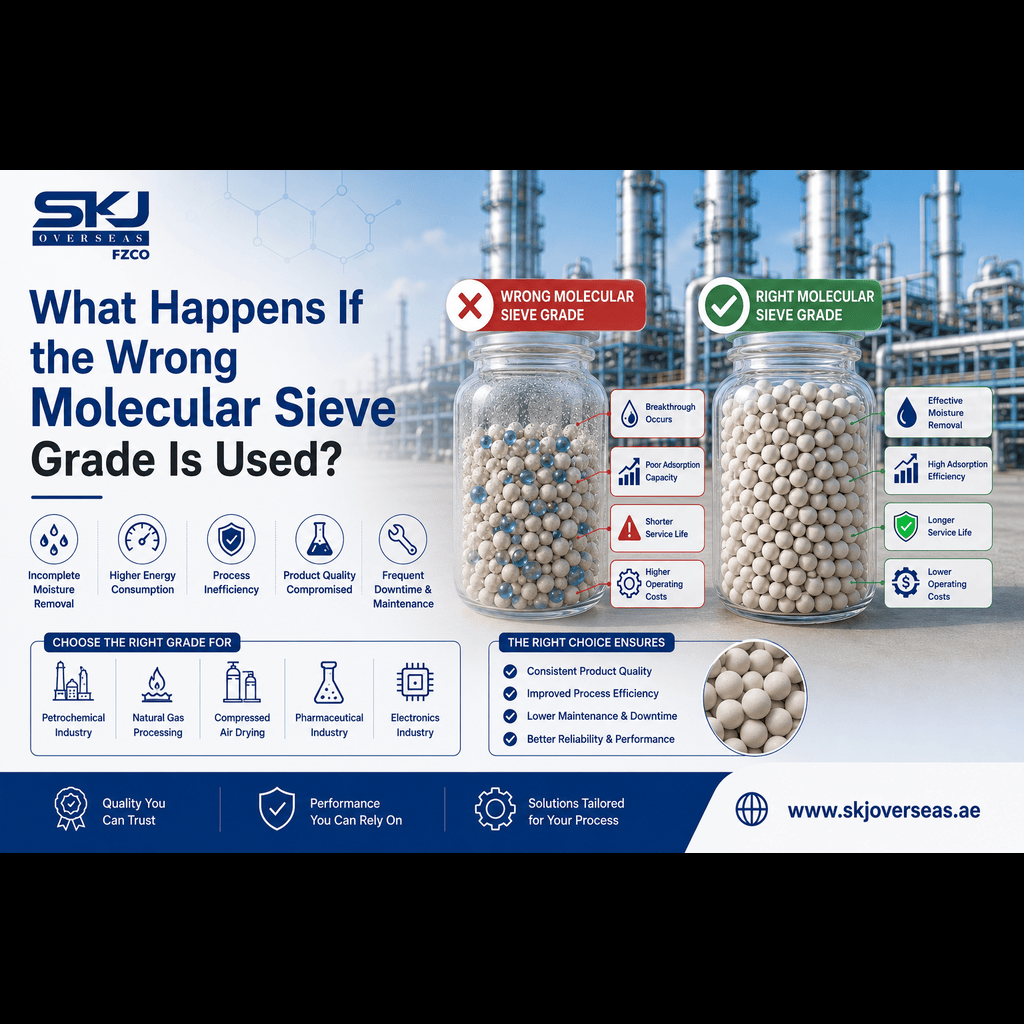
Choosing the right molecular sieve for your industrial application is a technical decision that directly affects your plant’s performance, product quality, and operating cost. The difference between using a 3A Molecular Sieve and a 13X Molecular Sieve in the wrong application can mean the difference between a reliable system and one that requires constant attention and early replacement.
The key is to start with your process requirements, identify the molecules you need to remove, and then match those requirements to the right pore size, form, and grade. Work with a Molecular Sieve supplier who understands both the material science and the industrial applications it serves.
For plants sourcing Molecular Sieve in Dubai and across the Gulf region, the choice of manufacturer and exporter matters just as much as the product itself. Consistent quality, proper packaging, and reliable technical support are what separate a good supplier from a great one.
Zeolite adsorbents have proven their value across decades of industrial use in drying, purification, and gas separation. The four main types cover virtually every industrial application you are likely to encounter. The challenge is not whether a molecular sieve exists for your process. The challenge is choosing the right one and sourcing it from a supplier you can rely on.
SJK Overseas is ready to help you do exactly that. With a full product range, documented quality, and technical expertise built over two decades of global supply, we are the partner your plant needs for industrial adsorption solutions that work every time.