Engineers choose packing for one reason: to get more gas and liquid contact from a column of a given size. This is exactly why the Ceramic Super Intalox Saddle is Used in Random Packing across acid, scrubbing, and absorption towers. Its open, curved shape gives a large wetted surface, low resistance to gas flow, and strong resistance to heat and corrosion.
SKJ Overseas is a dedicated Ceramic Manufacturers in Dubai, producing tower packing in-house. This guide explains what makes the saddle shape so effective, how it compares with other random packing, and how to choose the right size for your tower.
What Is Random Packing and Where Does the Saddle Fit?
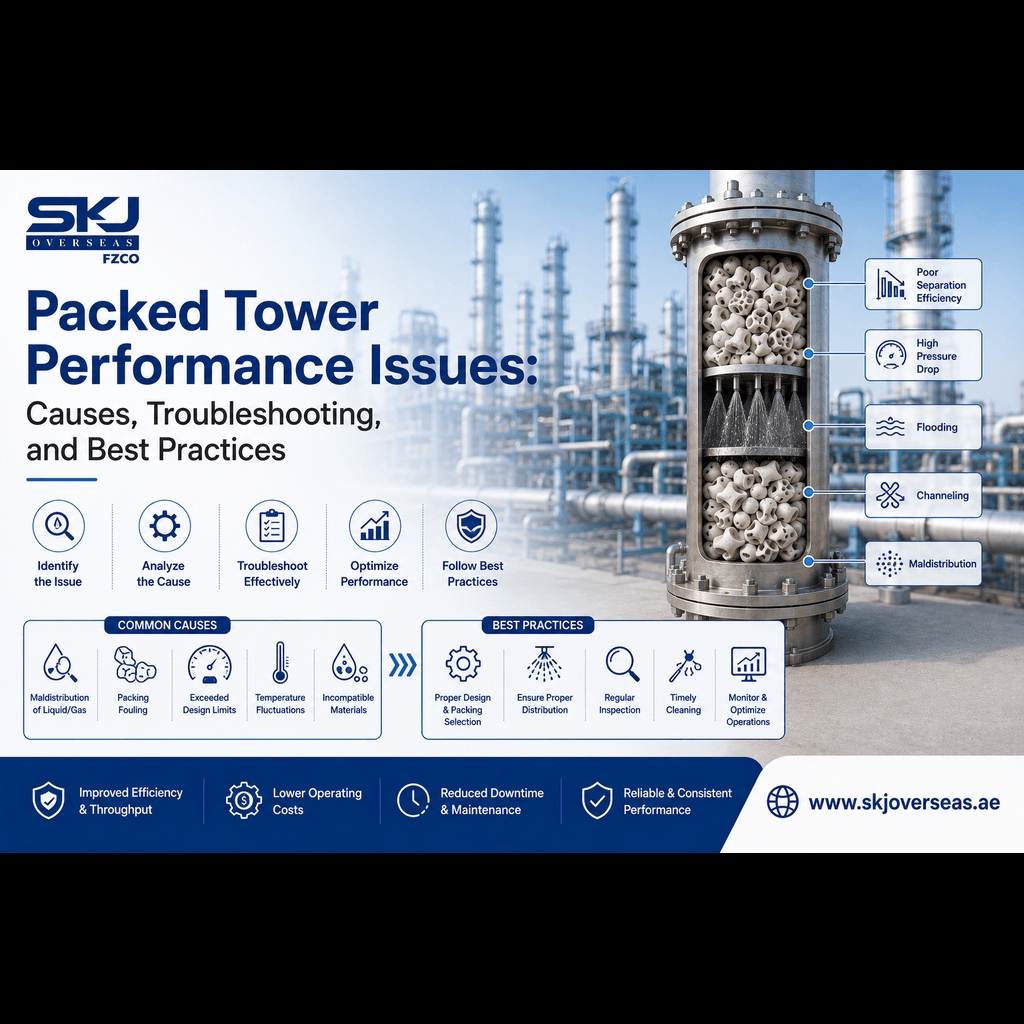
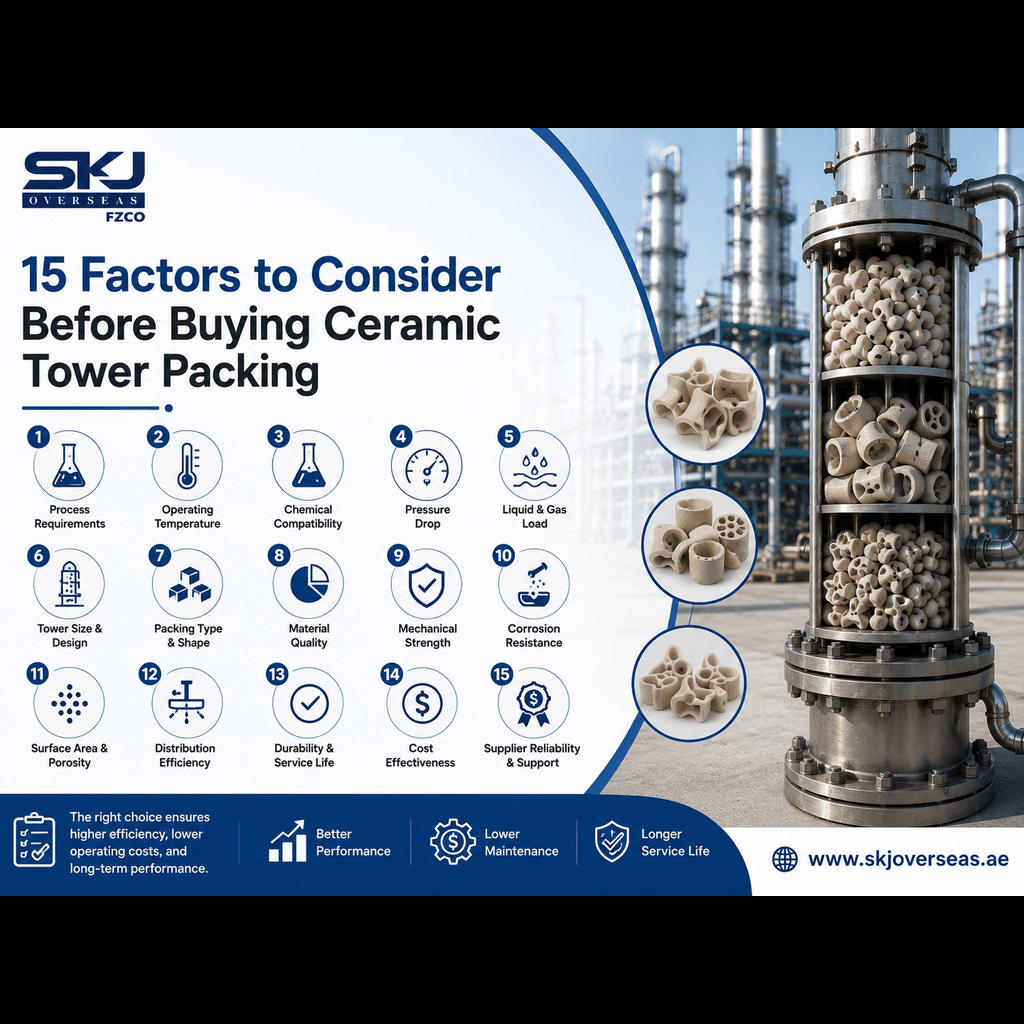
Random packing is a bed of small shapes dumped into a tower, where they settle in an irregular pattern. Gas rises through the gaps while liquid trickles down over the surfaces. The two streams meet on the packing, and mass transfer takes place there.
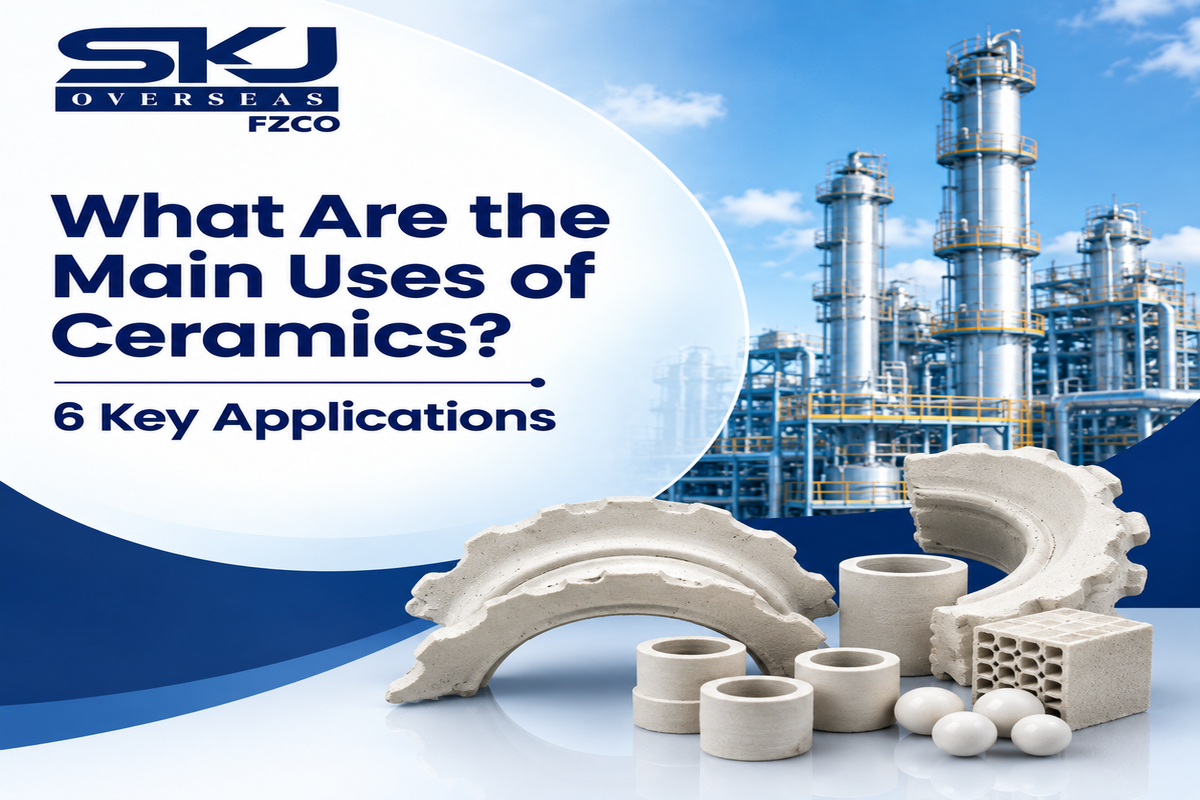
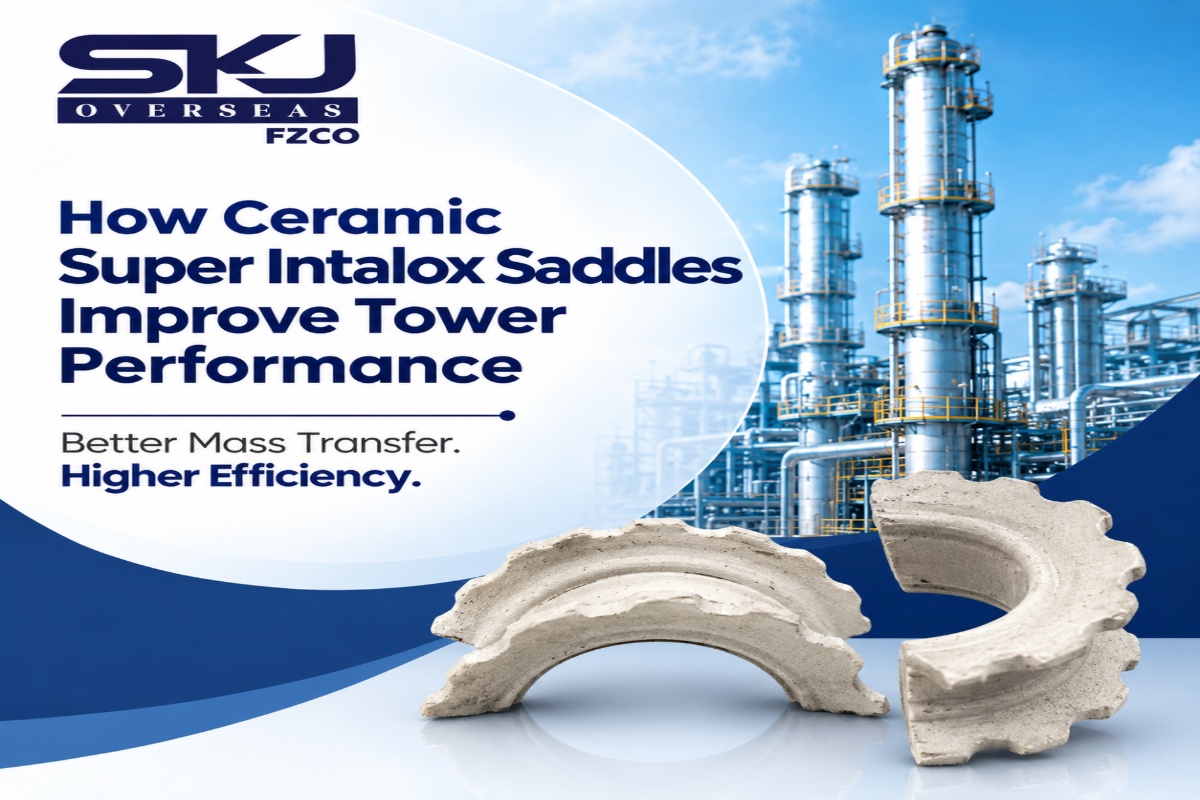
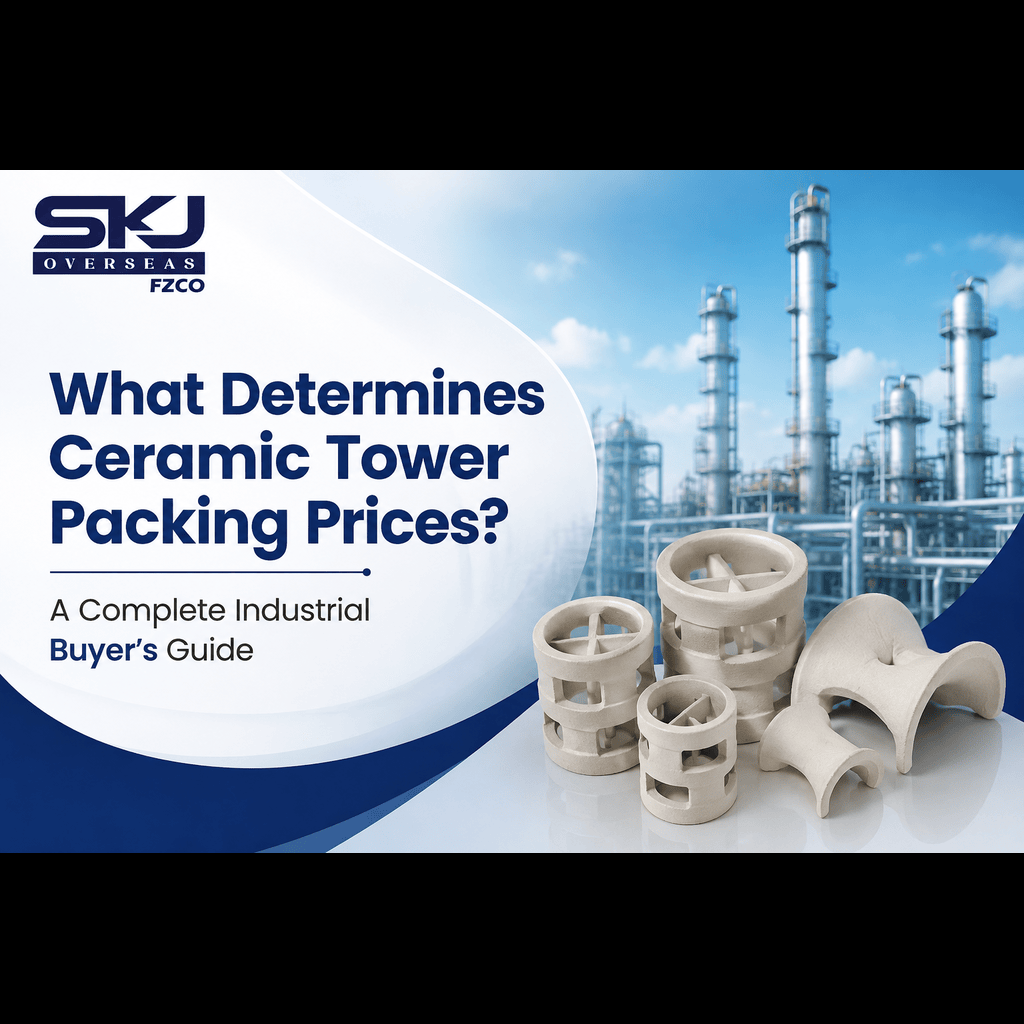
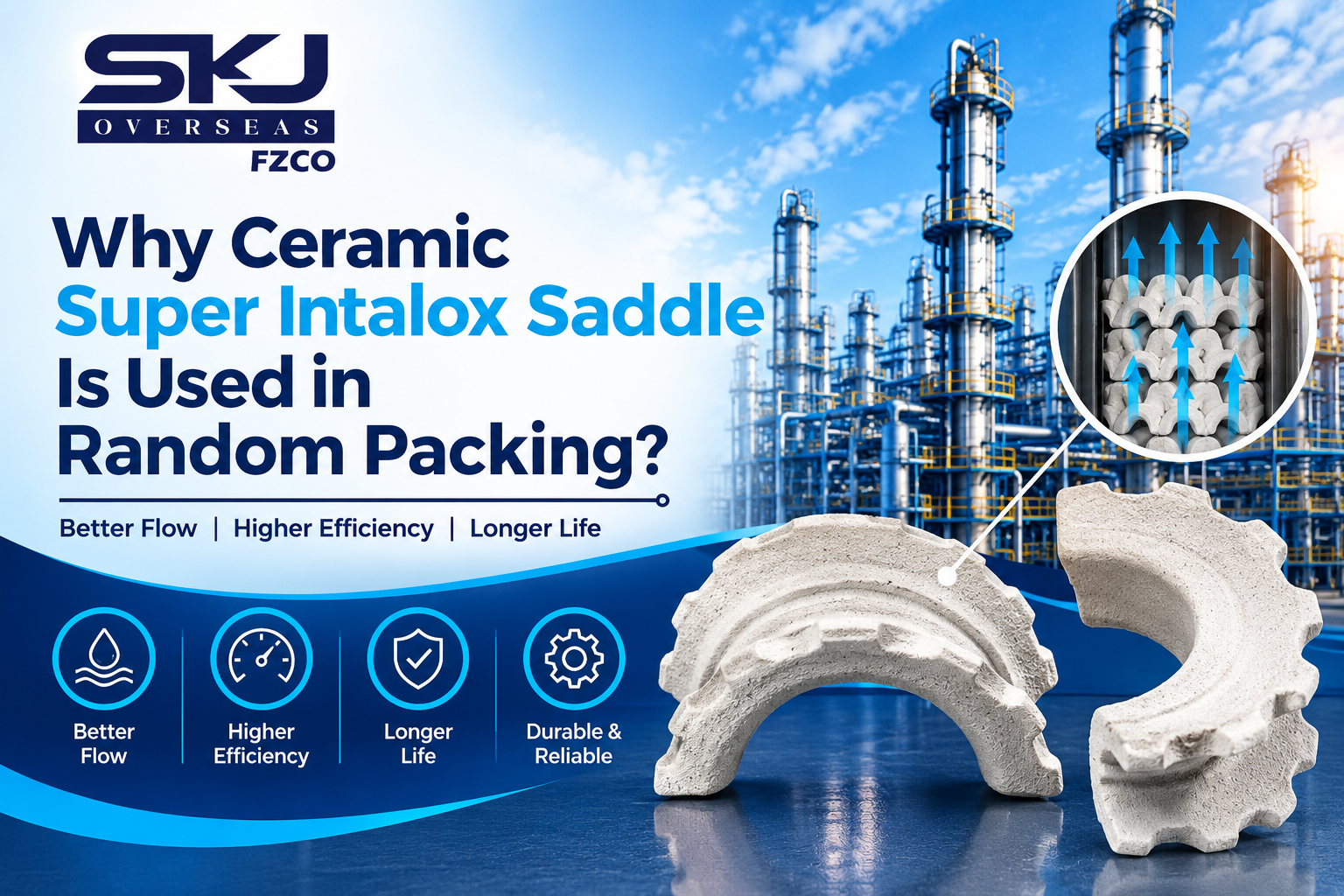
The Ceramic Super Intalox Saddle is a refined version of the classic Intalox saddle. It has a curved, saddle-like body with a scalloped, uneven edge and small openings along the rim. These details are not decoration. They shape how the bed packs and how liquid spreads.
Ceramic suits this shape well. It handles high temperatures and strong acids that would destroy metal or plastic, and it keeps its form over years of service.
Why the Ceramic Super Intalox Saddle is Used in Random Packing: 5 Core Reasons
There are five practical reasons this saddle keeps its place in process plants.
- Low pressure drop: the open curved shape lets gas rise freely, which saves blower energy
- High surface area: both sides of the saddle get wet, so more liquid contacts more gas
- Even liquid spreading: the scalloped rim breaks up liquid streams and sends them sideways
- Resistance to nesting: saddles do not stack tightly into each other, so flow paths stay open
- Chemical and heat stability: fired ceramic tolerates hot, acidic duty
Together, these points explain why the Ceramic Super Intalox Saddle is Used in Random Packing in towers where efficiency and uptime matter most.
How the Saddle Shape Improves Gas and Liquid Contact
Liquid in a packed tower tends to run toward the wall or down a few narrow paths. This is called channeling, and it wastes much of the bed. The saddle’s curved surface and uneven edge force liquid to change direction, which spreads it across the whole cross-section.
The shape also helps gas. Because saddles lie at many different angles, they leave no long, straight gaps for gas to rush through. Instead, gas weaves through the bed and meets liquid again and again.
The result is more even contact, and a more even bed does more useful work per cubic meter of packing.
Ceramic Super Intalox Saddle vs Raschig Rings and Berl Saddles
Many plants compare the Super Intalox saddle with older random packing. The table below gives a general view. Exact performance depends on size and manufacturer, so always check the datasheet.
| Feature | Raschig Ring | Berl Saddle | Ceramic Super Intalox Saddle |
| Shape | Plain cylinder | Simple saddle | Refined saddle with scalloped edge |
| Pressure drop | Higher | Moderate | Lower |
| Liquid distribution | Fair | Good | Very good |
| Tendency to nest or stack | Moderate | Higher | Low |
| Capacity | Lower | Moderate | Higher |
| Acid and heat resistance | Excellent | Excellent | Excellent |
All three are ceramic options with strong chemical resistance. The difference lies in geometry. The Super Intalox shape generally gives better flow and capacity, which is why many plants upgrade to it when they want more throughput from an existing tower.
Where Ceramic Super Intalox Saddles Are Used
The saddle suits any tower that needs corrosion resistance, heat tolerance, and steady mass transfer. Typical uses include:
- Sulphuric acid drying and absorption towers
- Hydrochloric acid and chlorine absorption systems
- Acid gas scrubbing and flue gas treatment
- Fertilizer and chemical process plants
- Gas cooling and quench sections
- Distillation of corrosive mixtures
A reliable Ceramic Super Intalox Saddle Manufacturer supports these industries with consistent sizes and documented quality, because a tower can only perform as well as the packing inside it.
Choosing the Right Saddle Size for Your Tower
Size is a trade-off between surface area and pressure drop. Ceramic Super Intalox saddles are commonly offered from about 1 inch to 3 inches, with some larger sizes available on request.
- Smaller sizes (25 to 38 mm): more surface area and better mass transfer, with higher pressure drop
- Medium sizes (50 mm): a balanced choice for most absorption and scrubbing towers
- Larger sizes (75 mm): lower pressure drop and higher capacity, with less surface area
As a rule of thumb, the packing size should be a small fraction of the tower diameter so the bed packs evenly and does not leave gaps at the wall. Share your tower diameter, gas flow, and liquid flow with your supplier, and let them confirm the size.
Installation Tips That Protect Packing Performance
Ceramic is hard but brittle, so careful loading protects both the packing and the process.
- Fill the tower partly with water before loading to cushion the fall
- Load in controlled batches instead of dropping from a great height
- Avoid walking directly on the bed without boards to spread weight
- Remove broken pieces and fines before startup
Broken pieces raise pressure drop and block liquid paths. Good loading habits keep the bed open and extend service life.
Why Manufacturing Quality Matters for Saddle Packing
Two saddles with the same size can perform very differently. Raw material purity, firing temperature, and wall thickness all affect acid resistance, strength, and how well the saddle survives thermal cycling. Under-fired saddles can crack or absorb acid, which shortens bed life.
SKJ Overseas makes its ceramic packing range directly rather than trading imported stock. Each batch is produced under controlled firing conditions and checked before dispatch. That means a trusted Ceramic Super Intalox Saddle Supplier can stand behind the numbers on its datasheet.
Sourcing Ceramic Super Intalox Saddle in Dubai
Buyers looking for Ceramic Super Intalox Saddle in Dubai benefit from direct contact with the manufacturer. Local support shortens lead times, speeds up sampling, and makes it easier to resolve questions during a shutdown or restart.
SKJ Overseas also works as a Ceramic And Tower Packing Exporter in Dubai, shipping to process plants across the Middle East, Africa, and Asia. Export documentation, packing, and delivery planning are handled together, so your purchasing team deals with one source for both product and shipment.
Frequently Asked Questions
1. Why is the Ceramic Super Intalox Saddle used in random packing?
It offers a large wetted surface, low pressure drop, and even liquid spreading. Ceramic also resists heat and acids, so the packing lasts in harsh process conditions.
2. What is the difference between an Intalox saddle and a Super Intalox saddle?
The Super Intalox saddle is an improved design with a more open, scalloped shape. This generally gives better flow, lower pressure drop, and higher capacity than the earlier Intalox form.
3. Is the Ceramic Super Intalox Saddle better than Raschig rings?
In many towers, yes. Saddles resist stacking and spread liquid more evenly, which usually means lower pressure drop and higher capacity. Raschig rings remain a simple, low-cost option for less demanding duties.
4. Can ceramic saddles handle hydrofluoric acid?
No. Ceramic resists most acids and alkalis, but hydrofluoric acid attacks it. Choose a different packing material for that service.
5. How do I choose the right saddle size?
Smaller saddles give more surface area but higher pressure drop. Larger ones give more capacity with less surface area. Match the size to your tower diameter and flow rates, and confirm it with your supplier.
Talk to SKJ Overseas About Ceramic Super Intalox Saddles
The right saddle size and quality protect your tower from poor efficiency, high pressure drop, and early packing failure. SKJ Overseas manufactures ceramic Super Intalox saddles for acid, scrubbing, and absorption service.
Contact us to request a quote, a technical datasheet, or a sample for your tower.