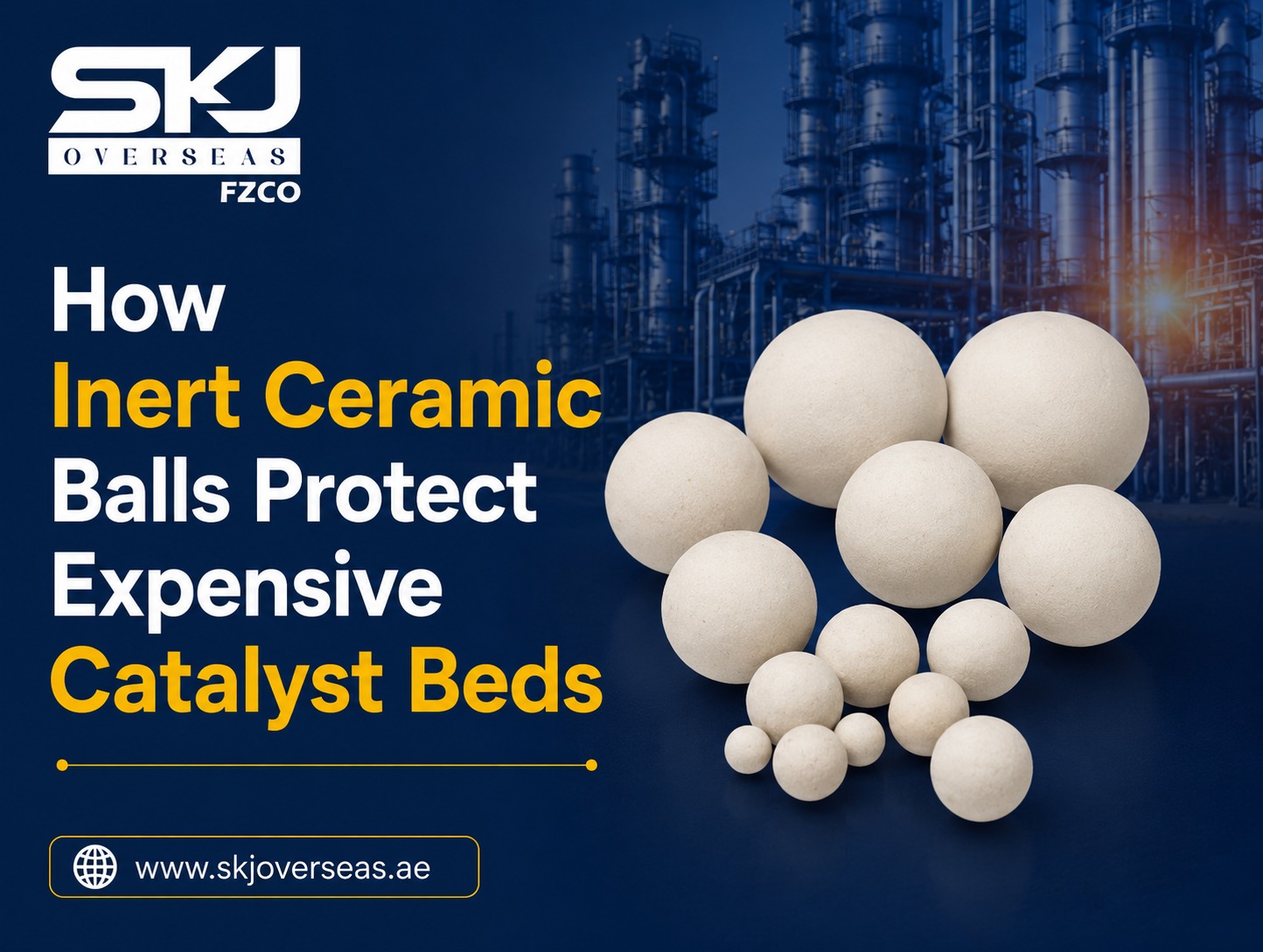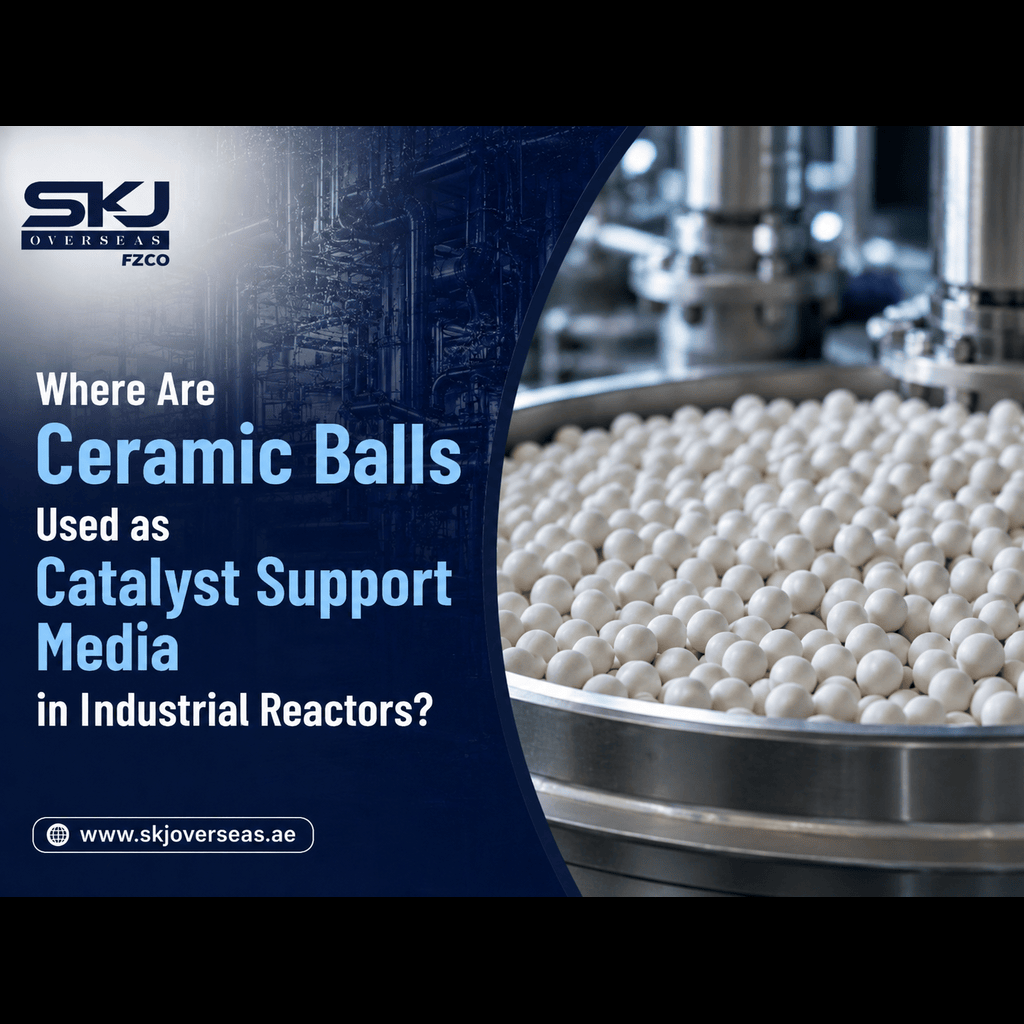
Inside almost every working reactor, there is a layer doing the unglamorous but critical job nobody talks about. It is not the catalyst getting all the credit for the reaction. It is the bed of inert ceramic balls sitting quietly above and below it, holding everything in place and making sure the catalyst actually gets to do its job properly.
Ignore this layer, and even the best catalyst in the world will underperform. Get it right, and your reactor runs longer, cleaner, and with fewer surprises. At SKJ Overseas, we get asked about this support layer often, since it rarely gets the attention it deserves until something goes wrong. So where exactly do these support balls show up, and what makes them so hard to replace with anything else?
What Catalyst Support Media Actually Does
Before we get into where ceramic balls show up, it helps to know what job they are actually doing inside the reactor. Support balls handle a few specific tasks that keep the whole bed functioning properly:
- Holding the catalyst layer in place and preventing it from shifting or settling unevenly
- Protecting the catalyst from mechanical stress caused by incoming flow
- Helping distribute gas or liquid evenly across the bed before it reaches the catalyst
- Stopping catalyst fines from migrating downstream and fouling equipment further along the line
Done right, this quietly extends catalyst life and keeps pressure drop stable for far longer than an unsupported bed ever could.
Where Ceramic Balls Show Up Across Industries
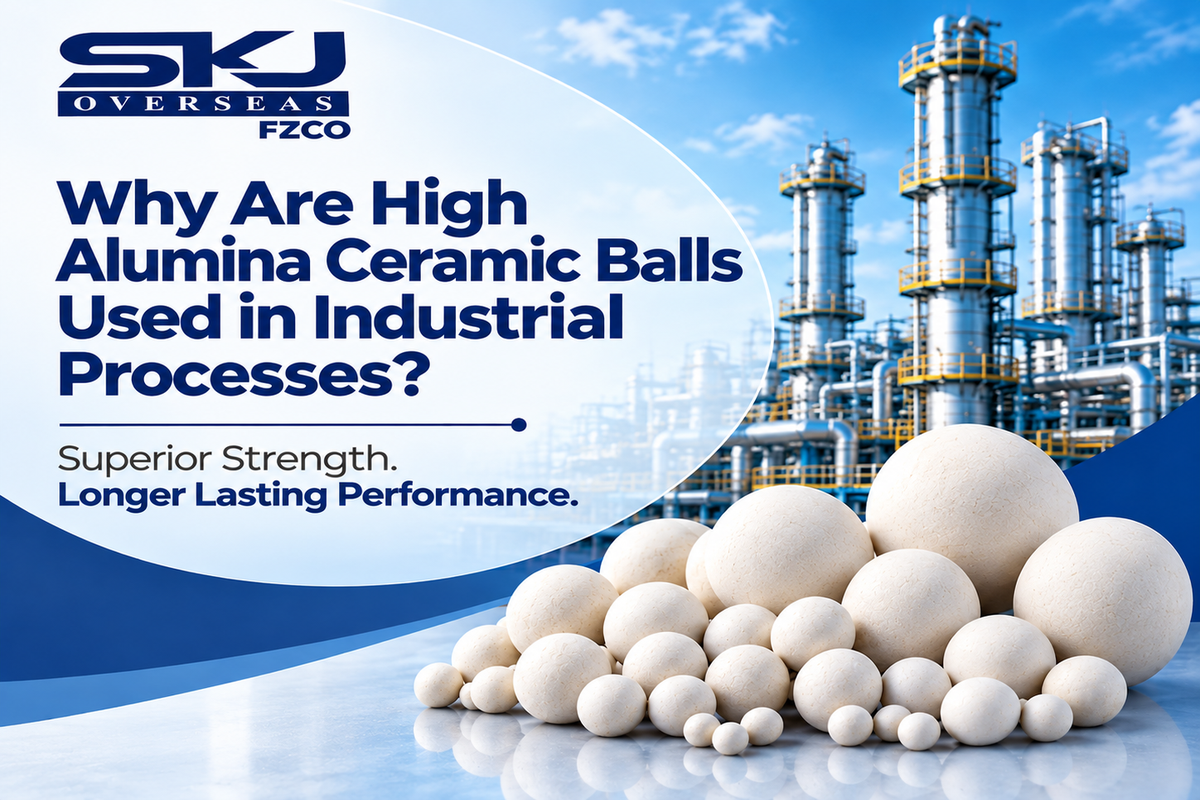
Petrochemical and refinery reactors: In hydrotreating, reforming, and hydrocracking units, ceramic balls sit at the top and bottom of the catalyst bed, absorbing the physical impact of high-velocity feed and spreading flow evenly before it reaches the active catalyst layer.
Fertilizer production: Ammonia and urea plants run catalyst beds under high temperature and pressure for long, uninterrupted stretches. The support media here needs to survive constant thermal cycling without losing shape or crushing under the weight above it.
Pharmaceutical processing: Reactors used in active ingredient synthesis need support material that stays completely neutral to the process chemistry. Chemical inertness matters just as much as mechanical strength in this setting.
Water and wastewater treatment: Ceramic balls also support filtration and biological treatment media in some water systems, where their inert surface resists scaling and keeps flow moving consistently through the bed.
Environmental and emissions control: In scrubbers and catalytic converter systems, support media holds catalytic material firmly in place while resisting the corrosive byproducts generated during emissions treatment.
Different industries, different reactions, but the same underlying requirement every time. Whatever the process, the support layer has to stay mechanically strong, chemically stable, and consistent from batch to batch.
What Makes Ceramic the Material of Choice
Plants could technically try other materials for catalyst support, but ceramic keeps winning out for a few clear reasons:
- High crush strength to bear the catalyst bed’s weight without deforming
- Chemical inertness, so the support media never interferes with the reaction
- Thermal stability across wide temperature swings without cracking
- Low porosity, which limits fluid absorption and keeps performance predictable over time
That combination is exactly why reactors across such different industries, from fertilizer to pharmaceuticals, still land on the same basic material choice.
Why the Manufacturer Behind the Balls Matters
Here is where a lot of plants get caught off guard. Two batches of ceramic balls can look identical on a spec sheet and still perform completely differently once loaded into a bed.
Working with an experienced ceramic ball manufacturer is what closes that gap. Crush strength, density, and dimensional accuracy need to stay consistent across every single delivery, not just the first one. A single batch of undersized or weaker balls can throw off an entire bed’s performance, even if the rest of the shipment checks out fine.
Why the Supplier Relationship Goes Beyond the Product
Sourcing good balls is only half the equation. The other half is who you are actually working with on the supply side.
A dependable ceramic ball supplier understands your reactor conditions, feed composition, and operating temperature well enough to recommend the right grade, not just quote the lowest price on a generic size. That kind of relationship saves plants from costly guesswork down the line.
Support Rings and Balls Rarely Work Alone
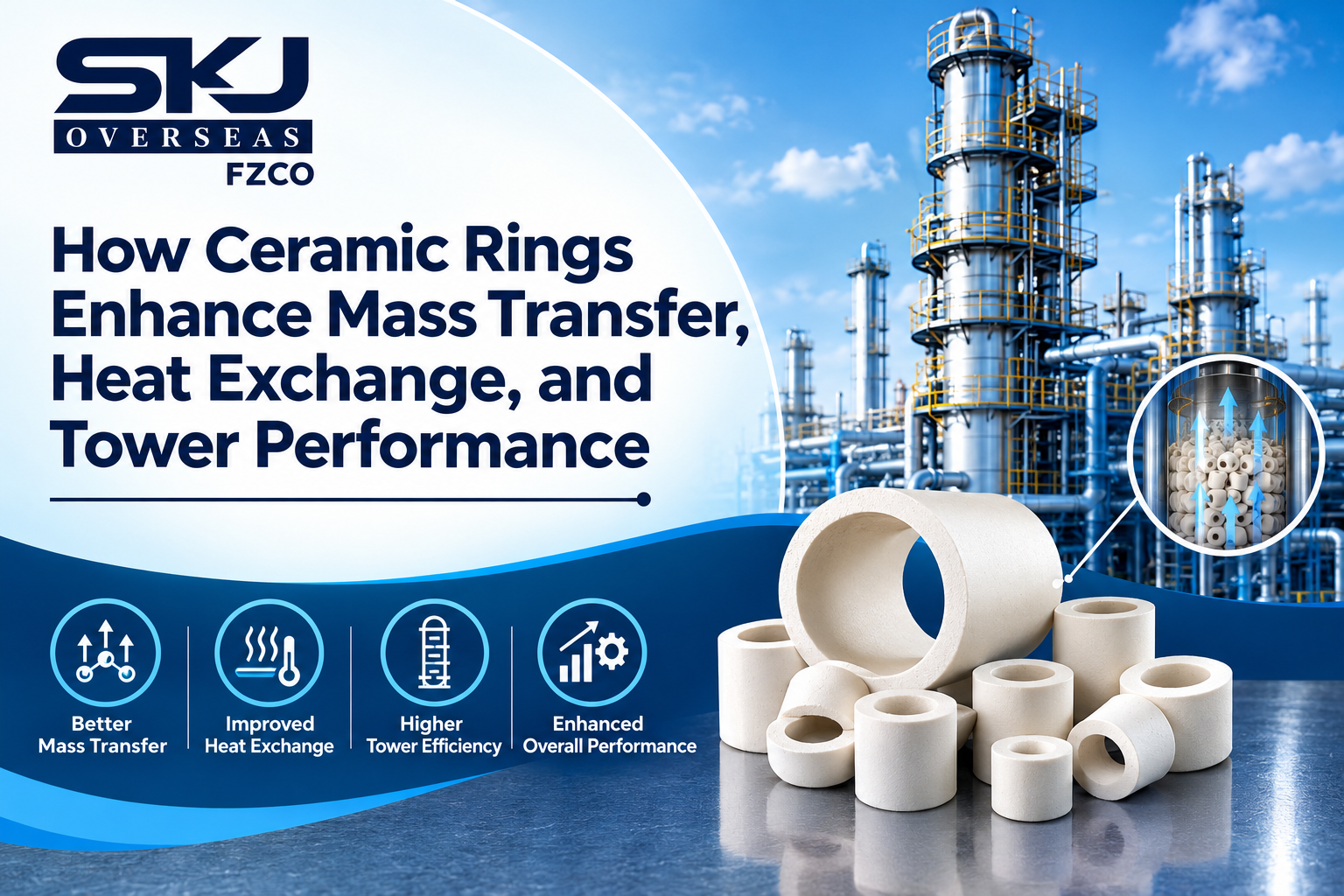
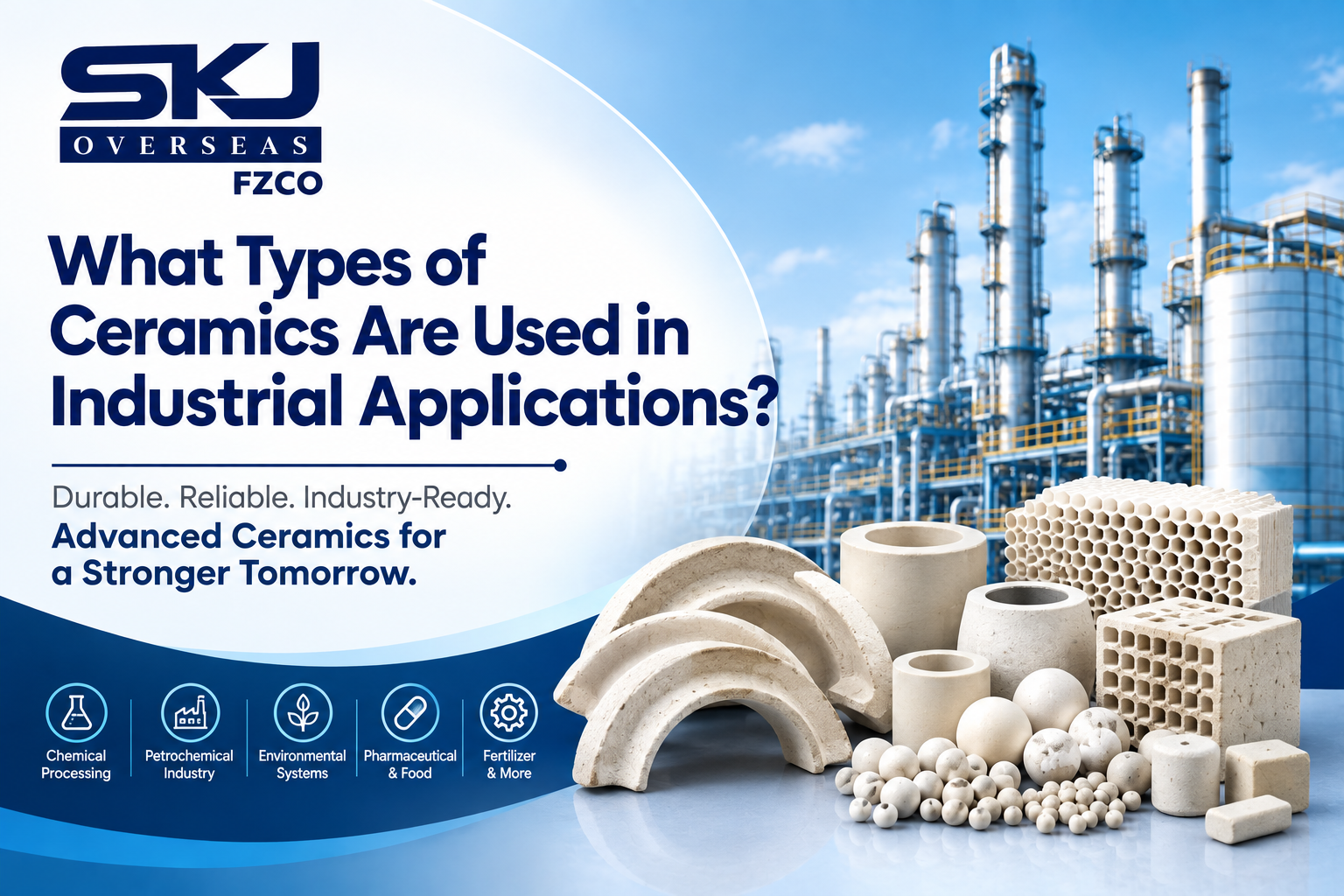
In many reactor and column designs, support balls are not the only structural piece carrying weight. Ceramic support rings usually sit at the very base of the bed, taking on the full structural load of everything stacked above, including the ball layers and the catalyst itself.
Working with a reliable ceramic support rings manufacturer ensures that the foundation can handle continuous load without cracking or settling unevenly over time, which in turn protects the ball layers and catalyst resting above it. Our ceramic ring range is built for exactly this kind of structural demand, engineered to hold up under years of continuous operation.
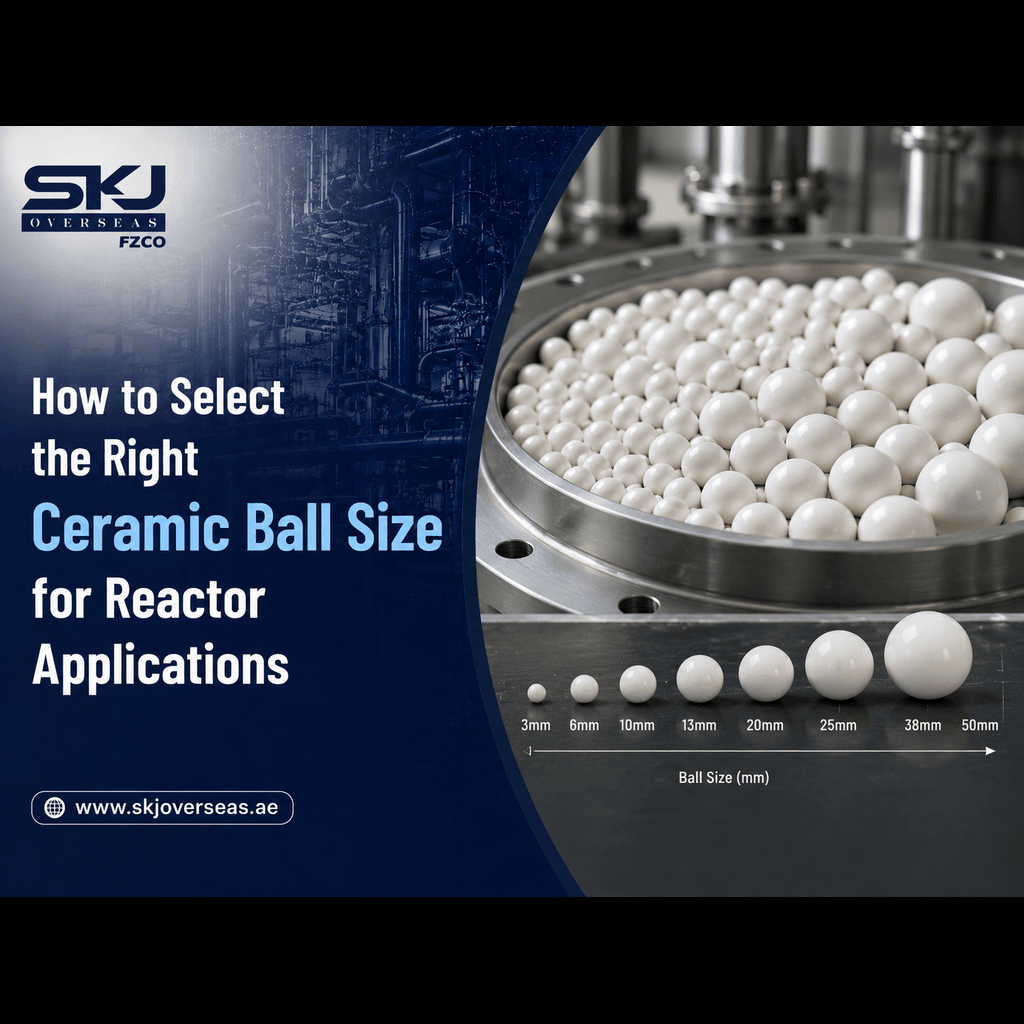
At SKJ Overseas, we supply Inert Ceramic Balls and Ceramic Support Rings manufactured to consistent quality standards for reliable catalyst support across a wide range of reactor applications. If you’re still planning your reactor support bed, read our guide on How to Select the Right Ceramic Ball Size for Reactor Applications to better understand the key factors involved in choosing the appropriate support media.
Frequently Asked Question’s
1. Which industries use ceramic balls as catalyst support media?
Ceramic balls are widely used in petrochemical, fertilizer, refining, chemical, natural gas, hydrogen, and environmental processing industries where reactors require durable catalyst support under demanding operating conditions.
2. Why are ceramic balls used as catalyst support media in reactors?
Ceramic balls provide strong mechanical support for catalyst beds while promoting uniform flow distribution. They also resist high temperatures, corrosion, and chemical attack, making them suitable for long-term reactor operation.
3. How do ceramic balls improve reactor performance?
Ceramic balls help distribute process fluids evenly, protect the support grid, reduce catalyst movement, and maintain stable operating conditions, contributing to efficient reactor performance.
4. What properties make ceramic balls suitable for catalyst support applications?
High compressive strength, excellent thermal stability, low water absorption, and outstanding chemical resistance allow ceramic balls to perform reliably in harsh industrial reactor environments.
5. Are ceramic balls used with other reactor support media?
Yes. Ceramic balls are often used together with ceramic support rings and other support media to create a stable support bed that improves load distribution and protects the catalyst layer.
6. How long do ceramic catalyst support balls typically last?
High-quality ceramic balls can remain in service for multiple catalyst replacement cycles when properly selected and operated within the reactor’s design conditions.
Final Thoughts
Ceramic balls quietly do some of the most important structural work inside a reactor, protecting catalyst, distributing flow, and keeping pressure drop predictable across industries as different as fertilizer production and pharmaceutical synthesis. Getting the material, size, and supplier right at the start saves plants from performance issues that are far more disruptive to fix later.
If you are designing or upgrading a catalyst support system and want guidance on the right combination of balls and rings for your reactor, contact our team at SKJ Overseas. We will help you match the right support media to your exact process conditions.