Picking the right ceramic honeycomb manufacturer is one of the most important steps when setting up or upgrading an emission control system. The wrong supplier can lead to poor filtration, short product life, and costly downtime. If you are looking for a ceramic honeycomb structure in Dubai or planning to source globally, this guide will walk you through everything you need to know before making your decision.
Ceramic honeycomb structures are the core component inside catalytic converters and exhaust gas treatment systems. They filter harmful gases, trap pollutants, and support the catalyst that breaks down toxic emissions. Choosing the right manufacturer ensures your system works at full capacity from day one.
What Is a Ceramic Honeycomb Structure and How Does It Work?
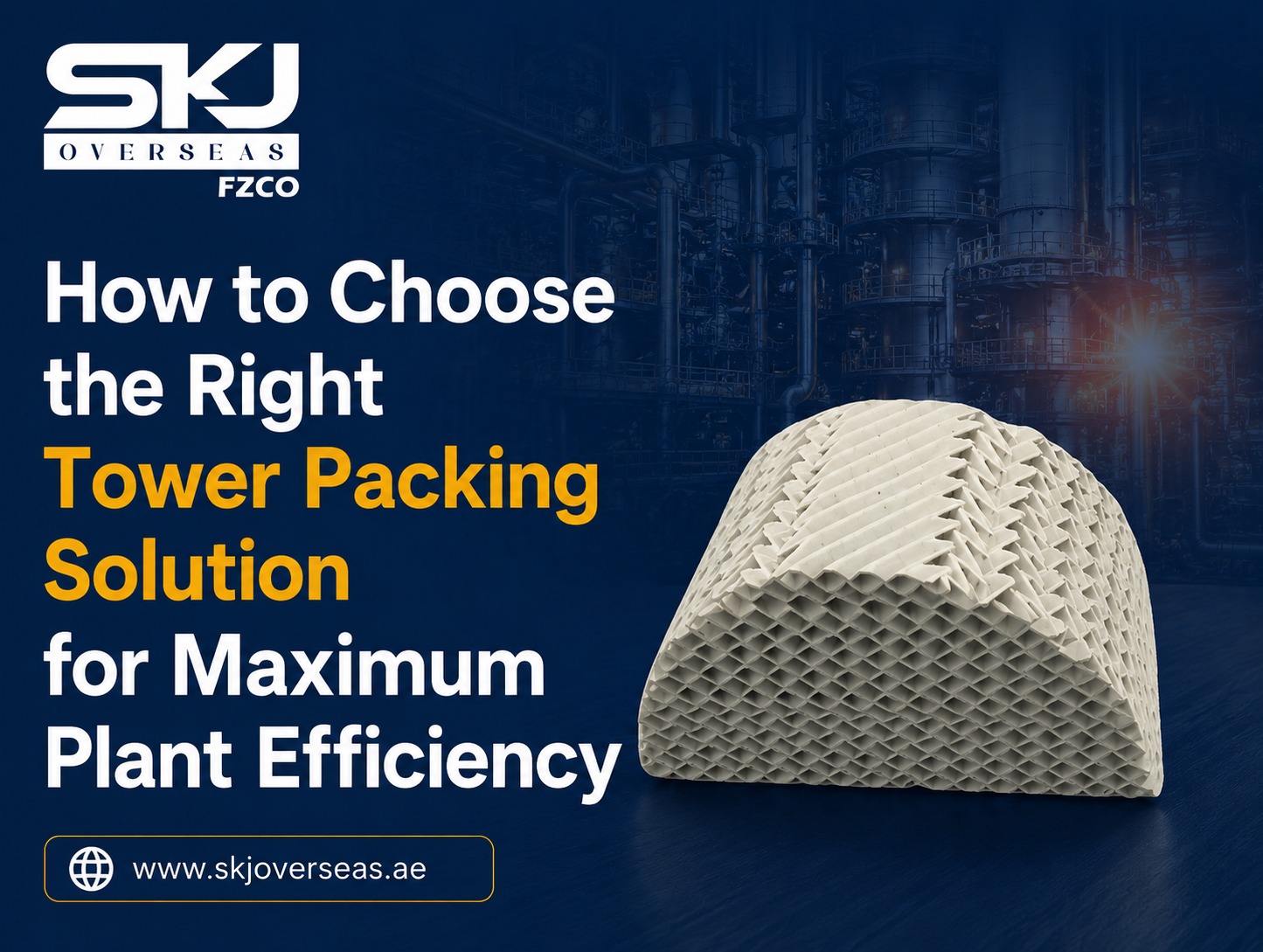
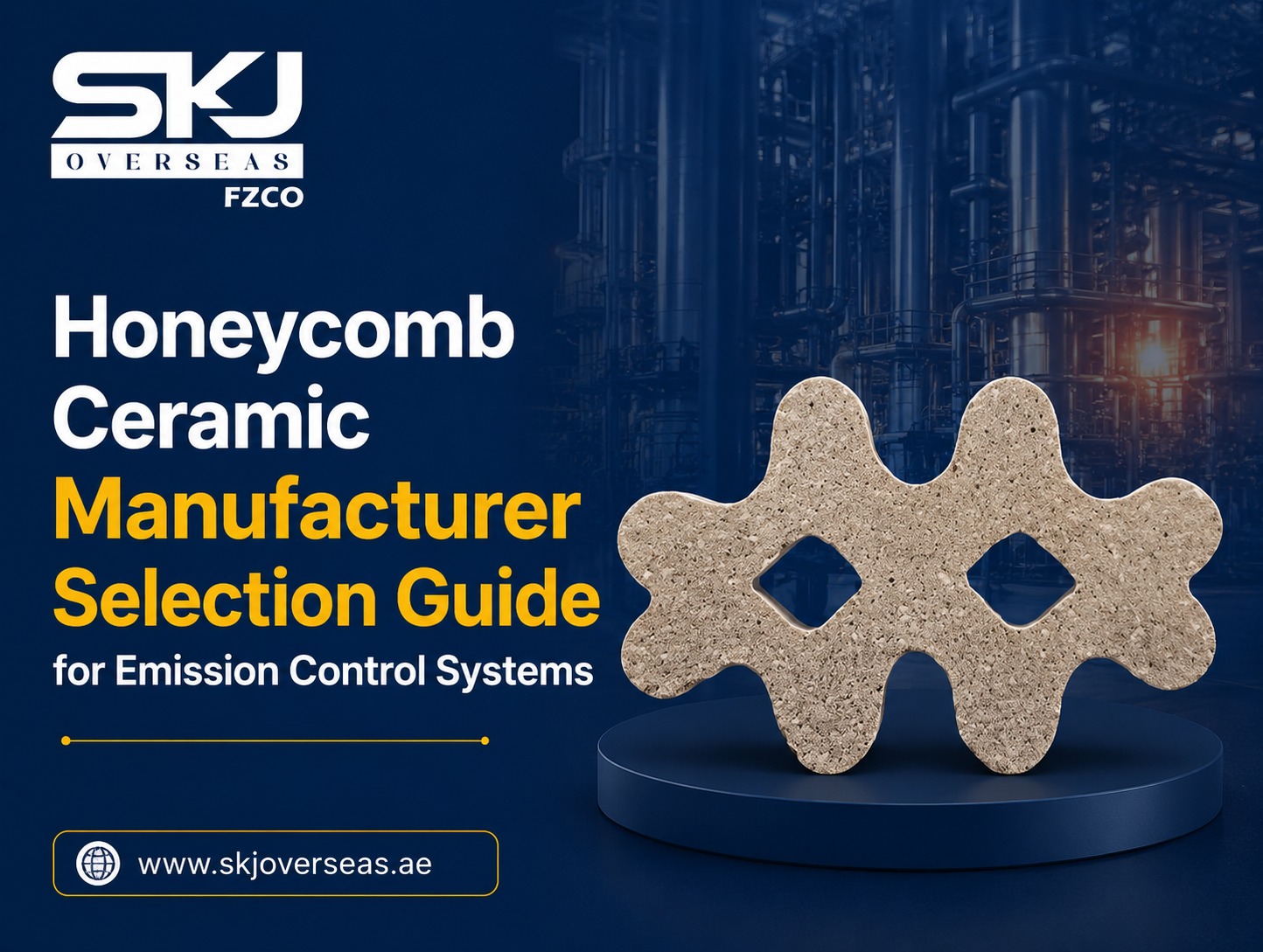
A ceramic honeycomb structure is a block of ceramic material with hundreds of tiny parallel channels running through it. These channels create a massive surface area inside a compact space.
When exhaust gases pass through these channels, the pollutants come into contact with a catalyst coating on the walls. The catalyst triggers a chemical reaction that converts harmful gases like carbon monoxide, nitrogen oxides, and unburned hydrocarbons into safer compounds.
This makes the ceramic substrate solution the heart of any exhaust gas treatment system. Without a high-quality honeycomb block, even the best catalyst will not perform as expected.
Why Choosing the Right Ceramic Honeycomb Manufacturer Matters
Not all manufacturers produce the same quality. The difference between a reliable and an unreliable supplier shows up in real plant conditions, sometimes after months of operation.
Here is why manufacturer selection is so critical:
- Dimensional accuracy affects how well the honeycomb fits into your system housing
- Wall thickness and cell density directly impact back pressure and filtration performance
- Material purity determines heat resistance and chemical durability
- Consistency between batches matters for long-term system reliability
- Certifications and testing data prove the product meets emission standards
A trusted ceramic honeycomb structure manufacturer provides documentation, technical support, and guaranteed specifications. A low-cost supplier with no quality control creates expensive problems later.
Key Factors to Consider When Selecting a Ceramic Honeycomb Supplier
Use these factors as your checklist when evaluating any ceramic honeycomb supplier:
1. Manufacturing Capability Check if the manufacturer has in-house production. Suppliers who outsource manufacturing often have less control over quality. A proper ceramic honeycomb manufacturer should have its own kilns, extrusion equipment, and testing facilities.
2. Cell Density and Wall Thickness Options Cell density is measured in cells per square inch (CPSI). Common options are 100, 200, 300, and 400 CPSI. Higher cell density means more surface area and better catalytic performance. Ask your supplier if they offer multiple configurations to match your specific application.
3. Material Composition The most widely used materials are cordierite and mullite. Cordierite is excellent for automotive and light industrial applications because it handles thermal cycling well. Mullite is better for very high-temperature industrial processes. A knowledgeable ceramic honeycomb structure supplier will help you match the material to your operating conditions.
4. Temperature and Chemical Resistance Industrial emission control systems often operate at very high temperatures. The packing must handle sudden temperature changes without cracking. Always ask for the maximum operating temperature and thermal shock resistance data.
5. Customization Support Your system may need a non-standard size, shape, or channel configuration. A flexible emission control ceramic honeycomb manufacturer can produce custom blocks to your exact specifications.
6. Export and Logistics Capability If you are sourcing from outside your country, the supplier must handle international shipping, packaging for fragile ceramic goods, and all required export documentation. This is especially important if you need ceramic honeycomb exporters who ship regularly to your region.
Ceramic Honeycomb Structure: A Quick Comparison of Material Types
| Feature | Cordierite | Mullite | Silicon Carbide |
| Max Temperature | Up to 1300°C | Up to 1700°C | Up to 1600°C |
| Thermal Shock Resistance | Excellent | Good | Very Good |
| Chemical Resistance | Good | Very Good | Excellent |
| Common Applications | Automotive, light industry | Heavy industry, kilns | Diesel filtration |
| Cost | Low to moderate | Moderate | Higher |
| Weight | Light | Moderate | Heavier |
| Availability | Widely available | Common | Selective |
This comparison helps you quickly narrow down the right material before approaching a supplier. Share your operating temperature and chemical exposure details with your ceramic honeycomb structure manufacturer to get the best recommendation.
How to Evaluate a Ceramic Honeycomb Manufacturer Before Buying
Before placing an order, go through this simple evaluation process:
Ask for product samples. Any serious manufacturer will provide samples for testing. Test the sample in your actual operating conditions before committing to a bulk order.
Request quality certificates. Look for ISO 9001 or equivalent quality management certification. Ask for material test reports, dimensional inspection data, and third-party lab results if available.
Check their export experience. If you need a ceramic honeycomb structure in Dubai or any international destination, confirm that the supplier has handled similar export orders before. They should know how to package fragile ceramic products for long-distance shipping.
Review their technical team. A good manufacturer has engineers who understand emission reduction technology and industrial air pollution control. They should be able to advise you on cell density, coating compatibility, and system integration, not just sell you a product.
Understand their lead times. Emission control upgrades often happen under regulatory pressure. Confirm realistic lead times and whether the manufacturer can meet urgent orders.
Red Flags to Watch for When Choosing Ceramic Honeycomb Suppliers
Be cautious if a supplier does any of the following:
- Cannot provide batch-specific test certificates
- Offers pricing that seems too far below the market average
- Has no technical team and only handles sales inquiries
- Cannot show you their manufacturing facility or process
- Has no experience exporting industrial ceramic honeycomb blocks internationally
- Avoids answering questions about material composition or temperature ratings
These are signs of a supplier who may not be able to deliver consistent quality at scale.
Applications Where Ceramic Honeycomb Structures Are Used
Ceramic honeycomb structures are used across a wide range of industries:
- Automotive industry – inside catalytic converters to reduce vehicle exhaust emissions
- Power generation plants – to filter exhaust from gas turbines and generators
- Chemical processing – as catalyst support media in reactors and thermal oxidizers
- Industrial furnaces – as heat storage and regeneration media for energy efficiency
- Air pollution control systems – in regenerative thermal oxidizers (RTOs) for VOC destruction
- Cement and steel plants – for high-temperature exhaust filtration and industrial air pollution control
Each application has different temperature, pressure, and chemical requirements. The best honeycomb catalyst support media for one application may not suit another.
Why SJK Overseas Is a Trusted Ceramic Honeycomb Structure Manufacturer
SJK Overseas has been manufacturing and exporting ceramic honeycomb structures for industrial emission control systems for over two decades. Here is what sets us apart:
- In-house manufacturing with full quality control at every production stage
- Multiple material options including cordierite, mullite, and alumina-based ceramics
- Custom sizes, cell densities, and shapes available on request
- ISO-certified production process with full material documentation
- Established ceramic honeycomb exporter with proven shipping experience to Dubai, the Middle East, Southeast Asia, and Europe
- Dedicated technical team for product selection, sizing, and application support
As a leading ceramic honeycomb structure exporter, we work directly with plant engineers, procurement teams, and system integrators to find the right solution for each project.
Case Study: Upgrading an Emission Control System in a Gulf Region Industrial Plant
Plant: A large industrial manufacturing facility in the Gulf region Challenge: The plant was failing local emission compliance checks due to high NOx and carbon monoxide output. Their existing catalytic converter components were underperforming because the honeycomb blocks inside had degraded after two years of operation. Solution: The facility contacted SJK Overseas for a full audit of their existing setup. Our technical team reviewed the column dimensions, operating temperature range, and gas composition data. We recommended a switch from a standard cordierite honeycomb to a high-density mullite ceramic honeycomb structure with 300 CPSI and custom-cut dimensions to fit the existing housing.
Results after 90 days of operation:
- NOx emissions reduced by 44%
- Carbon monoxide output fell below the regulatory threshold
- System back pressure stayed within acceptable limits
- No cracking or thermal damage after three thermal shock cycles
- The plant passed its next emissions inspection with a clean record
This case highlights how the right emission control ceramic honeycomb selection, combined with proper technical guidance, delivers measurable real-world results.
Frequently Asked Questions Ceramic Honeycomb Structure
Q1. What is a ceramic honeycomb structure used for in emission control?
A ceramic honeycomb structure is used as a substrate inside catalytic converters and thermal oxidizers. It provides a large internal surface area where catalyst coatings can react with exhaust gases, converting harmful pollutants like NOx, CO, and hydrocarbons into less harmful compounds before release into the atmosphere.
Q2. How do I choose the right cell density for my emission control system? Cell density depends on your gas flow rate, required surface area, and acceptable pressure drop. Higher cell density like 400 CPSI offers more surface area for better conversion but increases back pressure. Lower density like 100 CPSI handles higher flow rates. A qualified ceramic honeycomb structure supplier can advise based on your actual system specs.
Q3. What is the difference between cordierite and mullite ceramic honeycomb?
Cordierite handles thermal cycling well and is widely used in automotive and light industrial systems. Mullite performs better at very high temperatures and in more chemically aggressive environments. Your choice depends on your maximum operating temperature and the chemical composition of the gases passing through the system.
Q4. Can ceramic honeycomb structures be made in custom sizes?
Yes. A capable ceramic honeycomb structure manufacturer like SJK Overseas produces custom blocks in non-standard sizes, shapes, and channel configurations. Custom sizing is important when retrofitting existing housings or building new systems with specific dimensional requirements.
Q5. How long does a ceramic honeycomb structure last in industrial use?
With correct installation and compatible operating conditions, a quality industrial ceramic honeycomb block can last 5 to 10 years or more. Factors that shorten lifespan include thermal shock from rapid temperature changes, chemical contamination, and physical damage from improper handling or installation.
Q6. Is ceramic honeycomb structure available for export to Dubai and the Middle East?
Yes. SJK Overseas is an experienced ceramic honeycomb exporter with a strong track record supplying ceramic honeycomb structure in Dubai, UAE, Saudi Arabia, Qatar, and across the broader Middle East region. We handle all export documentation, packaging, and logistics for fragile ceramic goods.
Q7. What certifications should a ceramic honeycomb manufacturer have?
Look for ISO 9001 certification as a baseline for quality management. Ask for material composition reports, dimensional inspection data, and thermal resistance test results. A trustworthy ceramic honeycomb supplier will provide these documents without hesitation and support any third-party testing you require.
Q8. How do ceramic honeycomb structures support industrial air pollution control goals?
They act as the physical platform for catalytic reactions that break down toxic exhaust gases. In regenerative thermal oxidizers and selective catalytic reduction systems, ceramic honeycomb structures enable plants to meet emission standards for NOx, VOCs, and particulate matter, supporting compliance with local and international industrial air pollution control regulations.
Conclusion
Selecting the right ceramic honeycomb manufacturer is not just a purchasing decision. It is a technical decision that directly affects your plant’s compliance, efficiency, and operating cost.
The ceramic honeycomb structure you choose must match your exact process conditions, including temperature range, gas composition, flow rate, and system geometry. A supplier who understands all of these factors is worth far more than one who simply offers the lowest price.
As environmental regulations tighten across industries, the demand for high-quality ceramic substrate solutions and exhaust gas treatment systems is growing fast. Plants in the Gulf region, including those sourcing ceramic honeycomb structures in Dubai, are under increasing pressure to meet stricter emission standards.
SJK Overseas helps you navigate this with confidence. We combine manufacturing expertise, material science knowledge, and global export capability to deliver the right industrial ceramic honeycomb blocks for your specific application. Whether you need a standard product or a fully custom solution, our team is ready to support you from selection to delivery.
Do not leave your emission compliance to chance. Partner with a manufacturer who has the experience, the certifications, and the technical depth to back every product they ship.