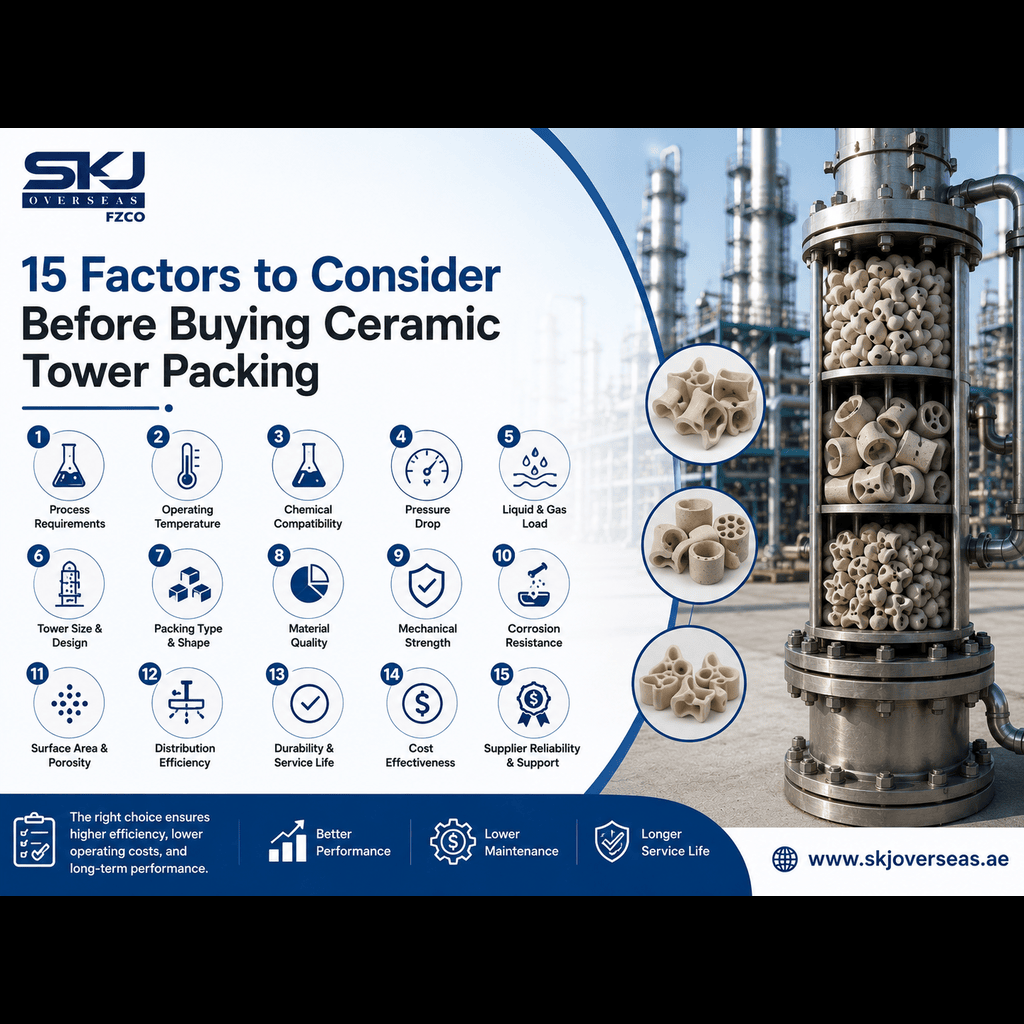
Buying ceramic tower packing is not a decision you want to rush. Get the specification wrong, and you end up with poor separation efficiency, faster wear, or a tower that needs attention far sooner than it should. Get it right, and the packing quietly does its job for years without drawing any attention at all.
At SKJ Overseas, we have walked plant engineers through this decision often enough to know exactly where things usually go wrong, whether it is a mismatch in mechanical strength or an oversight in supplier consistency. Here are the factors worth checking carefully before you place an order.
Getting the Operating Conditions Right From the Start
1. Process Temperature Range
Check the packing against your tower’s real operating temperature, including startup spikes and upset conditions, not just the average day-to-day reading.
2. Chemical Compatibility
Test resistance against everything the packing will touch, including trace impurities riding along with the main process stream.
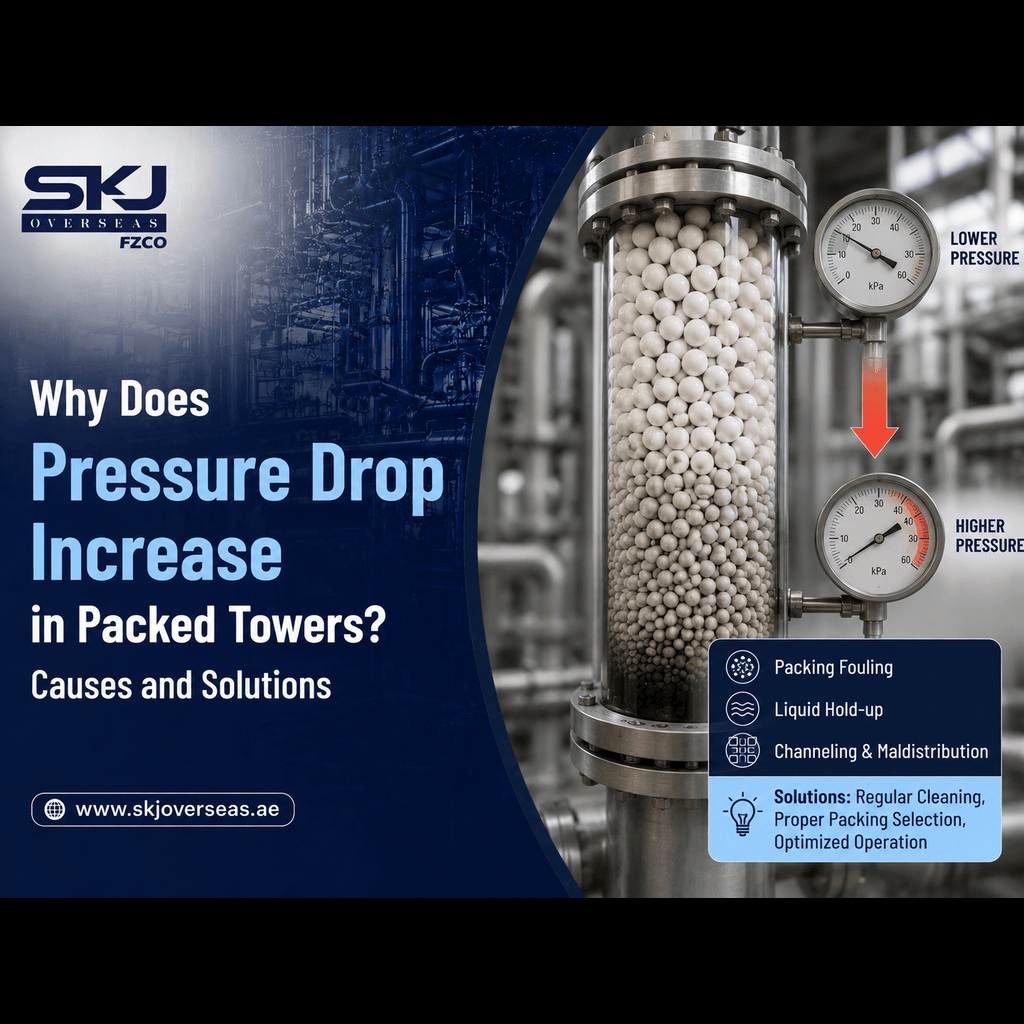
3. Pressure Drop Requirements
A packing shape that runs too tight quietly drives up energy costs and puts strain on everything connected to the tower.
Matching Packing Size to Your Tower’s Physical Design
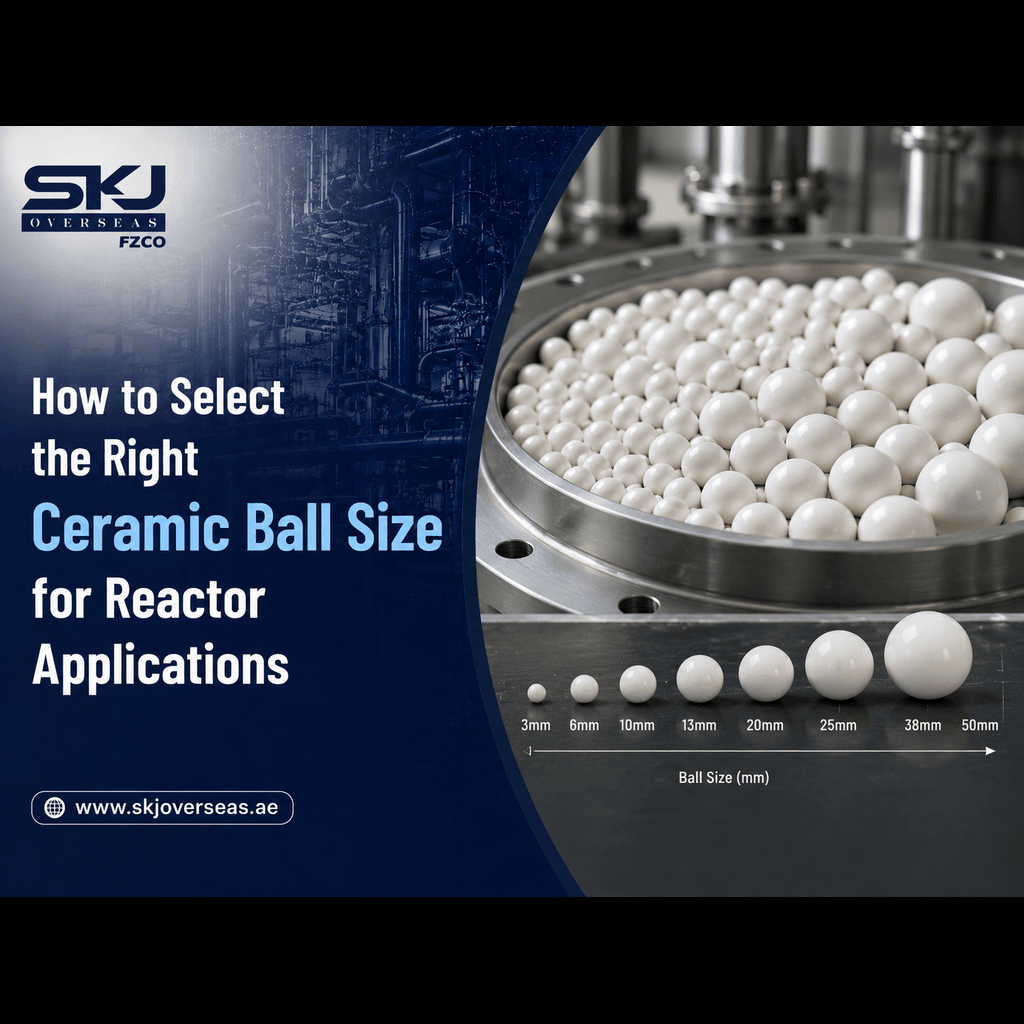
4. Tower Diameter and Bed Depth
Larger diameters and deeper beds often need a different packing size entirely to keep the bed stable and flow distributed evenly.
5. Scalability From Pilot to Full Tower
A packing choice that performs well in a smaller test setup does not always translate cleanly once scaled up to your actual column dimensions.
Checking Mechanical Strength Where It Matters Most
6. Mechanical Strength and Crush Resistance
The packing at the bottom of a deep bed carries the full weight of everything stacked above it, so crush strength needs to match your actual bed height.
7. Support Structure at the Base of the Bed
Working with an experienced ceramic support rings manufacturer matters here, since a weak or poorly made support ring can shift or crack under sustained load, throwing off the entire column above it.
Balancing Efficiency Against Practical Flow Needs
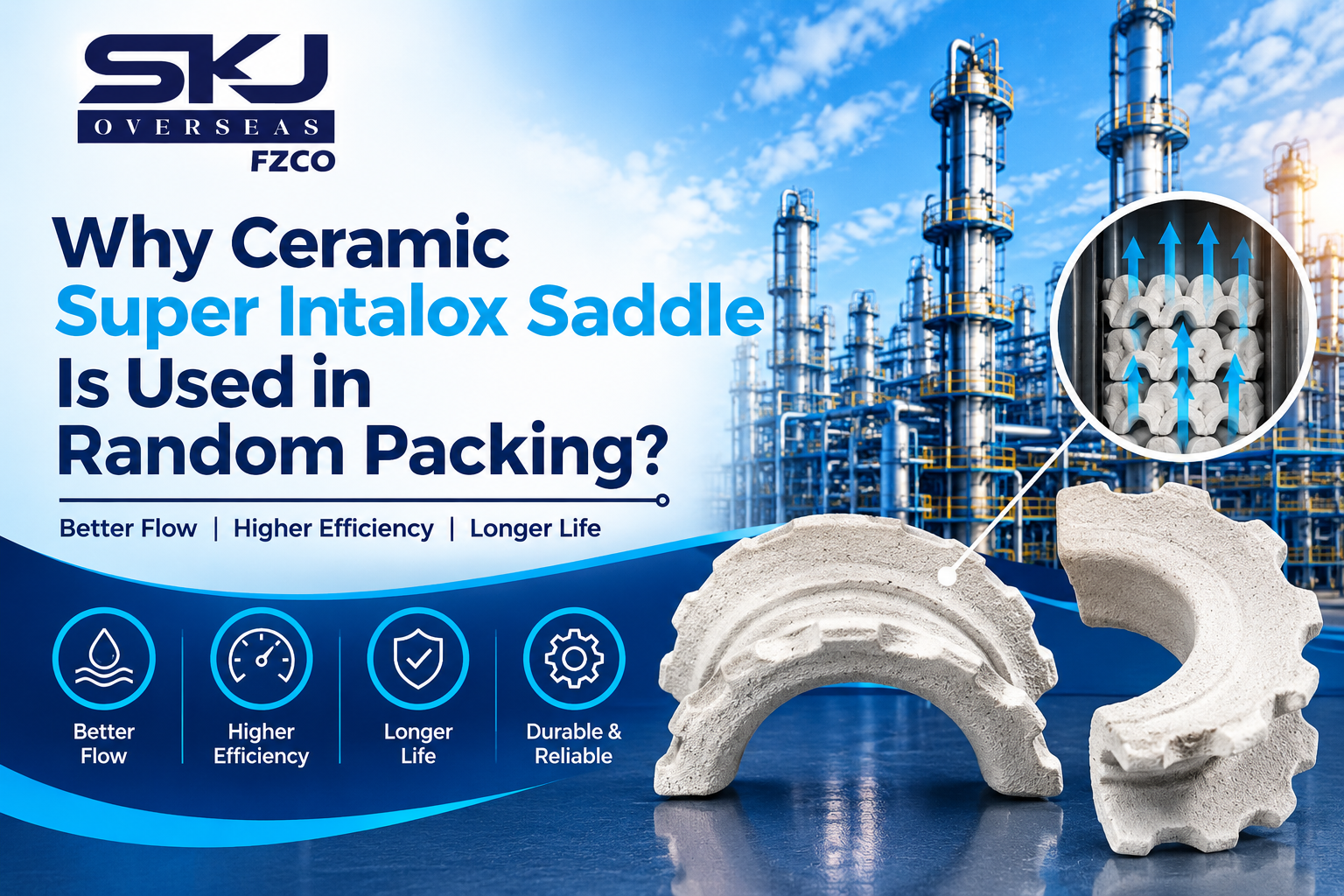
8. Surface Area and Mass Transfer Efficiency
Higher surface area generally improves separation, but it comes with a pressure drop trade-off worth weighing against your actual process goals.
9. Flow Rate and Capacity Needs
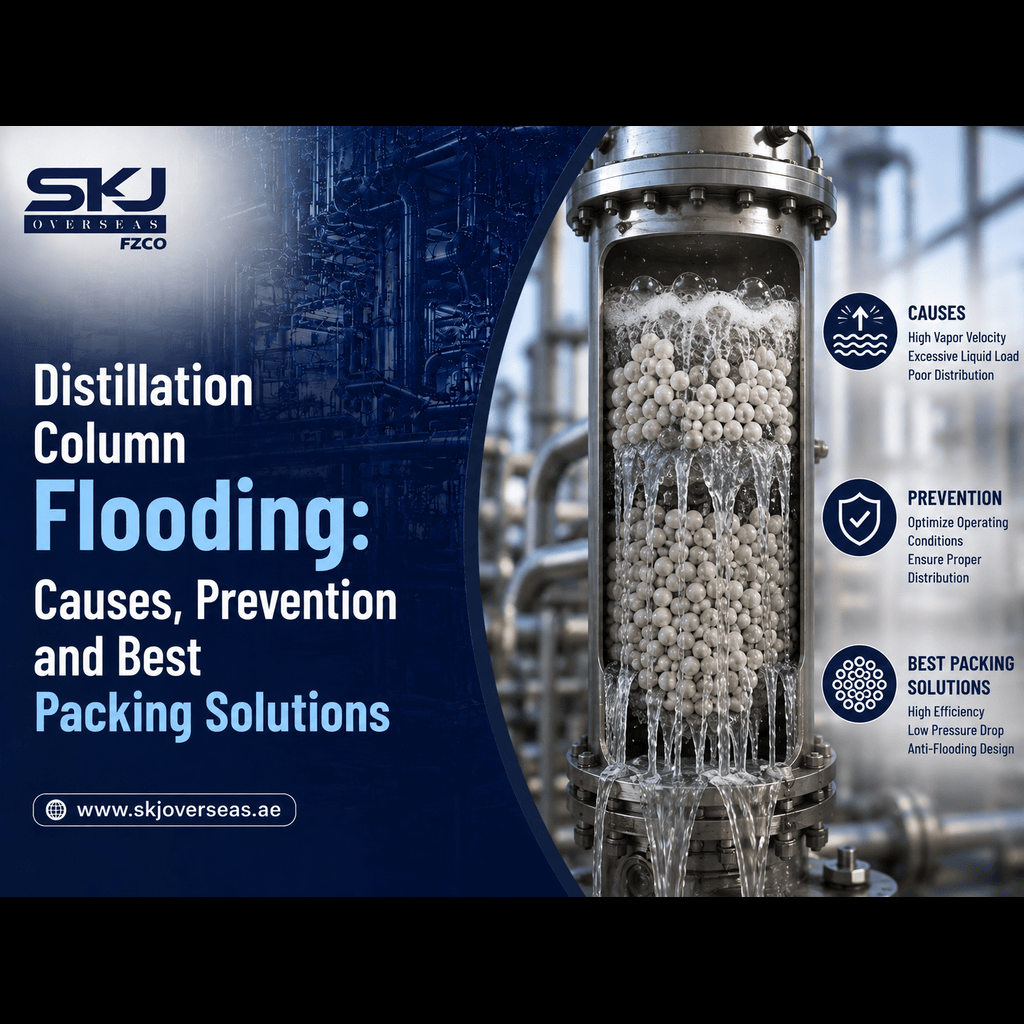
Packing that performs well at low throughput can flood or channel once flow rates climb, so match the specification to your real operating range.
Why Consistency in Manufacturing Changes Everything
10. Dimensional Consistency
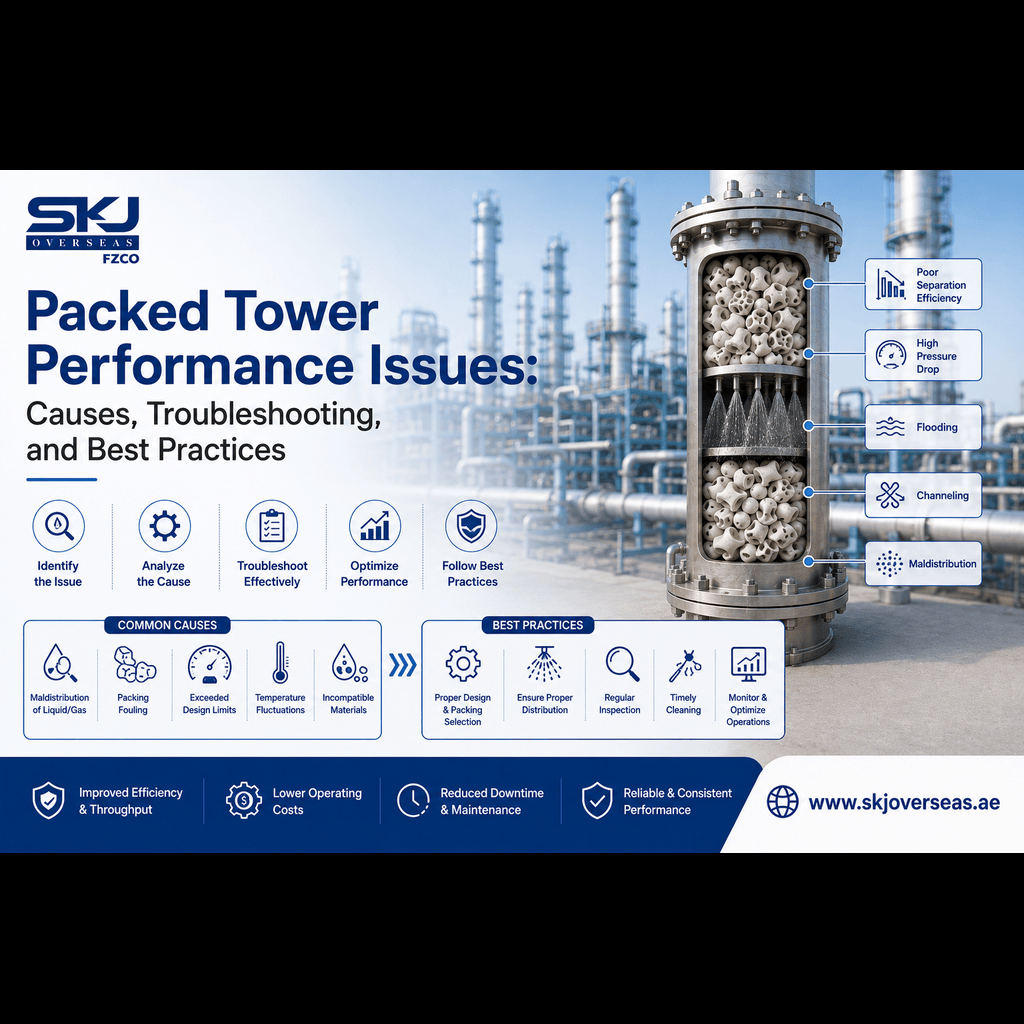
Inconsistent piece sizes create voids and dead zones inside the bed, quietly reducing efficiency in ways that are hard to trace back to their source.
11. Wetting and Liquid Distribution
Packing surface texture decides how well liquid spreads across the bed, and poor wetting leaves dry spots that cut contact efficiency.
12. Resistance to Thermal Cycling
Repeated heating and cooling cycles crack lower-quality material over time, so ask for thermal shock resistance data before ordering.
Making Sure New Packing Fits the Bigger Picture
13. Compatibility With Existing Bed Components
New packing should sit comfortably alongside your existing support plates, distributors, and hold-down grids, without forcing costly modifications on installation day.
14. Availability of the Right Sizes and Shapes
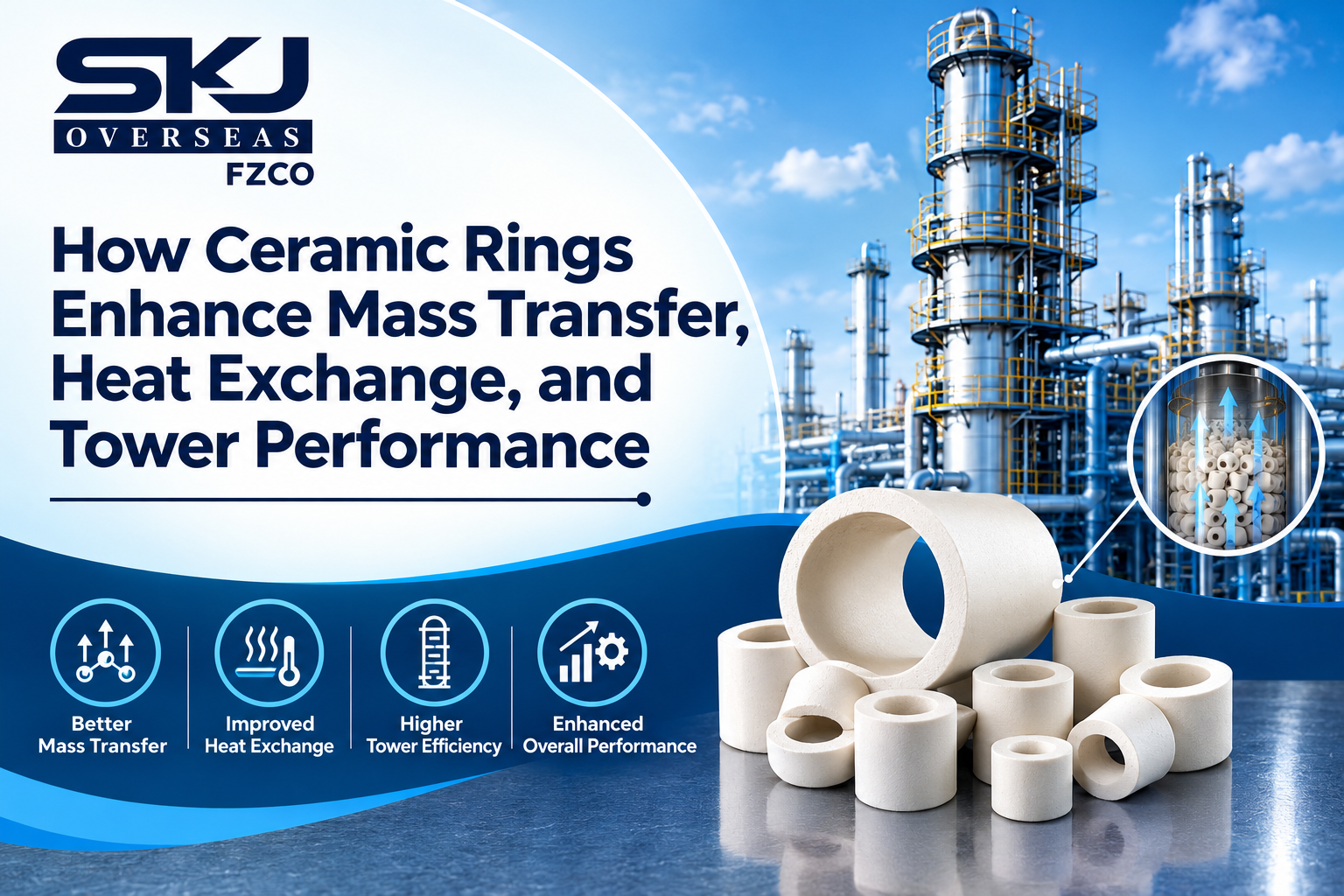
Confirm your supplier actually stocks or can produce the exact ceramic rings your tower design calls for, rather than settling for the closest available option, which can quietly compromise fit and performance.
Why the Supplier Relationship Matters as Much as the Product
15. Batch-to-Batch Consistency and Total Lifecycle Cost
Working with a dependable ceramic packing supplier ensures every delivery matches the same specification, since inconsistent batches are one of the most common causes of unexpected performance issues after installation. It is also worth weighing total lifecycle cost here, not just the purchase price, since cheaper packing that wears out faster often costs more once replacement labor and downtime enter the picture.
Why These Factors Matter Together, Not in Isolation
None of these fifteen points work in isolation. A packing choice that scores well on chemical resistance but ignores mechanical strength will still fail early if the support structure beneath it cannot handle the load. Reviewing these factors as a complete picture, rather than checking them off one at a time, gives a much clearer view of how the packing will actually perform once installed.
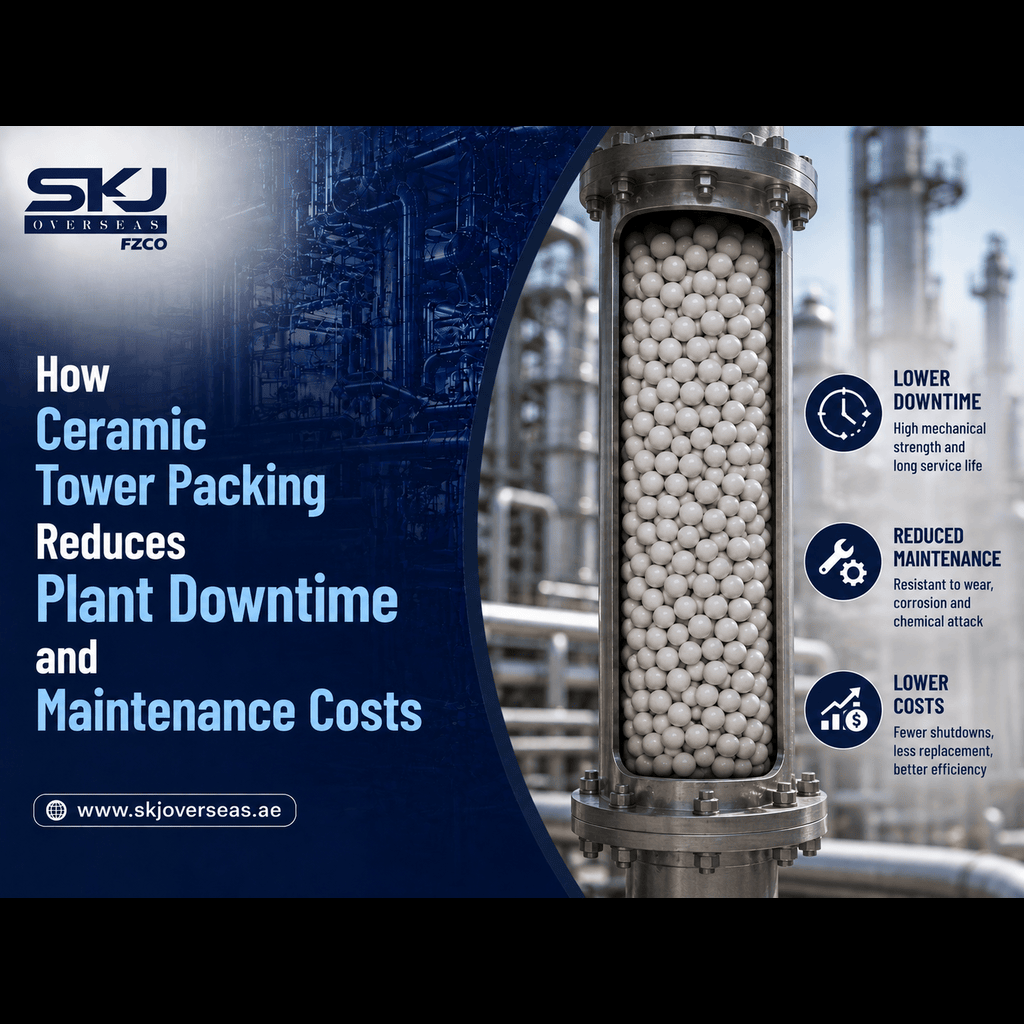
At SKJ Overseas, we work through this full checklist with plant engineers before recommending a specification, since a packing choice that looks correct on paper can still underperform if even one of these factors gets overlooked. If unplanned shutdowns have been a recurring issue in your tower, our article on how ceramic tower packing reduces plant downtime and maintenance costs goes deeper into how the right packing choice prevents that pattern from repeating.
FAQs
1. How do I know what size ceramic packing my tower needs?
Tower diameter, bed depth, and flow rate all factor into sizing. A supplier familiar with your process conditions can recommend the right size range rather than a generic default.
2. Can I mix different packing types in the same tower?
Yes, some towers use different packing types in separate sections, though this needs careful design to avoid compatibility or flow distribution issues between layers.
3. How often does ceramic tower packing need replacement?
This depends on process conditions, but well-manufactured ceramic packing generally lasts significantly longer than lower-grade alternatives before replacement becomes necessary.
4. Does ceramic packing perform better than plastic packing in all applications?
Not always. Ceramic suits high-temperature and highly corrosive services well, while plastic packing can be more cost-effective in moderate-temperature, less aggressive processes.
5. What is the biggest mistake plants make when buying tower packing?
Focusing only on purchase price while overlooking mechanical strength, batch consistency, and compatibility with existing tower internals, which often leads to higher costs later.
Final Thoughts
Buying ceramic tower packing is a decision with long-term consequences, and rushing past any of these fifteen factors usually shows up as a performance problem down the line. Taking the time to check temperature range, chemical compatibility, mechanical strength, and supplier consistency upfront keeps your tower running the way it was designed to for years.
If you are specifying packing for an upcoming project and want help working through these factors, contact our team. We will help you match the right ceramic packing to your exact process conditions.