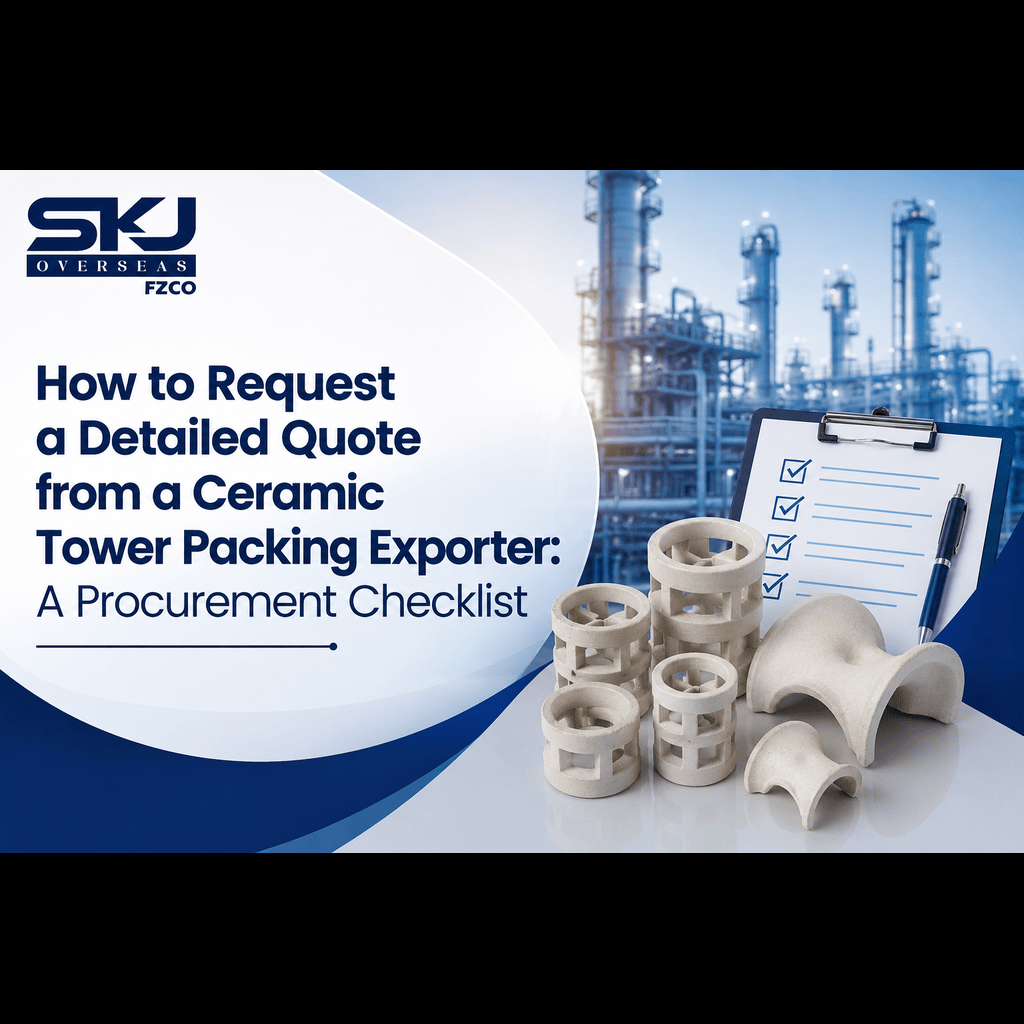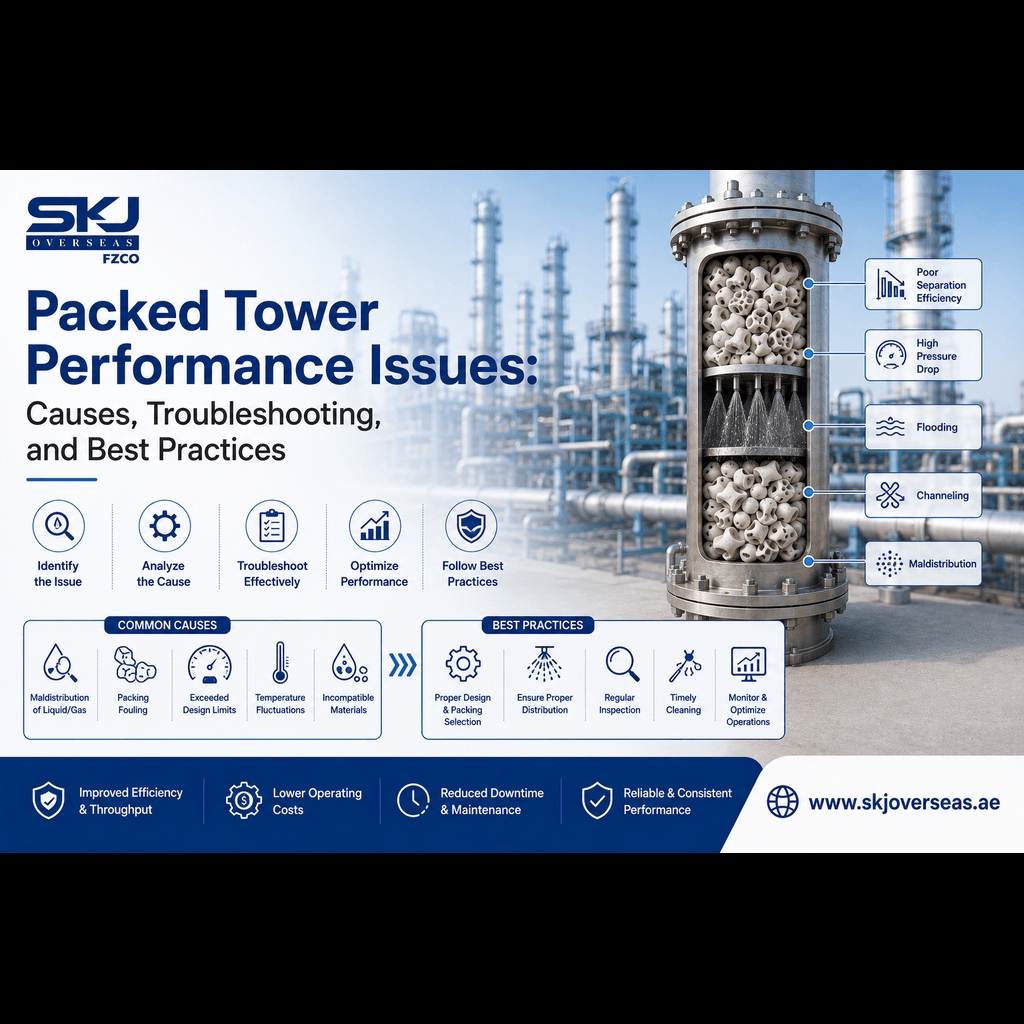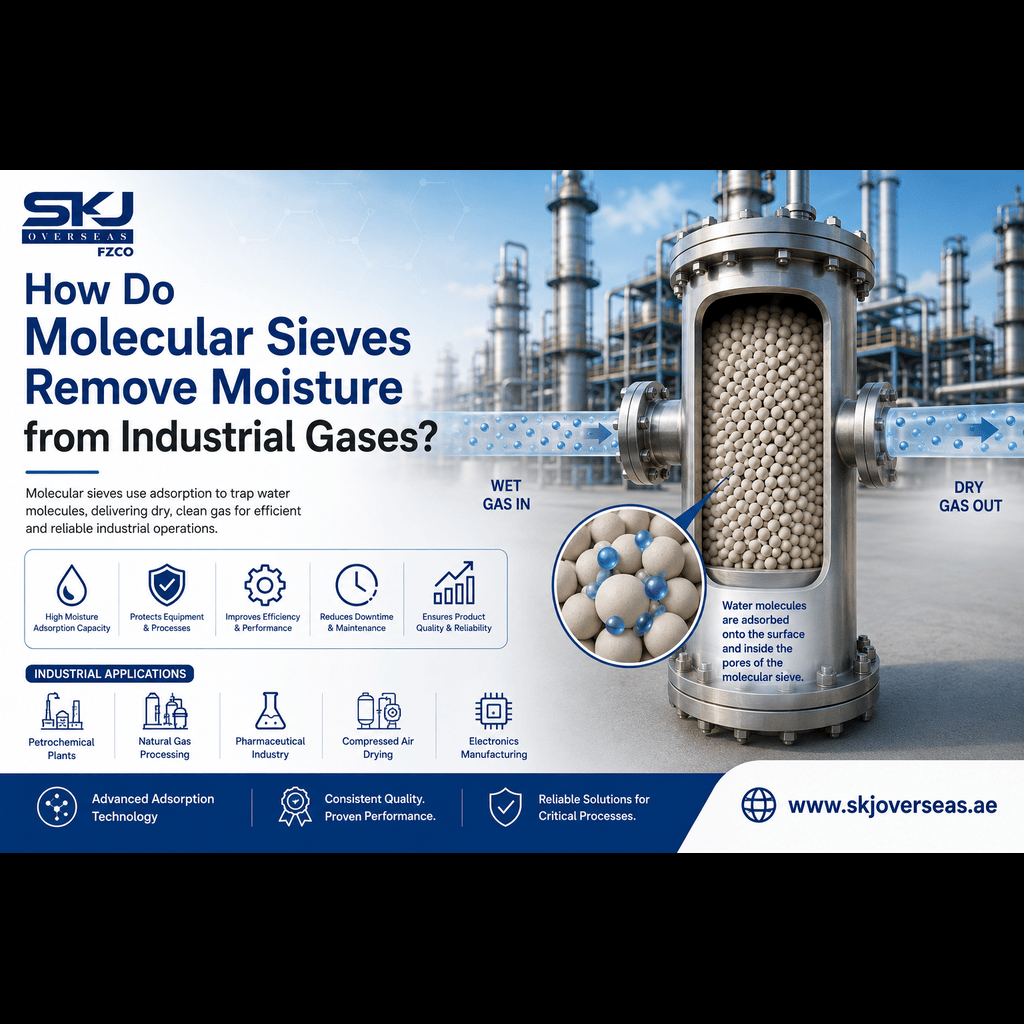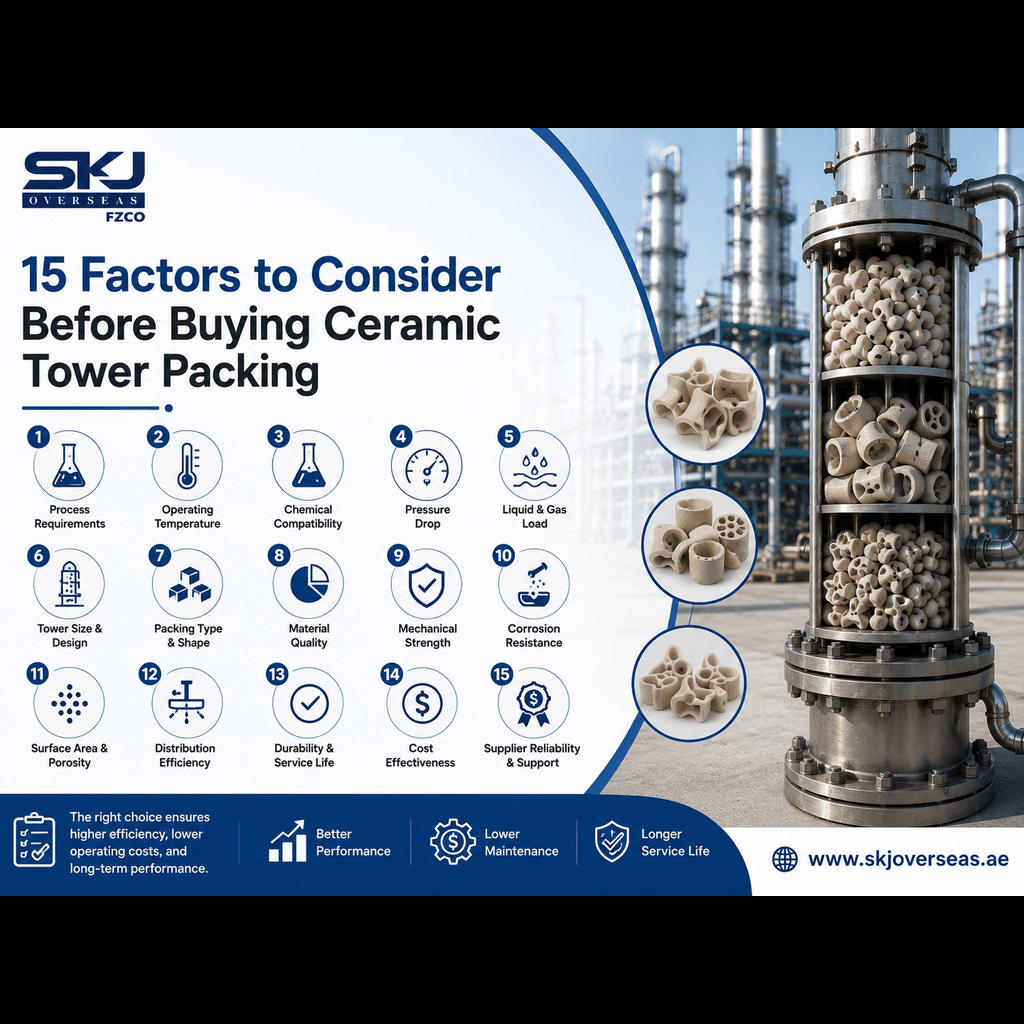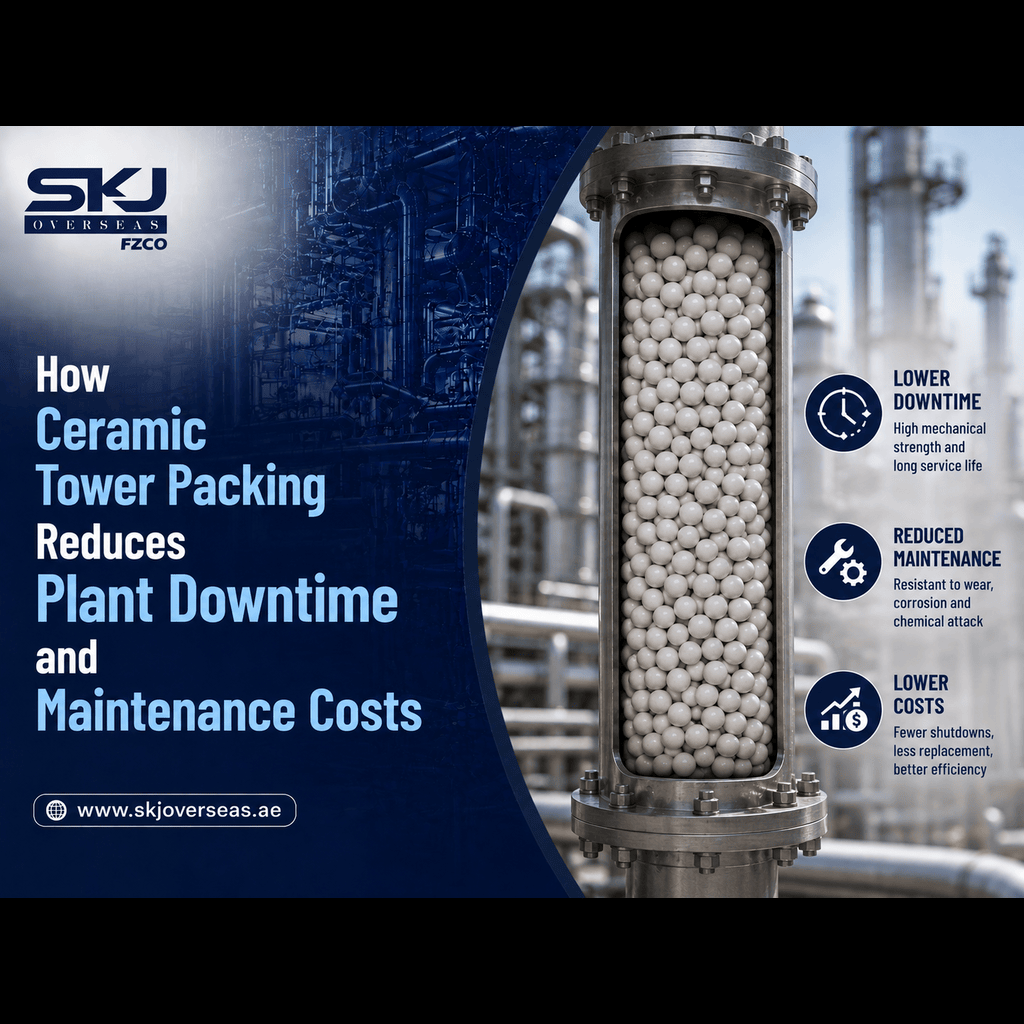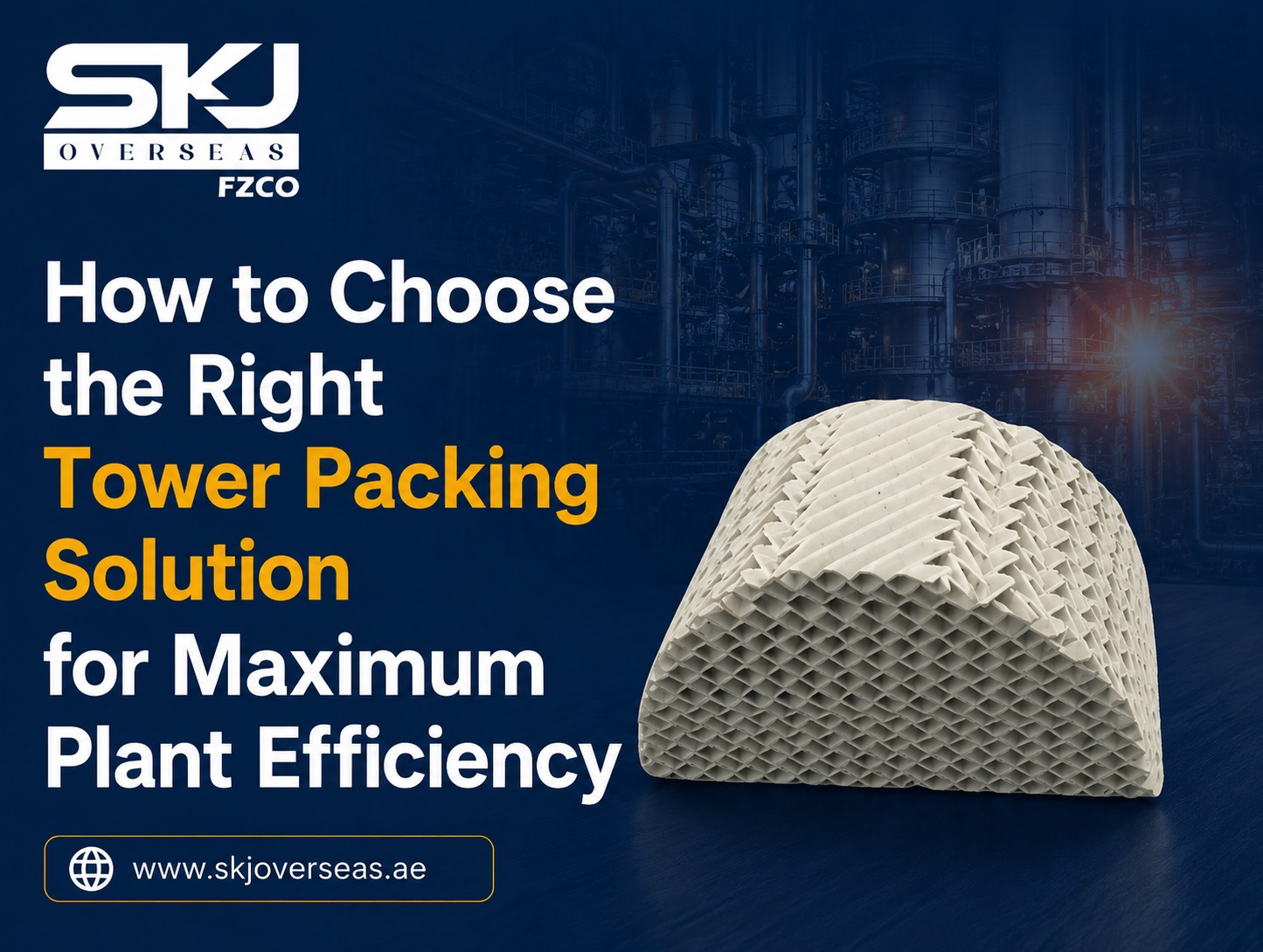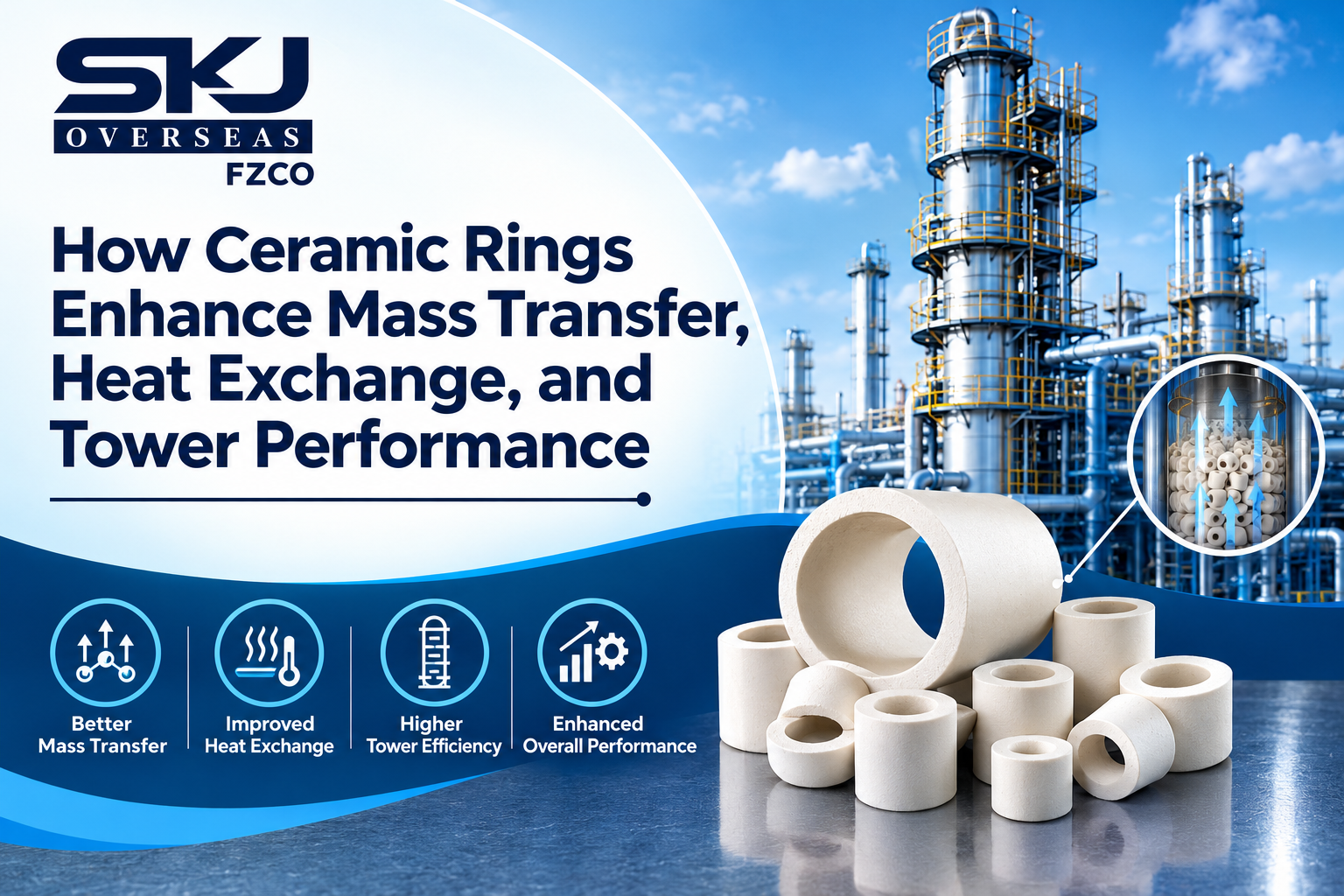
A packed tower only works as well as the surface its gas and liquid can share. This is exactly why Ceramic Rings Enhance Mass Transfer so effectively: their shape creates a large, wet, turbulent surface inside the column, so more of the target gas moves into the liquid per meter of packed height. The same surface also supports heat exchange and keeps pressure drop low, which is why ceramic rings remain a standard choice in acid, scrubbing, and absorption towers.
SKJ Overseas is a dedicated Ceramic Manufacturers in Dubai, producing ceramic packing in-house, and a recognized Ceramic and Tower Packing Exporter in Dubai supplying process plants across the region. This guide explains how ceramic rings improve mass transfer, heat exchange, and overall tower performance, and how to choose the right size for your column.
How Ceramic Rings Enhance Mass Transfer Inside a Packed Tower
Mass transfer is the movement of a substance from one phase to another, such as sulfur trioxide moving from a gas stream into acid, or ammonia moving into water. The faster and more completely this happens, the shorter the tower needs to be.
Rings help in three simple ways:
- Large contact surface: liquid spreads as a thin film over the ring surface, exposing more liquid to the rising gas
- Turbulence: the open cylindrical shape forces gas and liquid to change direction, which mixes both phases and speeds up transfer
- Fine surface texture: the slightly rough ceramic surface holds a stable liquid film, which supports even wetting
A trusted Ceramic Rings manufactures partner controls wall thickness and size consistency, since small variations change how the bed packs and how the liquid film forms.
How Ceramic Rings Support Heat Exchange in Towers
Many towers do two jobs at once. They transfer a substance between phases and they move heat between a hot gas and a cooler liquid. Packing that exposes a large wet surface helps with both.
In direct-contact heat exchange, hot gas meets cooler liquid on the ring surface. Heat moves across the thin liquid film without a metal wall in between, so there is nothing to foul or corrode. This is useful in cooling towers, gas quench sections, and acid drying and absorption systems that run hot.
Ceramic adds two further advantages:
- High temperature tolerance: ceramic rings commonly handle service temperatures up to about 1100°C, far above what plastic packing can survive
- Thermal stability: ceramic does not corrode in hot, acidic conditions where metal packing would degrade
Ceramic also stores heat well, which is why ceramic media is widely used in regenerative thermal oxidizer beds to capture and return heat.
How Ceramic Rings Improve Overall Tower Performance
Mass transfer and heat exchange only help if gas and liquid can actually flow through the bed. Tower performance depends on three balanced factors.
Low Pressure Drop
The open ring structure lets gas rise with little resistance. Typical void fractions for ceramic rings fall between roughly 62% and 80% depending on size, which keeps blower energy use reasonable.
Even Liquid Distribution
When rings pack randomly but evenly, liquid spreads across the bed instead of running down the walls or through a few narrow channels. Better spreading means the whole bed does useful work, not just a small part of it.
Strong Resistance to Fouling
Solid-wall ceramic rings have few edges and pockets where scale or particles can lodge. This makes them a dependable choice for dirtier gas streams where more complex shapes may clog.
Where Partitioned Rings Add Value
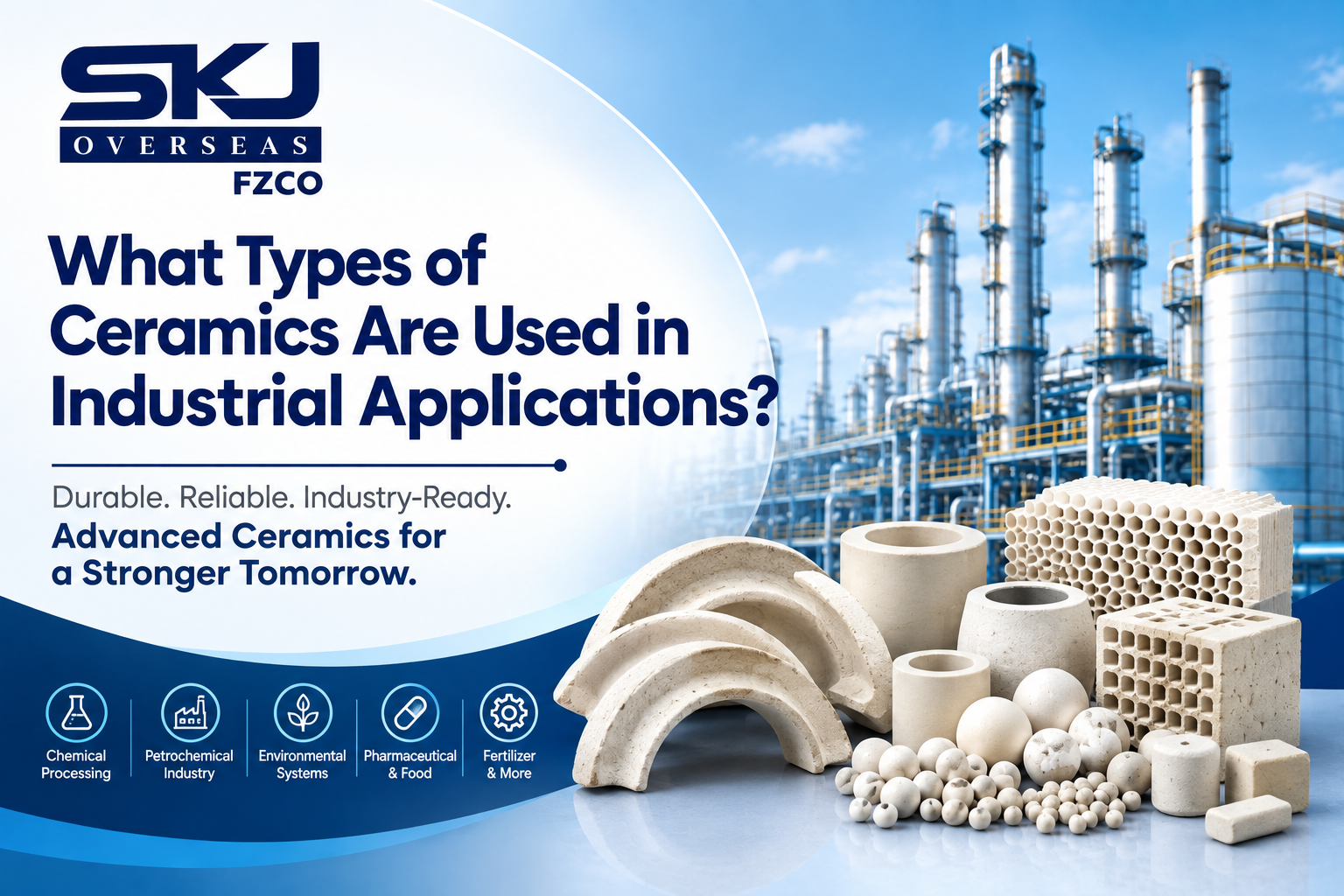
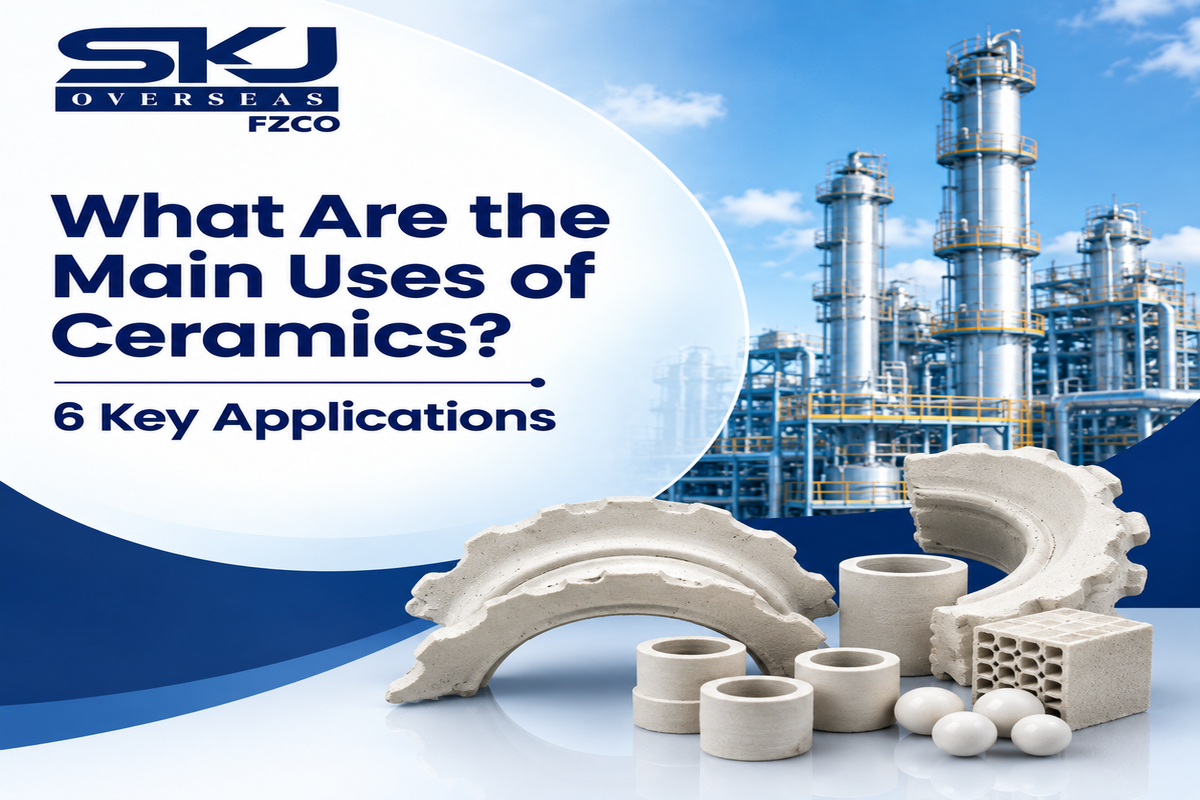
Standard rings suit most columns. In larger-diameter towers, partitioned rings add internal walls that divide the ring into smaller flow zones, which increases surface area and helps liquid spread more evenly across the cross-section.
A specialist ceramic ring partitioned Manufacturer focuses on precise internal wall geometry, because uneven partitions shrink or distort during firing and weaken the flow benefit. Plants running large absorption or drying towers often evaluate partitioned rings when standard rings leave capacity or efficiency on the table.
Typical Applications of Ceramic Rings
Ceramic rings are used wherever corrosion, heat, or both rule out metal and plastic:
- Sulphuric acid drying and absorption towers
- Chlorine, HCl, and acid gas scrubbing systems
- Acid recovery and regeneration units
- Cooling towers and gas quench sections
- Distillation and rectification of corrosive mixtures
- Catalyst support layers in reactors
- Fertilizer, metallurgy, and chemical process plants
Ceramic Rings vs Other Ring Packing at a Glance
| Feature | Ceramic Rings | Metal Rings | Plastic Rings |
| Maximum temperature | Very high, about 1100°C | High | Low to moderate |
| Acid resistance | Excellent, except hydrofluoric acid | Often limited | Good in mild service |
| Fouling resistance | Strong with solid walls | Moderate | Moderate |
| Mechanical toughness | Brittle, needs careful handling | Tough | Moderate |
| Best fit | Hot, corrosive, acid service | Hot, non-corrosive service | Cooler, milder service |
How to Choose the Right Ceramic Ring Size
Size is a trade-off between surface area and pressure drop.
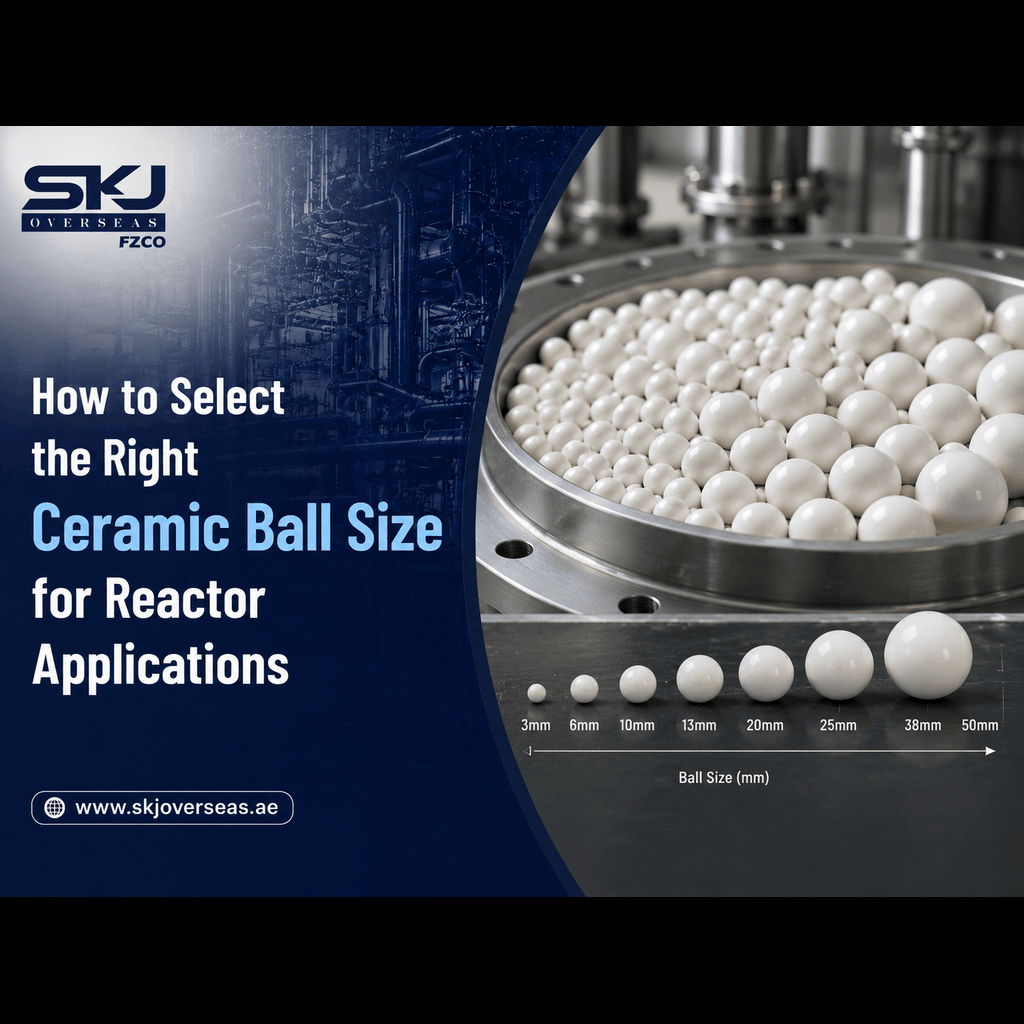
- Small rings (6 to 25 mm): higher surface area and better mass transfer, but higher pressure drop and a greater chance of blockage
- Medium rings (38 to 50 mm): a balanced choice for most absorption and scrubbing towers
- Large rings (75 to 100 mm and above): lower pressure drop and higher capacity, with less surface area per cubic meter
As a general rule, the ring should be no larger than about one eighth of the tower diameter, and smaller rings suit smaller columns. Confirm sizing with your supplier using your own gas and liquid flow rates, since the right choice depends on the specific duty.
Handling and Installation Tips
Ceramic is brittle, so careful handling protects performance. Partly filling the tower with water before loading rings softens the fall and reduces breakage. Loading in layers, instead of dumping from height, also helps avoid cracked rings that would otherwise add fines and raise pressure drop.
Why Manufacturing Quality Decides Real Performance
Two rings with the same dimensions can behave very differently. Firing temperature, raw material purity, and wall thickness all affect how well a ring resists acid, handles load, and survives thermal cycling. Under-fired rings can crack or absorb acid, shortening bed life.
SKJ Overseas makes its ceramic ring range directly rather than trading imported stock. Every batch is produced under controlled firing conditions and tested before dispatch, so the performance on the datasheet is the performance you get inside the tower.
Sourcing Ceramic Rings in Dubai
A regional source shortens lead times and makes technical support easier during design, startup, or an unplanned shutdown. Buyers looking for Ceramic Rings in Dubai benefit from direct access to the manufacturer for size selection, samples, and documentation.
Plants running large towers can also source partitioned styles locally. Working with a ceramic ring partitioned in Dubai supplier means one manufacturer can advise on both standard and partitioned designs for the same column, which keeps specification and delivery simple.
Key Takeaways
- Ceramic Rings Enhance Mass Transfer by creating a large, turbulent, evenly wetted surface for gas and liquid contact.
- The same surface supports direct-contact heat exchange, and ceramic tolerates temperatures up to about 1100°C.
- Open ring geometry keeps pressure drop low and liquid distribution even, which improves overall tower performance.
- Partitioned rings suit larger-diameter towers that need more surface area and better flow division.
- Ring size, firing quality, and careful installation all influence real-world results.
Frequently Asked Questions
1. How do ceramic rings improve mass transfer?
They give gas and liquid a large wet surface to share, and their open shape creates turbulence that mixes both phases. Together these effects let more of the target substance move between phases in a shorter column.
2. Can ceramic rings be used for heat exchange?
Yes. In cooling towers, quench sections, and hot acid towers, heat passes between gas and liquid across the thin film on the ring surface. Ceramic’s high temperature tolerance and corrosion resistance suit this duty well.
3. What is the difference between standard and partitioned ceramic rings?
Partitioned rings have internal walls that divide the ring into smaller flow zones. This adds surface area and helps spread liquid more evenly, which is useful in larger towers.
4. Are ceramic rings suitable for hydrofluoric acid?
No. Ceramic resists almost all acids and alkalis, but hydrofluoric acid attacks it, so another packing material is needed for that service.
5. How do I choose the right ring size for my tower?
Smaller rings give more surface area but higher pressure drop, while larger rings give more capacity with less surface. Match size to tower diameter and your gas and liquid flow rates, and confirm it with your supplier.
Talk to SKJ Overseas About Ceramic Rings
Choosing the right ring size and style protects your tower from poor efficiency, high pressure drop, and early packing failure. SKJ Overseas manufactures ceramic rings and partitioned rings engineered for consistent performance in acid, scrubbing, and absorption service.
Contact us to request a quote, a technical datasheet, or a sample for your tower.