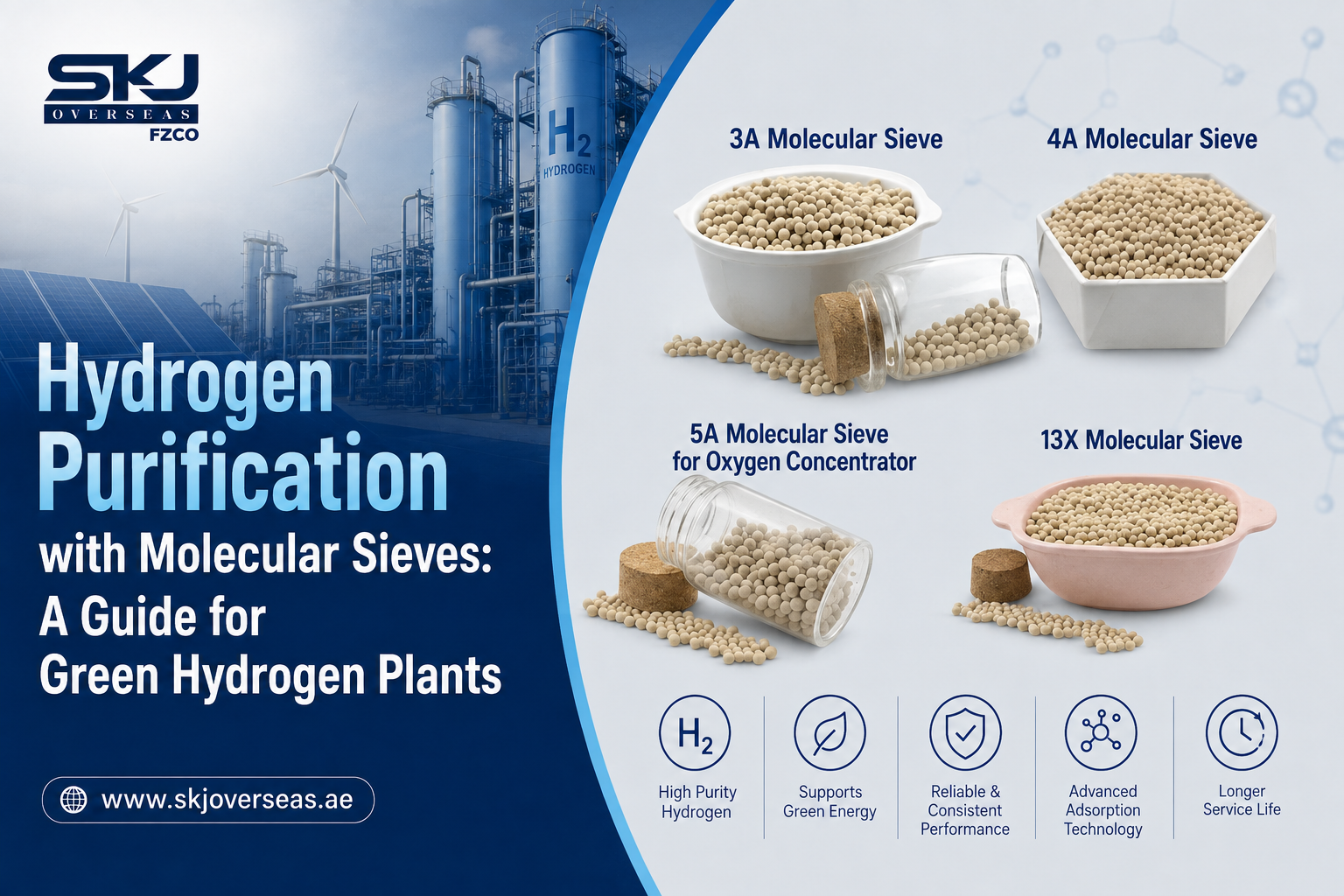
Hydrogen purification with molecular sieves is the process green hydrogen plants use to strip water vapour, oxygen, and trace gases out of electrolyzer output so the final gas meets fuel-cell and industrial purity standards. As Dubai and the wider UAE push toward the National Hydrogen Strategy’s target of 1.4 million tonnes per annum of low-carbon hydrogen by 2031, purification has become one of the most important and most overlooked steps in the hydrogen value chain.
SKJ Overseas, a ceramic and tower packing manufacturer and exporter based in Dubai, supplies molecular sieves for hydrogen purification and related adsorption media to plants across the UAE and the broader GCC region. This guide explains how molecular sieves for hydrogen purification work, why they matter for green hydrogen projects, and what plant operators should check before choosing a supplier.
What Is Hydrogen Purification with Molecular Sieves?
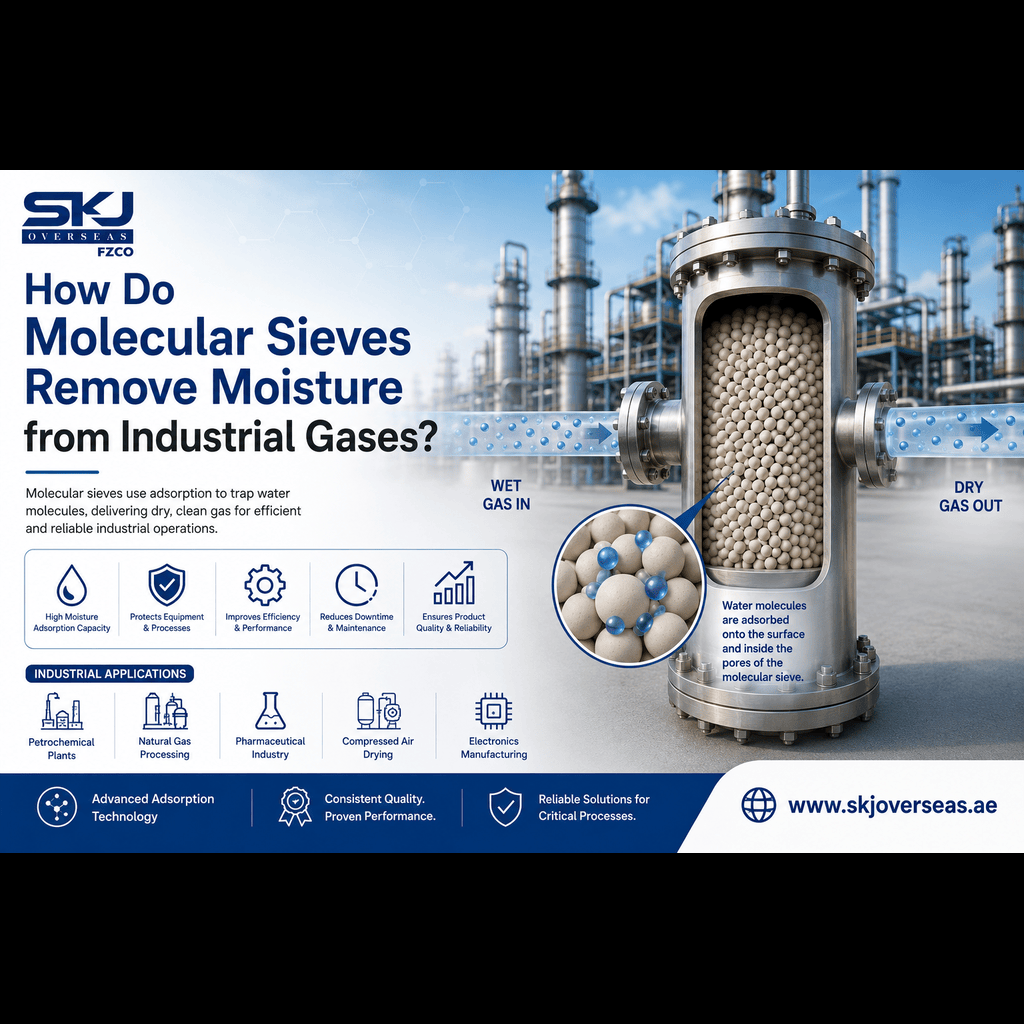
Hydrogen purification with molecular sieves is a physical separation method that removes impurities from a hydrogen gas stream by trapping them inside tiny, uniformly sized pores. The hydrogen molecule is small enough to pass through these pores, while water vapour, carbon dioxide, and other larger molecules get trapped and held back.
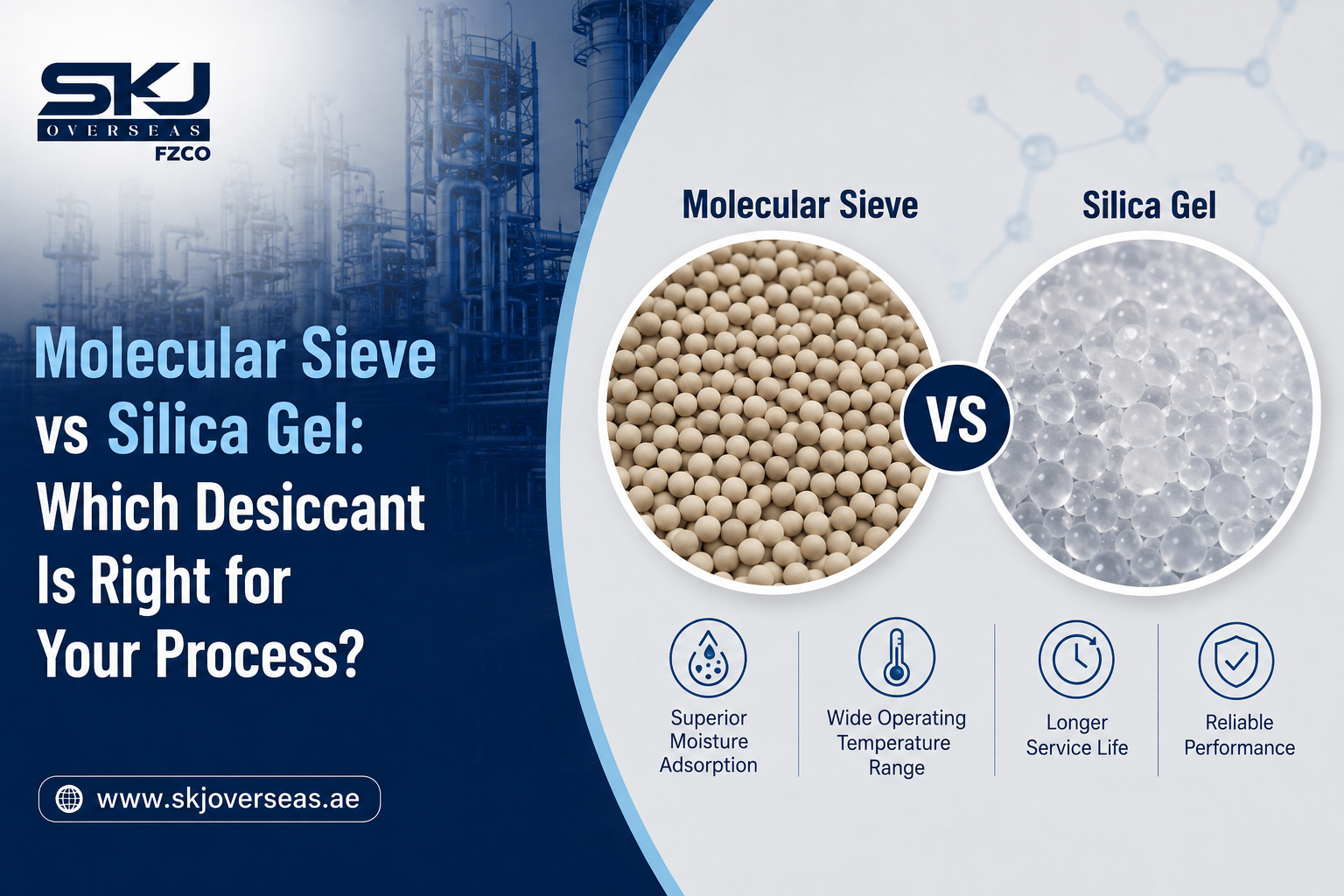
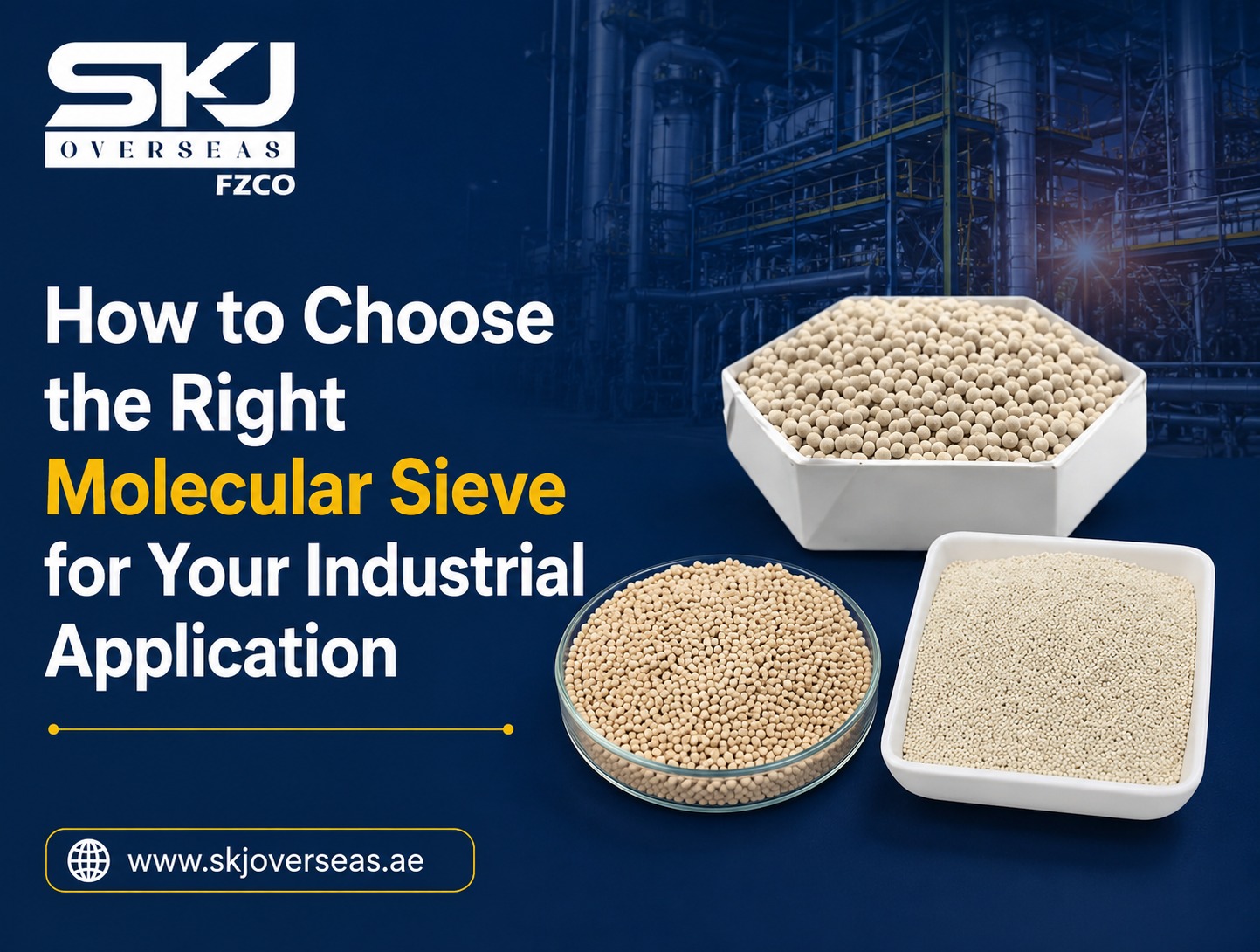
Molecular sieves are crystalline aluminosilicates, more commonly known as zeolites. They’re highly porous desiccants formed through the cross-linking of AlO4 and SiO4 tetrahedra, which gives them the uniform pore sizes needed for precise molecular separations.
Think of a molecular sieve as a very fine kitchen strainer: water flows through, but larger particles get caught. In gas purification, hydrogen “flows through,” and impurity molecules get caught in the pores.
Why Green Hydrogen Plants Need This Purification Step
Green hydrogen is made by splitting water using renewable electricity a process called electrolysis. The hydrogen that comes out of an electrolyzer isn’t pure. It typically carries moisture, trace oxygen, and sometimes nitrogen or other gases picked up during production and storage.
This raw gas can’t go straight into a fuel cell, a pipeline, or an export terminal. Downstream equipment is sensitive, and even small amounts of contamination can cause serious damage over time.
Common impurities removed during hydrogen purification include:
- Water vapour (moisture)
- Carbon dioxide
- Carbon monoxide
- Nitrogen and residual oxygen
- Trace hydrocarbons and sulphur compounds
Left untreated, these impurities reduce fuel cell efficiency, corrode pipelines, and shorten the working life of compressors and storage tanks. This is exactly why hydrogen purification technology now centres on adsorption-based systems using industrial molecular sieves.
How Molecular Sieves Purify Hydrogen: The PSA Process
The most widely used method for hydrogen purification is Pressure Swing Adsorption, or PSA. PSA works by cycling high-pressure feed gas through a vessel packed with molecular sieves, which selectively capture impurities such as water, carbon dioxide, and hydrocarbons while allowing pure hydrogen to pass through.
The process runs in repeating cycles, each with clear stages.
Step 1: Adsorption Impure hydrogen gas enters a vessel filled with molecular sieve beads under high pressure. Impurities stick to the sieve’s internal surface while hydrogen continues through the bed and out as purified gas.
Step 2: Depressurization Once the bed nears saturation, pressure inside the vessel is reduced. This loosens the grip the sieve material has on the trapped impurities.
Step 3: Regeneration (Desorption) Once adsorption is complete, the vessel is depressurized and purged with a small stream of clean gas. This releases the trapped impurities so the bed is ready for reuse.
Step 4: Repressurization The vessel is brought back to operating pressure, and the cycle starts again. Most PSA systems use two or more vessels working in rotation, so purified hydrogen flows continuously even while one bed regenerates.
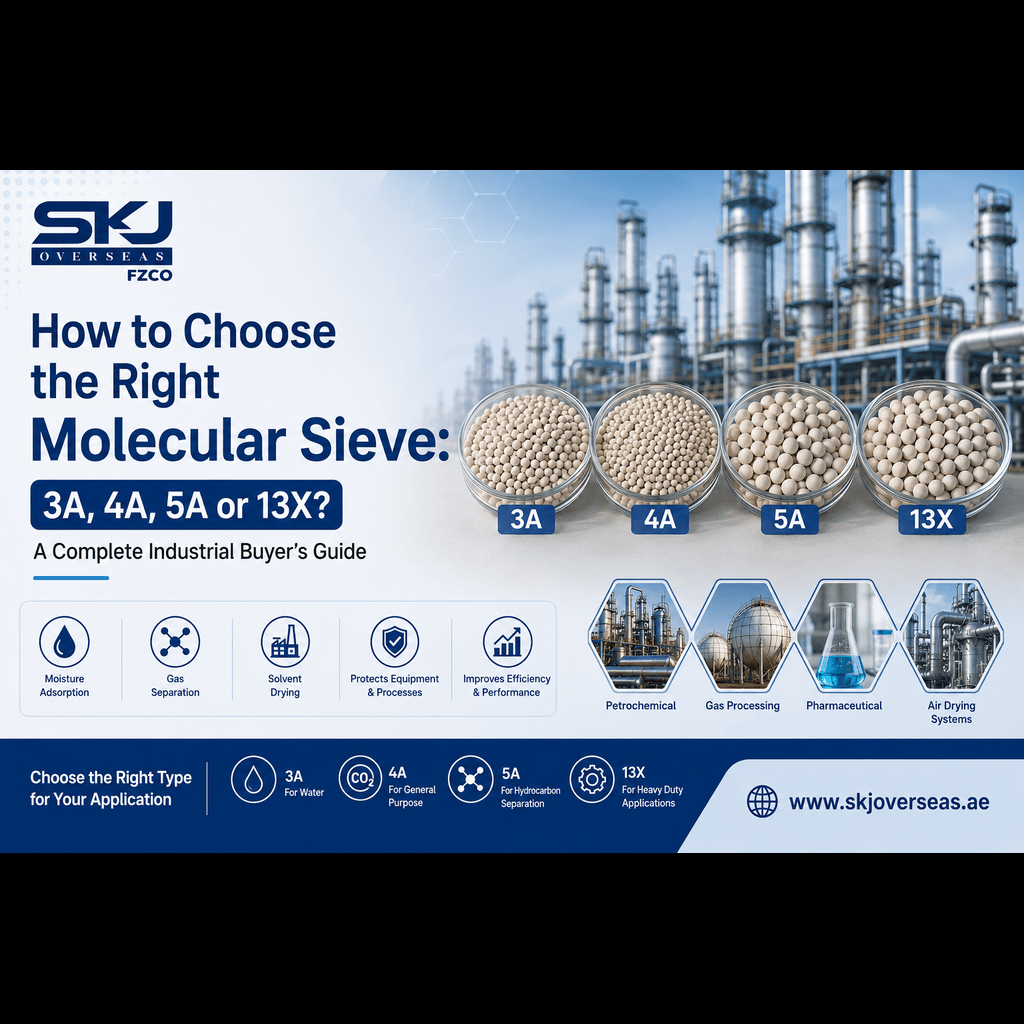
Types of Molecular Sieves Used in Hydrogen Purification
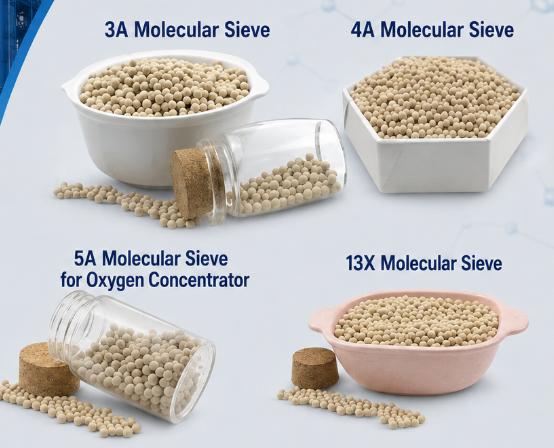
Not every molecular sieve is built for the same job. Pore size and chemical composition decide which impurities a sieve can trap.
| Molecular Sieve Type | Primary Use in Hydrogen Purification | Typical Application |
| 3A Molecular Sieve | Deep drying, moisture removal | Pre-treatment before other beds |
| 4A Molecular Sieve | General moisture and CO2 removal | Standard PSA hydrogen units |
| 5A Molecular Sieve | CO, CO2, and hydrocarbon removal | Core hydrogen PSA bed |
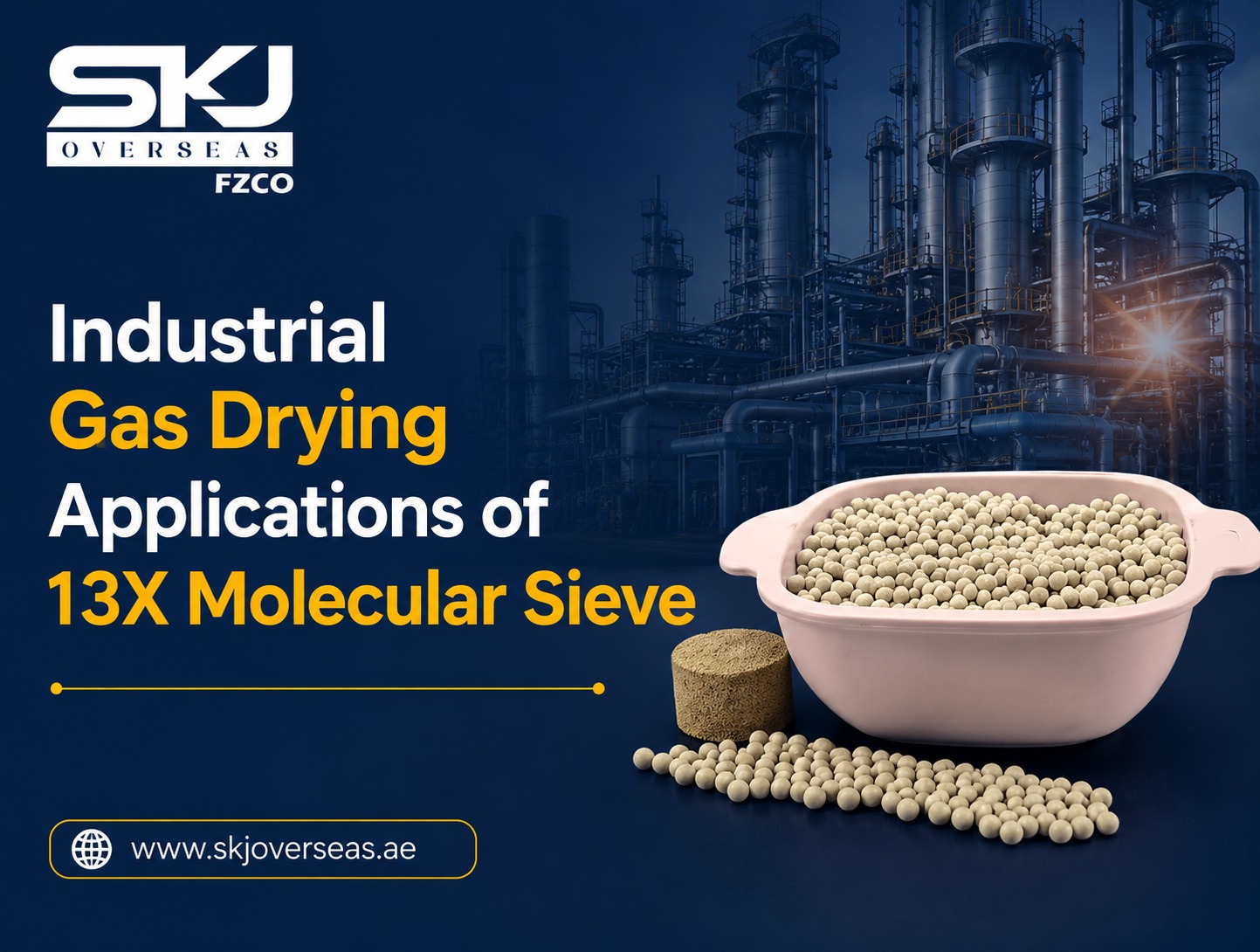
| 13X Molecular Sieve | Larger impurity molecules, enhanced adsorption | High-purity electrolyzer output |
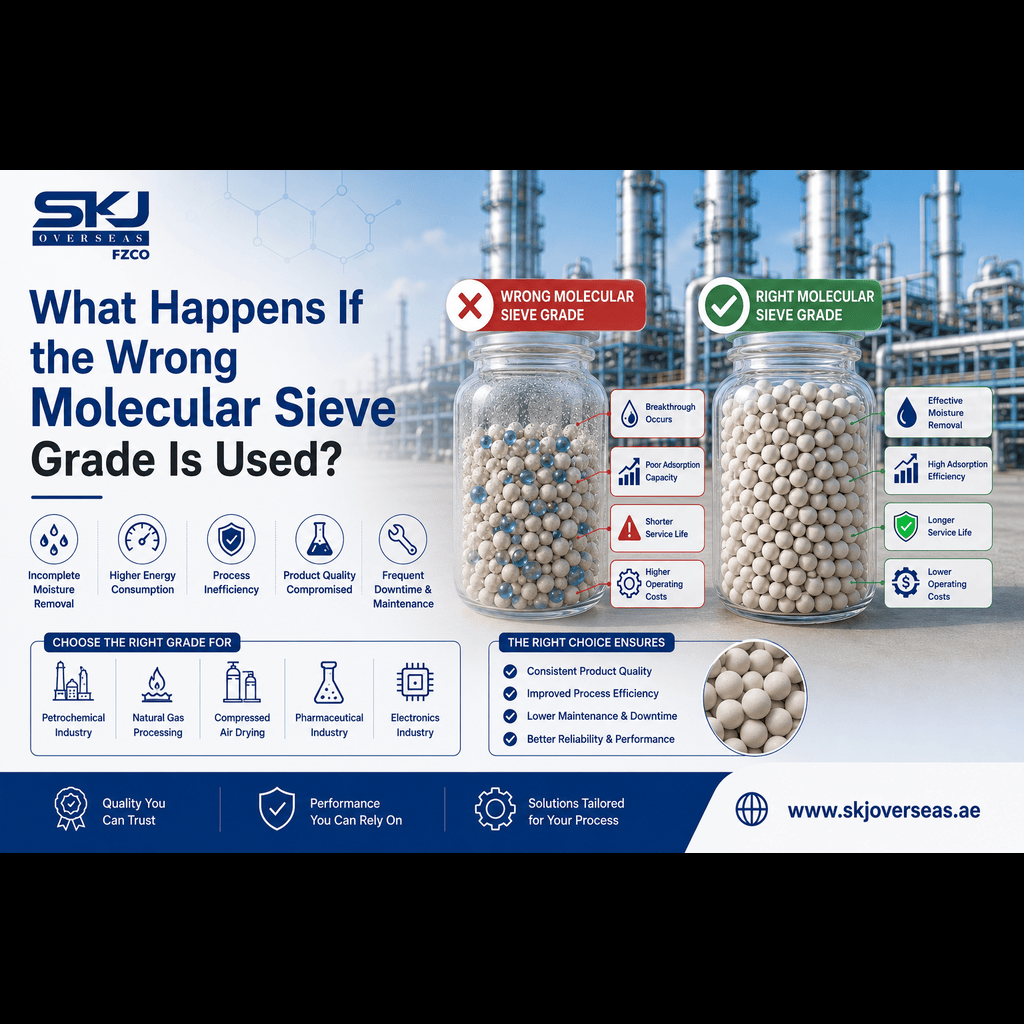
Each of these grades is engineered for precise separation based on molecule size, and all are known for strong water adsorption capacity and selectivity. Choosing the right combination depends on the electrolyzer type, feed gas quality, and the purity level the end application demands.
Purity Standards Green Hydrogen Plants Must Meet
Purity isn’t a matter of preference it’s governed by international standards, particularly for fuel cell use.
ISO 14687 sets maximum allowable concentrations for 13 impurities, including gases and volatile organic compounds, relevant to fuel cell applications. It defines minimum hydrogen fuel quality for residential, commercial, industrial, vehicular, and stationary use.
For PEM fuel cell use, hydrogen typically needs to reach 99.97% purity or higher, with strict limits on individual contaminants like carbon monoxide, sulphur compounds, and moisture. Meeting this bar consistently requires a well-designed molecular sieve system, not a one-time filter.
For plant operators in the UAE, this matters twice over: domestic green hydrogen supports the country’s decarbonisation goals in transport, chemicals, fertilizers, and metals, while export-grade hydrogen must meet the purity expectations of international buyers in Europe and Asia.
Green Hydrogen in the UAE: Why This Matters Now
The UAE is scaling up fast. The National Hydrogen Strategy targets 1.4 million tonnes per annum of low-carbon hydrogen by 2031, including 1 million tonnes of green hydrogen from renewable sources.
Dubai has already proven the model works. The UAE’s first green hydrogen plant was commissioned in Dubai in May 2021 as a public-private partnership, located at the Mohammed bin Rashid Al Maktoum Solar Park, producing 20kg of hydrogen per hour from solar PV electricity.
As more electrolyzer capacity comes online across Dubai and Abu Dhabi, demand for reliable hydrogen purification systems rises alongside it. Every new project needs a dependable source of purification media that can handle continuous cycling without losing adsorption capacity too quickly which is why a proven molecular sieve supplier becomes part of a plant’s core infrastructure, not just a consumable purchase.
What to Check Before Choosing a Molecular Sieve Supplier
Plant engineers evaluating suppliers of industrial molecular sieves should look beyond price and check the following:
- Crush strength and attrition resistance, so the sieve beads survive repeated pressure cycling without breaking down into dust
- Consistent pore size distribution, which directly affects separation accuracy
- Water adsorption capacity, since moisture is usually the first impurity removed
- Regeneration performance how well the sieve releases trapped impurities cycle after cycle
- Packaging and moisture protection during transport, since exposure to humid air before installation can pre-saturate the sieve
- Technical support and documentation, including data sheets and batch consistency records
A supplier that also manufactures ceramic tower packing and structured packing understands adsorption and gas-liquid contact media at a deeper level useful when a plant needs both purification and separation equipment from one trusted source.
SKJ Overseas: Supporting Hydrogen Purification Across the UAE
SKJ Overseas manufactures and exports ceramic packing, tower packing, and adsorption media, including molecular sieves suited to hydrogen purification across the UAE and GCC. The company works with plant engineers, EPC contractors, and green hydrogen developers who need consistent, well-documented adsorbent supply for PSA systems.
For a region moving as quickly as the UAE toward its 2031 hydrogen targets, working with a supplier who understands both the chemistry and the logistics of the region reduces project risk and keeps commissioning schedules on track.
FAQs about Hydrogen Purification with Molecular Sieves
What is the difference between molecular sieve and activated carbon for hydrogen purification? Molecular sieves separate gases by precise pore size, giving them strong selectivity for water, CO2, and other polar molecules. Activated carbon has a broader, less uniform pore structure and is generally less effective for the strict purity levels green hydrogen and fuel cell applications require.
How long do molecular sieves last in a hydrogen PSA system?
Most industrial molecular sieves last between three and five years under normal operating conditions, depending on cycle frequency, feed gas quality, and regeneration efficiency. Exposure to liquid water or oil contamination can shorten this lifespan significantly.
What purity level does green hydrogen need to reach for fuel cells?
Fuel cell grade hydrogen generally needs to meet ISO 14687 requirements, which call for a purity level around 99.97% or higher along with strict limits on individual impurities such as carbon monoxide, sulphur compounds, and moisture.
Can molecular sieves remove both moisture and CO2 from hydrogen at the same time?
Yes. Multi-layer PSA beds commonly combine different sieve types, such as 4A and 5A, in a single vessel so moisture, CO2, and other impurities are removed in one pass rather than needing separate purification stages.
Why is hydrogen purification especially important for green hydrogen plants in the UAE?
UAE green hydrogen is produced for both domestic decarbonisation and international export, so it must meet strict, internationally recognised purity standards. Reliable purification protects fuel cells and pipelines while helping UAE producers meet the quality expectations of overseas buyers under the National Hydrogen Strategy.
Building or upgrading a green hydrogen purification line in Dubai or elsewhere in the UAE? SKJ Overseas supplies molecular sieves, ceramic packing, and tower packing engineered for consistent PSA performance. Contact SKJ Overseas today for technical data sheets, bulk pricing, and delivery timelines tailored to your plant’s commissioning schedul