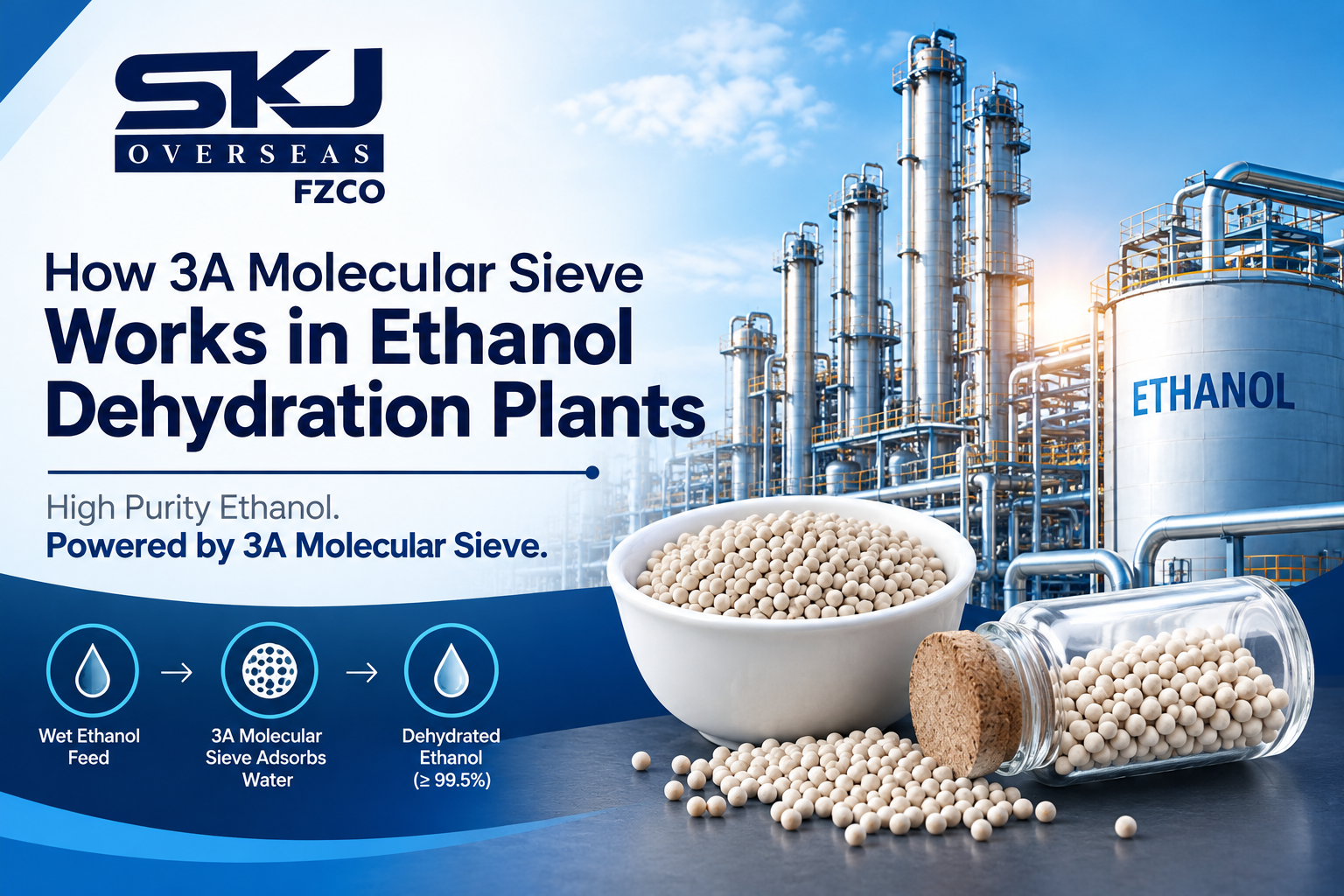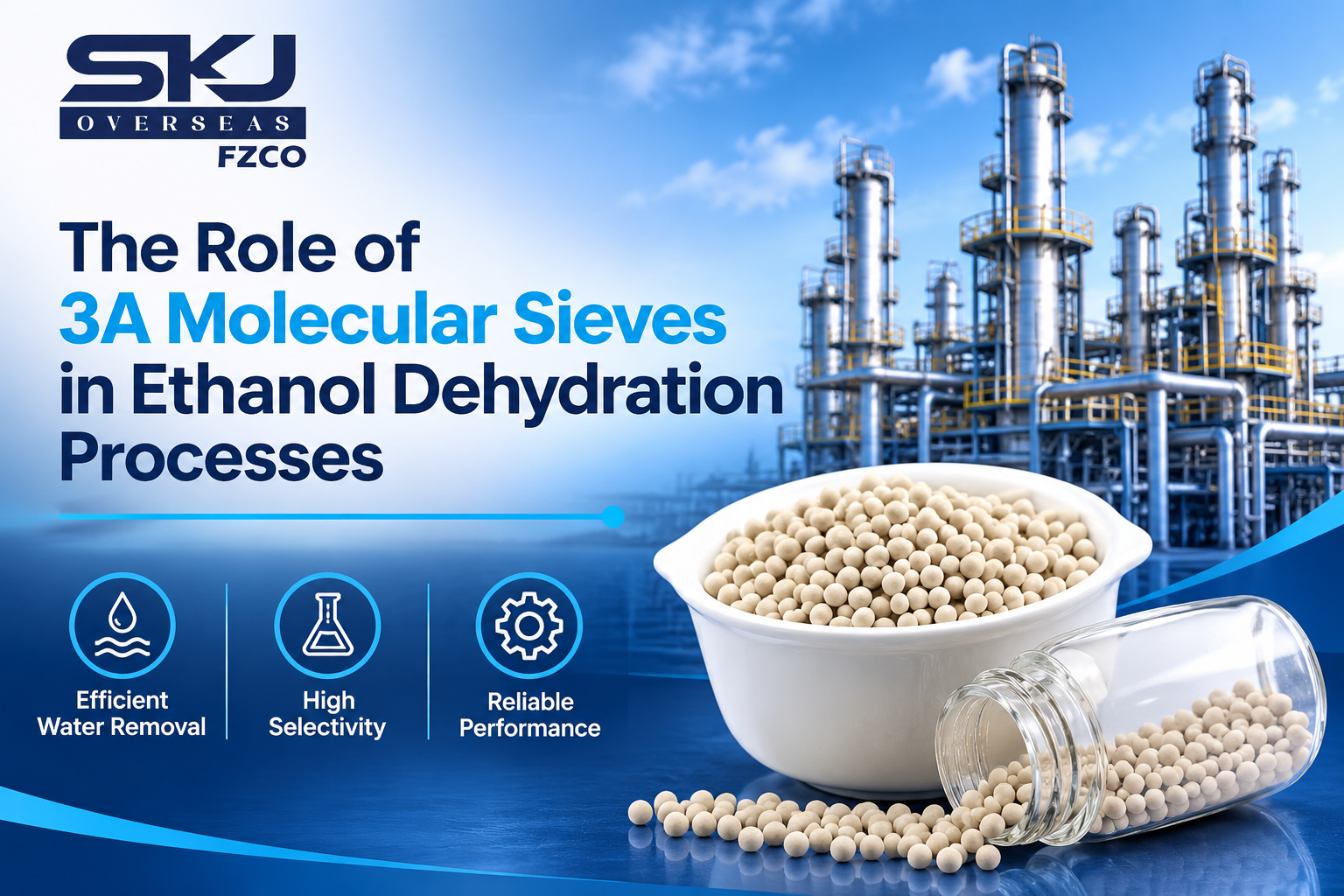
Distillation can only take ethanol to about 95.6% purity by weight. After that, water and ethanol boil together and cannot be separated by simple distillation. The Role of 3A Molecular Sieves is to remove that last stubborn water, so ethanol can reach fuel-grade purity of 99.5% and above.
SKJ Overseas is a dedicated Ceramic Manufacturers in Dubai, working with industrial ceramics and adsorbent media for process plants. This guide explains what 3A molecular sieves do, why they work so well in ethanol plants, and how to choose the right product for your unit.
Why Ethanol Needs a Dehydration Step
Ethanol from fermentation is mixed with a lot of water. Distillation removes most of it. At about 95.6% ethanol by weight, however, ethanol and water form an azeotrope. This means the vapor has the same makeup as the liquid, so more distillation changes nothing.
Fuel ethanol and many industrial grades need far less water. Blending ethanol into petrol, for example, requires nearly water-free ethanol. A second step is needed, and adsorption with molecular sieves is the most common choice.
The Role of 3A Molecular Sieves in Breaking the Azeotrope
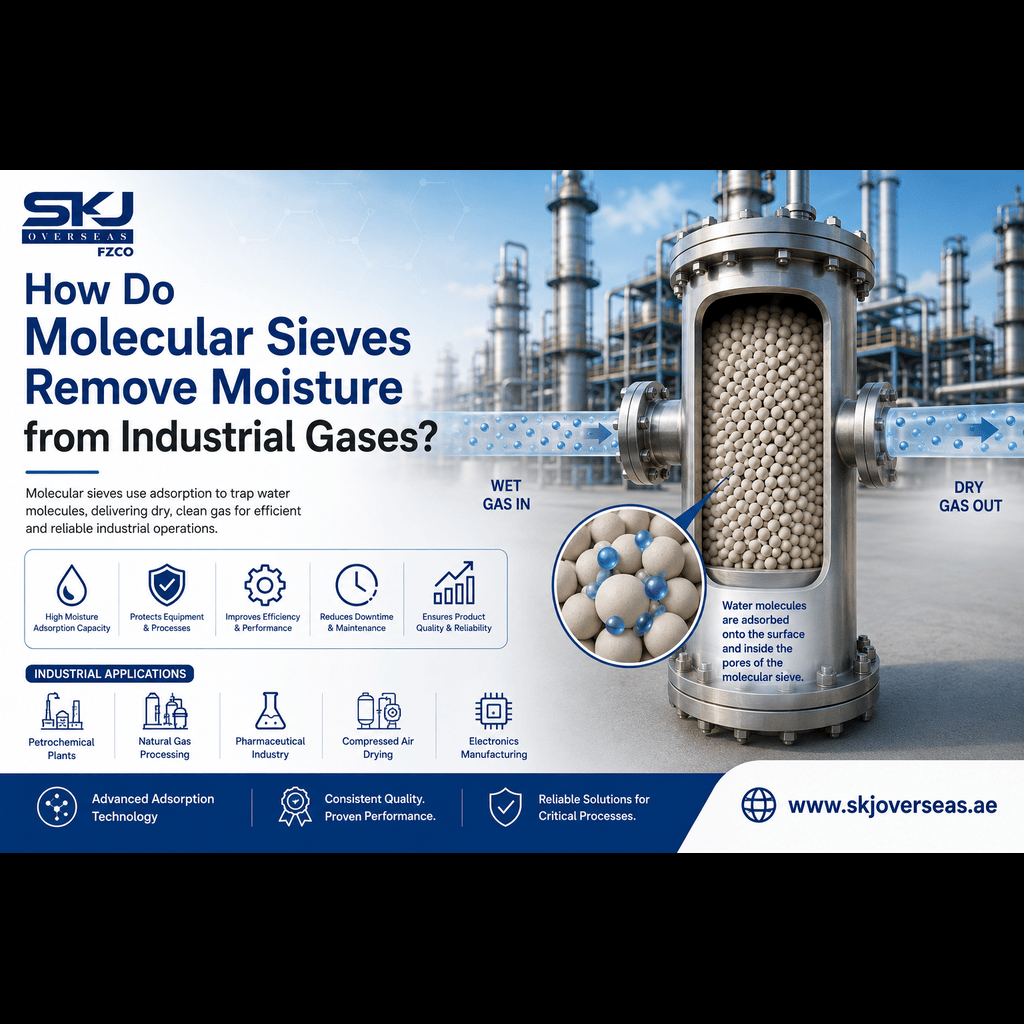
The key is pore size. A 3A molecular sieve has pores of about 3 angstroms. Water molecules are small enough to enter these pores. Ethanol molecules are larger, so they cannot.
The sieve acts like a strainer at molecular level. Water is captured inside, and dry ethanol passes through. This is why the Role of 3A Molecular Sieves is described as selective adsorption: it takes what it should and leaves the product alone.
What Is a 3A Molecular Sieve?
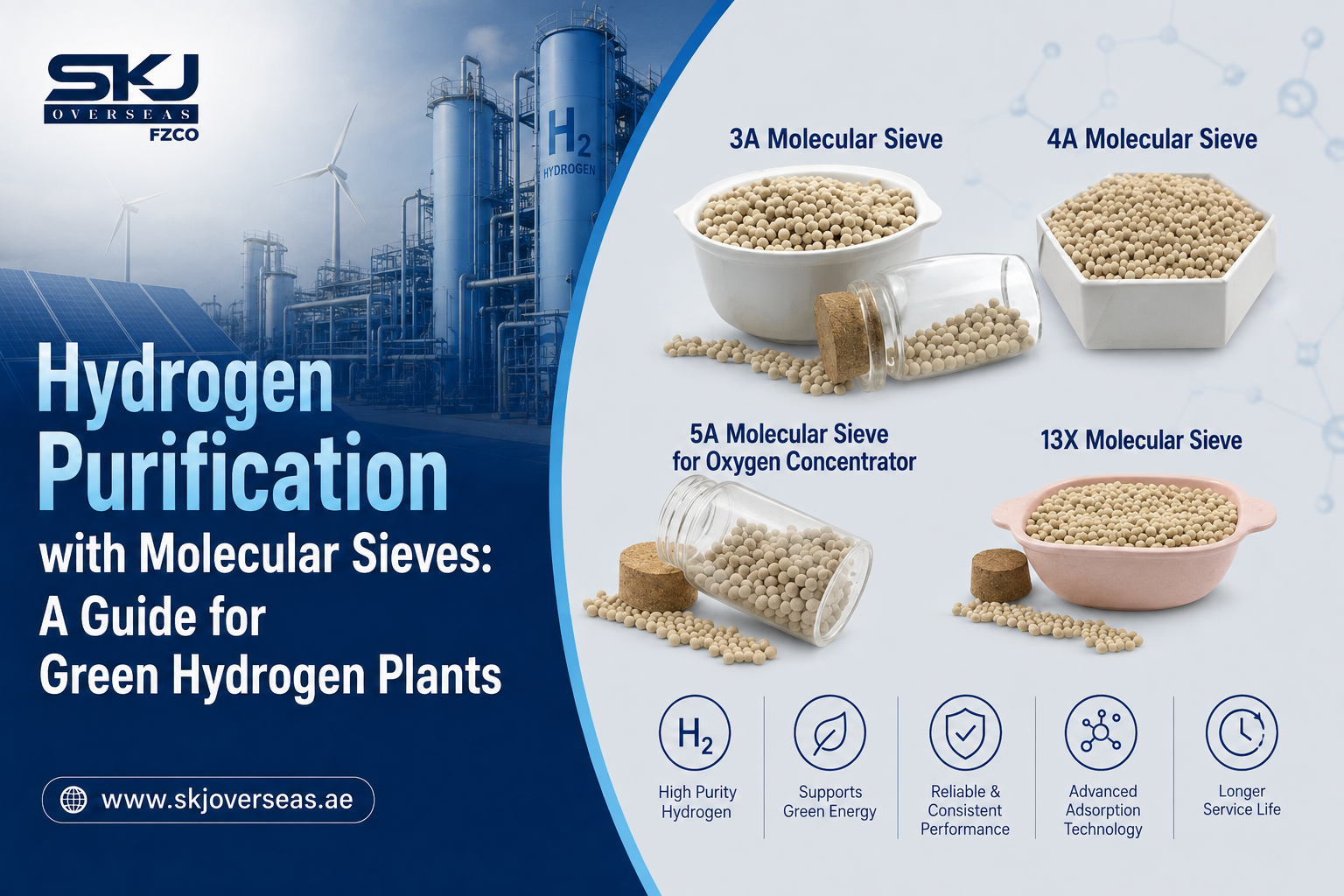
A 3A molecular sieve is a type of zeolite, a crystalline material with a very regular network of pores. The “3A” name comes from the 3 angstrom pore opening. Zeolite A is the base structure, and potassium exchange sets the pore size at about 3 angstroms.
It is usually supplied as small beads or pellets. Typical bead sizes are in the 1.6 to 2.5 mm range, though other sizes are available. The beads are packed in vessels, and ethanol vapor or liquid flows through them.
How the Dehydration Process Works Step by Step
Most plants run two or more adsorption beds side by side. While one bed removes water, another is being regenerated. The steps repeat in a cycle.
- Feed: ethanol near azeotropic strength is heated into vapor
- Adsorption: vapor passes through the bed, and the beads capture water
- Product: dry ethanol vapor leaves the bed and is condensed
- Regeneration: the loaded bed is depressurized or purged so water leaves the beads
- Switch: beds swap roles, and the cycle continues
Many plants use pressure swing adsorption, where pressure changes drive the cycle. Others use temperature changes. Both rely on the same sieve action.
Why Plants Choose 3A Molecular Sieves Over Other Methods
Other methods can break the azeotrope too, such as azeotropic distillation with a third solvent or membranes. Molecular sieves remain popular for practical reasons.
- High purity: reaches fuel-grade ethanol, 99.5% and above
- No added chemicals: no extra solvent enters the product
- Repeatable cycle: beds are regenerated and reused
- Compact design: adsorption units suit both small and large plants
- Predictable operation: performance is stable when beds are managed well
These qualities explain why the Role of 3A Molecular Sieves is central in most modern ethanol dehydration units.
Why 3A and Not 4A or 5A?
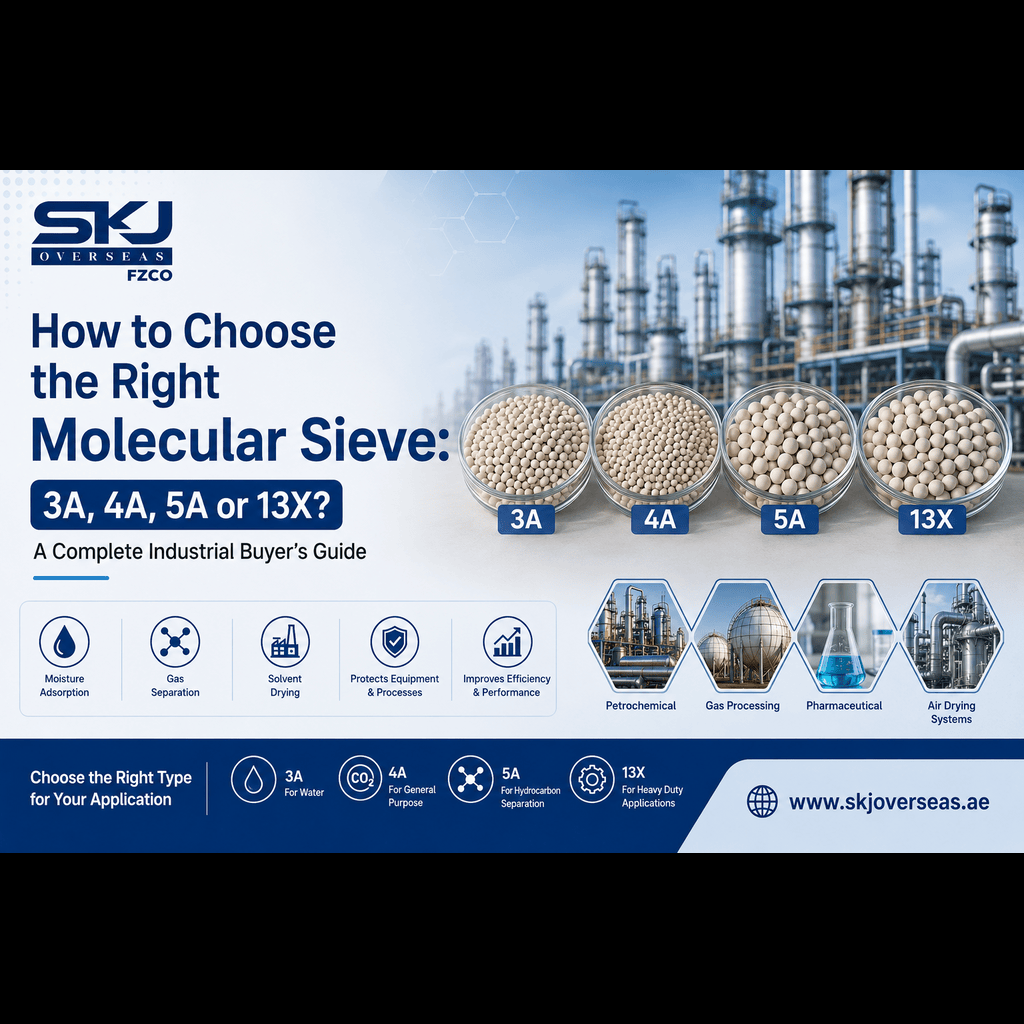
Different sieves have different pore sizes. A 4A sieve has pores of about 4 angstroms, which are large enough to admit some ethanol. Ethanol would then be adsorbed along with water, which lowers yield and wastes capacity.
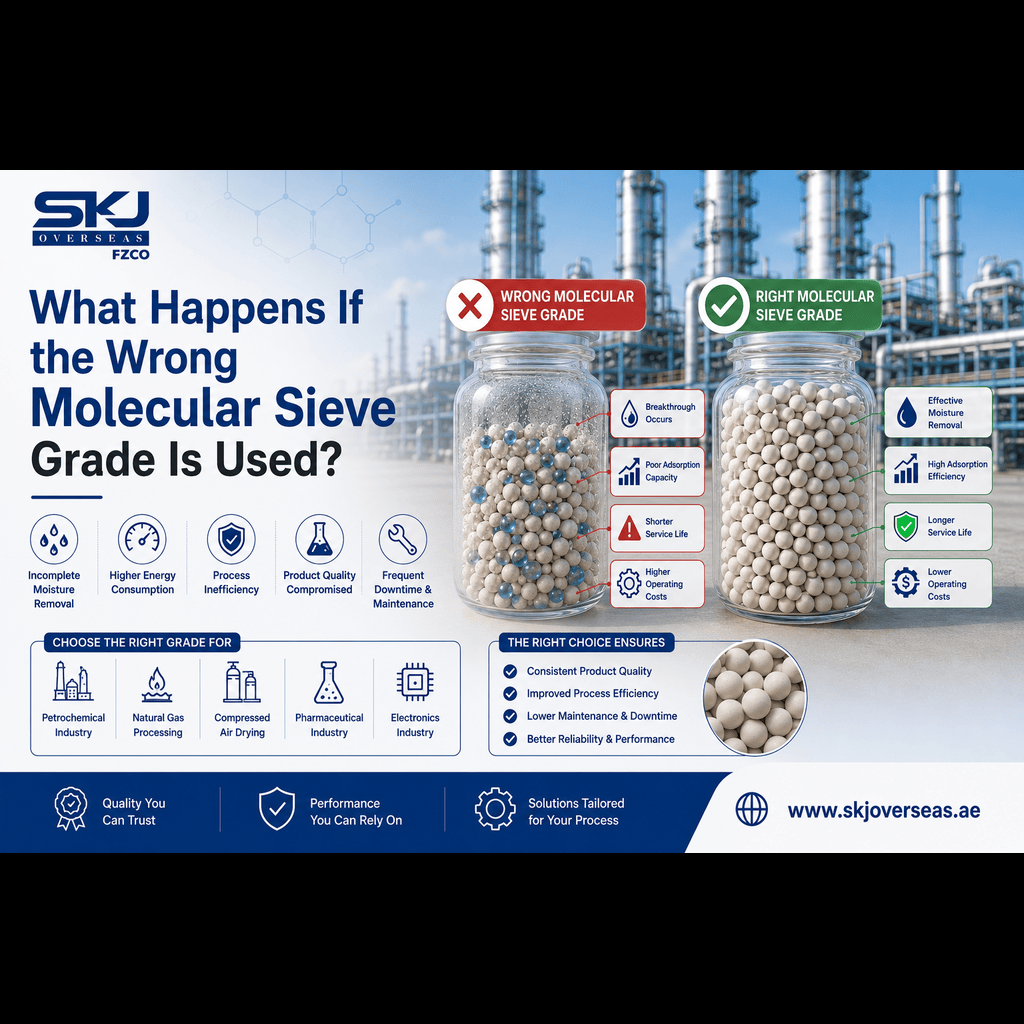
A 3A sieve keeps the pore opening small enough to exclude ethanol. That is why it is the standard for ethanol dehydration, and why using the wrong grade causes poor results.
Where Else 3A Molecular Sieves Are Used
The same selective drying ability is useful in other fields:
- Drying of other alcohols and polar solvents
- Dehydration of cracked gas and ethylene streams
- Drying of insulating glass and refrigerants
- Protection of sensitive products from moisture
Each use depends on the same idea: capture small water molecules and leave larger molecules alone.
What Affects Sieve Performance in Ethanol Plants
Real results depend on more than pore size. Check these points when evaluating a product and a plant design.
- Water capacity: how much water the beads hold per cycle
- Crush strength: beads must resist breaking under load and cycling
- Attrition: low dust formation protects valves and downstream equipment
- Bead size and uniformity: even beads give even flow and lower pressure drop
- Regeneration conditions: correct purge and timing protect bed life
Poor quality beads can break into dust, raise pressure drop, and shorten bed life. A documented specification protects against these problems.
Choosing Among 3A Molecular Sieve Manufactures
Not all 3A beads perform the same. Raw material purity, binder quality, and activation control all change capacity and strength. When comparing 3A Molecular Sieve manufactures, ask for water adsorption data, crush strength, bead size distribution, and moisture content on delivery.
A reliable maker also supplies batch certificates. These let your plant team verify each shipment before it goes into the bed.
Working With 3A Molecular Sieve Suppliers
The right partner does more than ship material. Good 3A Molecular Sieve suppliers help with grade selection, loading advice, and sample testing before a large order.
Ask about packaging as well. Molecular sieves adsorb moisture from air, so they should arrive in sealed, moisture-proof drums. Keep them sealed until loading.
Sourcing 3A Molecular Sieve in Dubai
Buyers looking for 3A Molecular Sieve in Dubai benefit from regional access to stock, samples, and technical support. This shortens lead times during a bed change or a planned shutdown.
Local contact also makes it easier to match the product to your plant design, whether you run a small distillery or a large fuel ethanol unit.
Export Support for Ethanol Plants
Ethanol and chemical plants across the Middle East, Africa, and Asia source adsorbents from the UAE. SKJ Overseas works as a Ceramic And Tower Packing Exporter in Dubai, and plant teams rely on that export experience for packing, documents, and delivery planning.
Dedicated 3A Molecular Sieve exporters also understand shipping needs. Sealed drums, correct labeling, and complete paperwork keep the cargo ready for the bed.
Handling and Loading Tips
Careful handling protects both the sieve and the process.
- Keep drums sealed until the moment of loading
- Load beds evenly, without dropping beads from a great height
- Use a layer of inert ceramic balls below and above the bed if your design calls for it
- Follow the regeneration guidance for your unit
- Replace beads when capacity has fallen, rather than waiting for failure
Frequently Asked Questions
1. What is the role of 3A molecular sieves in ethanol dehydration?
They remove water from ethanol that has reached the azeotrope, so it can reach 99.5% purity or higher. Their 3 angstrom pores admit water but block ethanol.
2. Why can’t distillation alone make pure ethanol?
At about 95.6% ethanol by weight, ethanol and water form an azeotrope. The vapor and liquid have the same makeup, so more distillation cannot separate them.
3. Why is 3A used instead of 4A?
A 4A sieve has larger pores that can admit some ethanol. This lowers yield and wastes capacity. A 3A sieve excludes ethanol, so only water is captured.
4. Can molecular sieve beds be reused?
Yes. Beds are regenerated by pressure or temperature changes that release the captured water. Over time capacity falls, and beads must eventually be replaced.
5. What should I check before buying 3A molecular sieve?
Ask for water capacity, crush strength, bead size, moisture content, and batch certificates. Also confirm that the product ships in sealed, moisture-proof packaging.
Talk to SKJ Overseas About 3A Molecular Sieves
The right sieve grade and quality protect your plant from poor purity, bead dust, and early bed replacement. SKJ Overseas supports ethanol and chemical plants with documented 3A molecular sieve specifications.
Contact us to request a quote, a technical datasheet, or a sample for your dehydration unit.