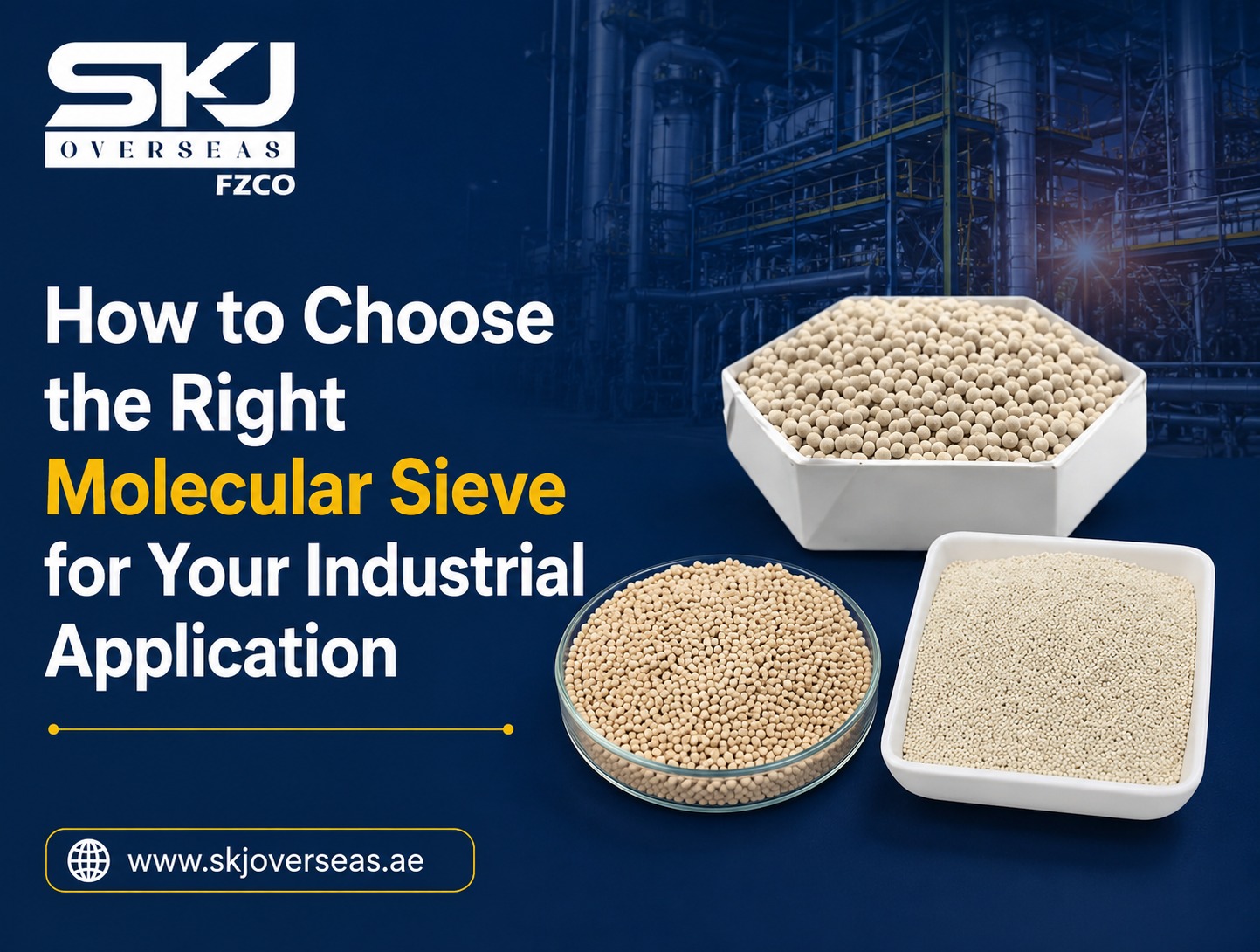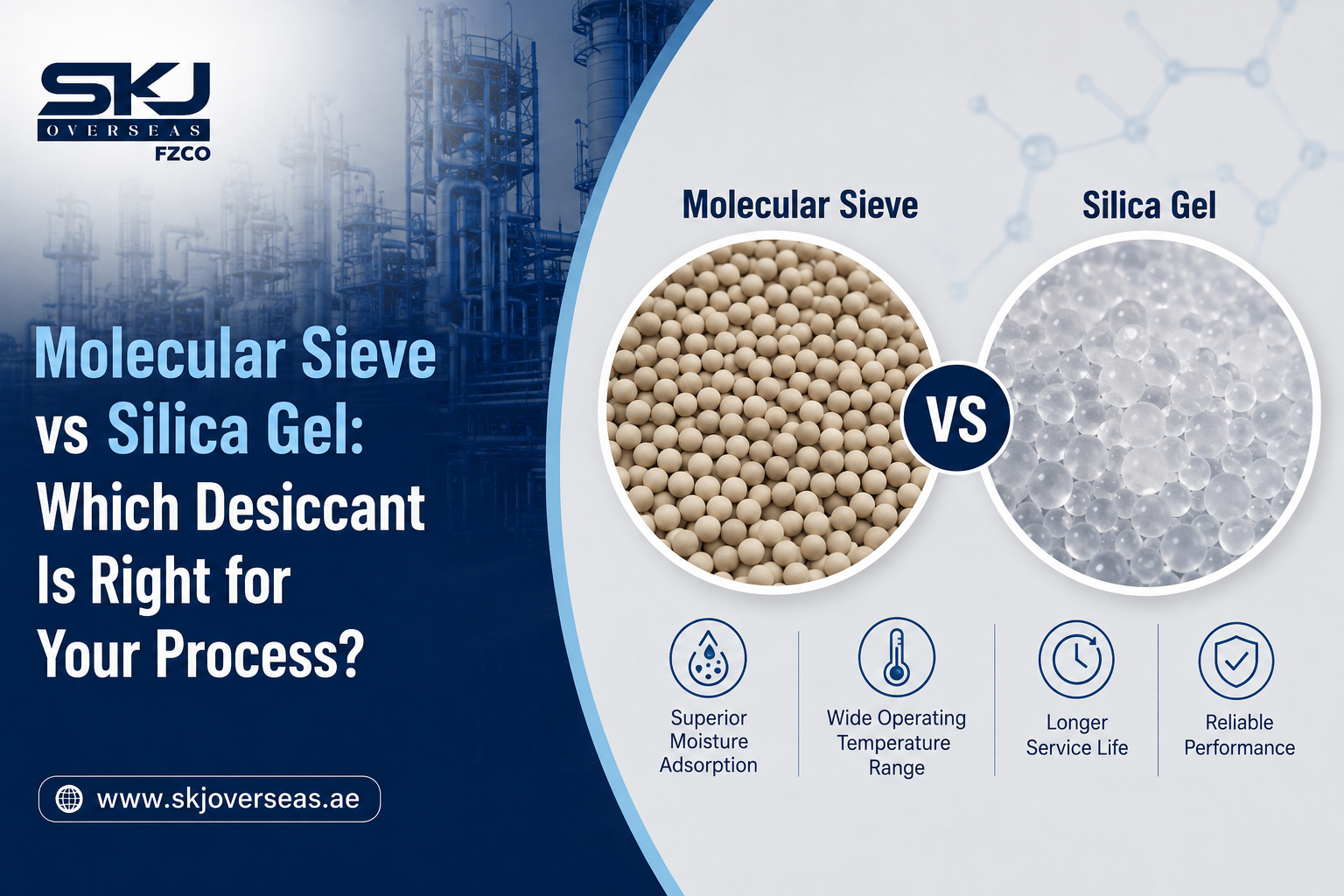
Molecular sieve vs silica gel is the first question any process engineer should answer before specifying a desiccant for gas drying, dehydration, or moisture control. In short: molecular sieve removes moisture to much lower dew points and performs reliably at high temperatures, while silica gel offers a lower cost, higher total moisture capacity, and easier handling for less demanding applications.
SKJ Overseas, a ceramic and tower packing manufacturer and exporter based in Dubai, also supplies industrial desiccants and the ceramic tower internals used in drying and absorption columns across the UAE.
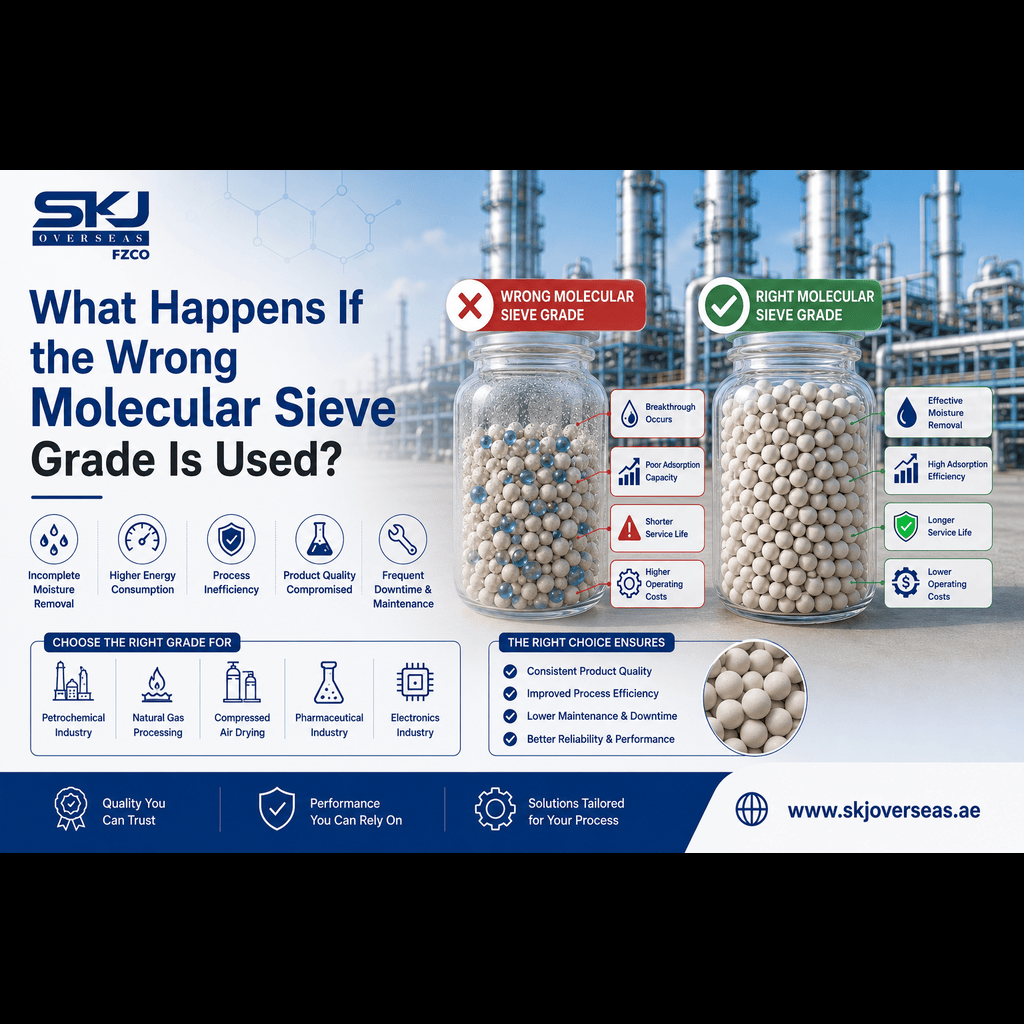
Choosing the wrong desiccant can lead to hydrate formation in gas pipelines, product spoilage, corrosion, or costly unplanned shutdowns. This guide compares molecular sieve and silica gel on structure, performance, cost, and real-world application, so you can make a confident, technically sound decision for your plant.
What Is the Difference Between Molecular Sieve and Silica Gel?
The core difference lies in structure. Silica gel is an amorphous, porous form of silicon dioxide made of irregularly shaped particles that adsorb water through simple physical attraction, much like a sponge.
Molecular sieve, by contrast, is a synthetic crystalline aluminosilicate (zeolite) manufactured with a uniform, precisely sized pore structure that selects and holds molecules based on their size. This uniformity is what gives molecular sieve its selective, high-strength adsorption behavior.
In simple terms, silica gel absorbs water in bulk, while molecular sieve selects and traps individual water molecules based on size. This one structural difference explains most of the performance gap between the two desiccants.
How Do Molecular Sieve and Silica Gel Adsorb Moisture?
Both desiccants work through physical adsorption, not chemical reaction, so neither one degrades the product it protects. However, the adsorption strength differs significantly between the two materials.
Molecular sieve has a much steeper adsorption isotherm than silica gel, meaning it grabs water more aggressively even when humidity is very low. Typical figures put the heat of adsorption for water on molecular sieve at around 1,800 BTU per pound adsorbed, compared to roughly 1,300 BTU per pound for silica gel a gap that explains why molecular sieve holds moisture so much more tightly, even as temperatures rise. Silica gel, under the same heat, can start releasing absorbed water back into the process stream.
Molecular Sieve vs Silica Gel: Key Performance Comparison
| Property | Molecular Sieve | Silica Gel |
| Structure | Crystalline aluminosilicate, uniform pores | Amorphous silica, irregular pores |
| Minimum achievable dew point | Very low (below 0.1 ppm in some designs) | Moderate, higher residual moisture |
| Performance at high temperature | Retains capacity well | Loses capacity, may desorb moisture |
| Adsorption speed | Fast and aggressive | Slower, more gradual |
| Moisture capacity by weight | Lower per unit weight | Higher up to about 40% of its own weight |
| Regeneration energy | Higher | Lower |
| Typical cost | Higher upfront cost | Lower upfront cost |
| Common use case | Natural gas dehydration, cryogenic drying, solvent purification | Packaging, general storage, electronics, pharmaceuticals |
Silica gel can hold a large volume of moisture relative to its weight, with capacity reaching roughly 40% of its own weight in water under favorable conditions. Molecular sieve, meanwhile, is the preferred choice whenever a process demands very low residual moisture, since it maintains strong adsorption even at low relative humidity the range where silica gel performance drops off.
When Should You Use Molecular Sieve?
Molecular sieve is the right choice whenever a process cannot tolerate trace moisture or must operate at elevated temperature. Common applications include:
- Natural gas dehydration ahead of cryogenic or NGL extraction units
- LNG pretreatment, where moisture must drop below 0.1 ppm to prevent freezing in cryogenic equipment
- Drying of solvents, refrigerants, and petrochemical liquids such as LPG
- Air separation plants and hydrogen purification systems
- Protecting catalysts in refinery processes from moisture-driven deactivation
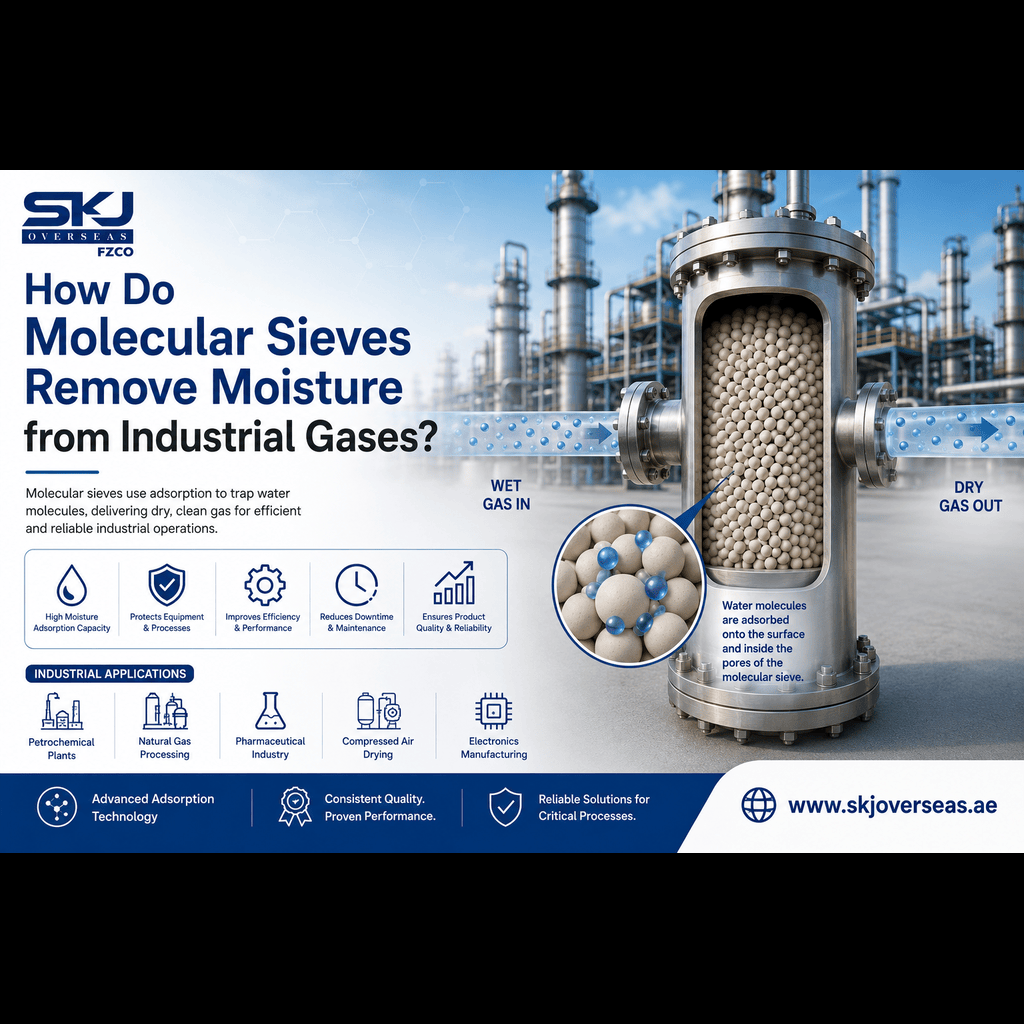
In gas processing, molecular sieve units are typically installed in vertical adsorption towers, where the wet gas stream enters at the top and flows downward through the packed bed of zeolite beads before exiting dry at the bottom. Silica gel beds and glycol contactors often cannot reach the ultra-low dew points that cryogenic and LNG processes require.
When Is Silica Gel the Better Choice?
Silica gel remains the practical, cost-effective option for a wide range of moderate-humidity applications. It’s a strong fit when:
- Budget and total cost of ownership matter more than reaching an ultra-low dew point
- The application runs near room temperature without major temperature swings
- Regulatory approval for food or pharmaceutical contact is required, since silica gel is widely approved for food and drug packaging
- The desiccant needs visual monitoring, since indicating silica gel changes color as it saturates
- Moisture load is moderate, and high total capacity per unit weight matters more than adsorption speed
For general industrial drying, container desiccation, and instrument air applications where conditions stay close to ambient, silica gel offers dependable performance at a lower installed cost.
Cost, Regeneration, and Life Cycle
Cost is rarely just the purchase price. A fair comparison has to include regeneration energy, service life, and how each desiccant behaves over repeated cycles.
Molecular sieve costs more per kilogram since it’s manufactured rather than mined, but it often needs less volume to hit a target dew point and holds its structure through many regeneration cycles. Silica gel costs less upfront and regenerates at lower temperatures, but its capacity can decline faster in high-heat or high-cycle service, meaning more frequent replacement in demanding gas processing duty.
Plants weighing long-term operating cost should model both desiccants against actual flow rate, target dew point, and regeneration schedule, rather than comparing purchase price alone.
Choosing a Desiccant Supplier in the UAE
Sourcing matters as much as material selection. When evaluating a supplier, check for:
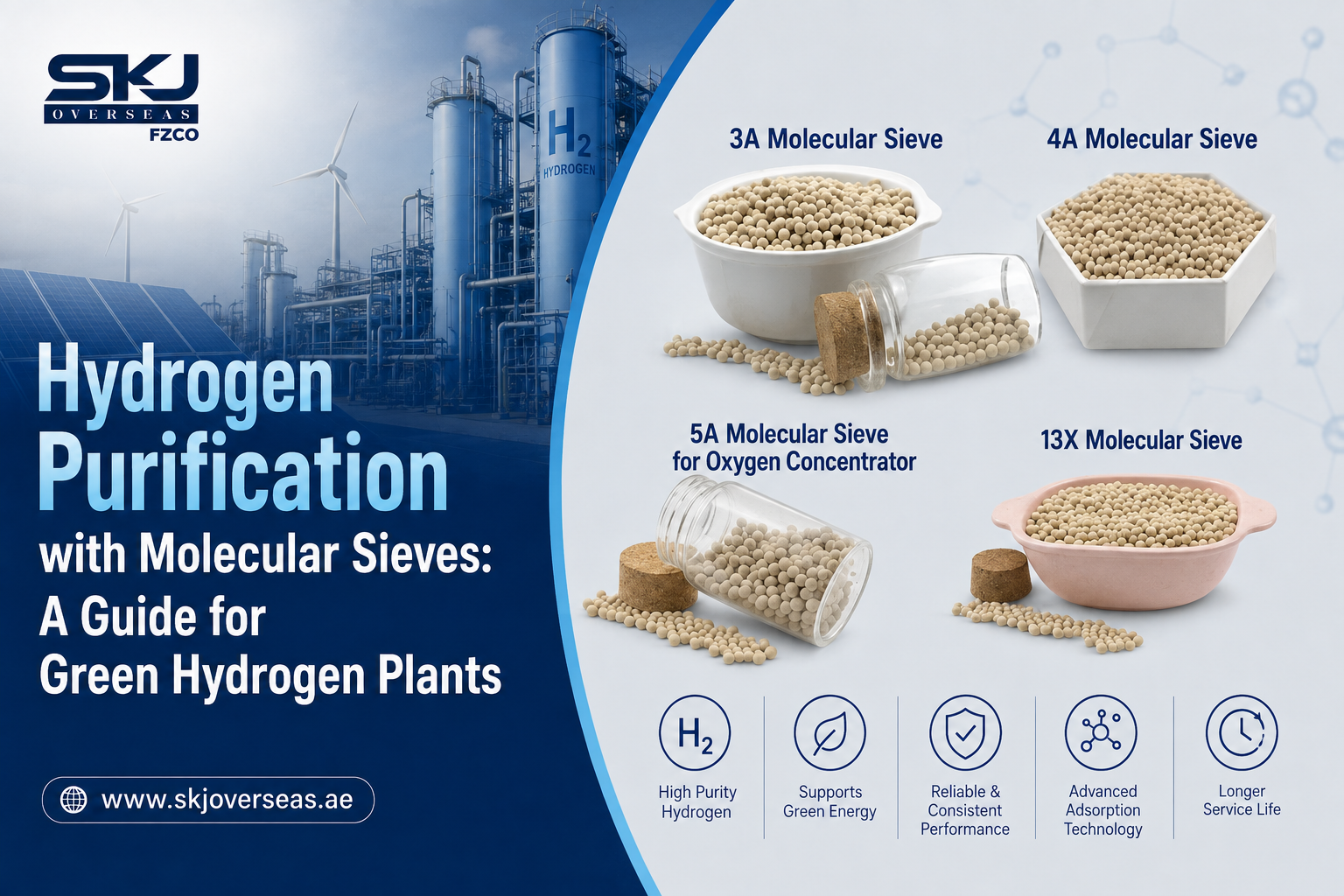
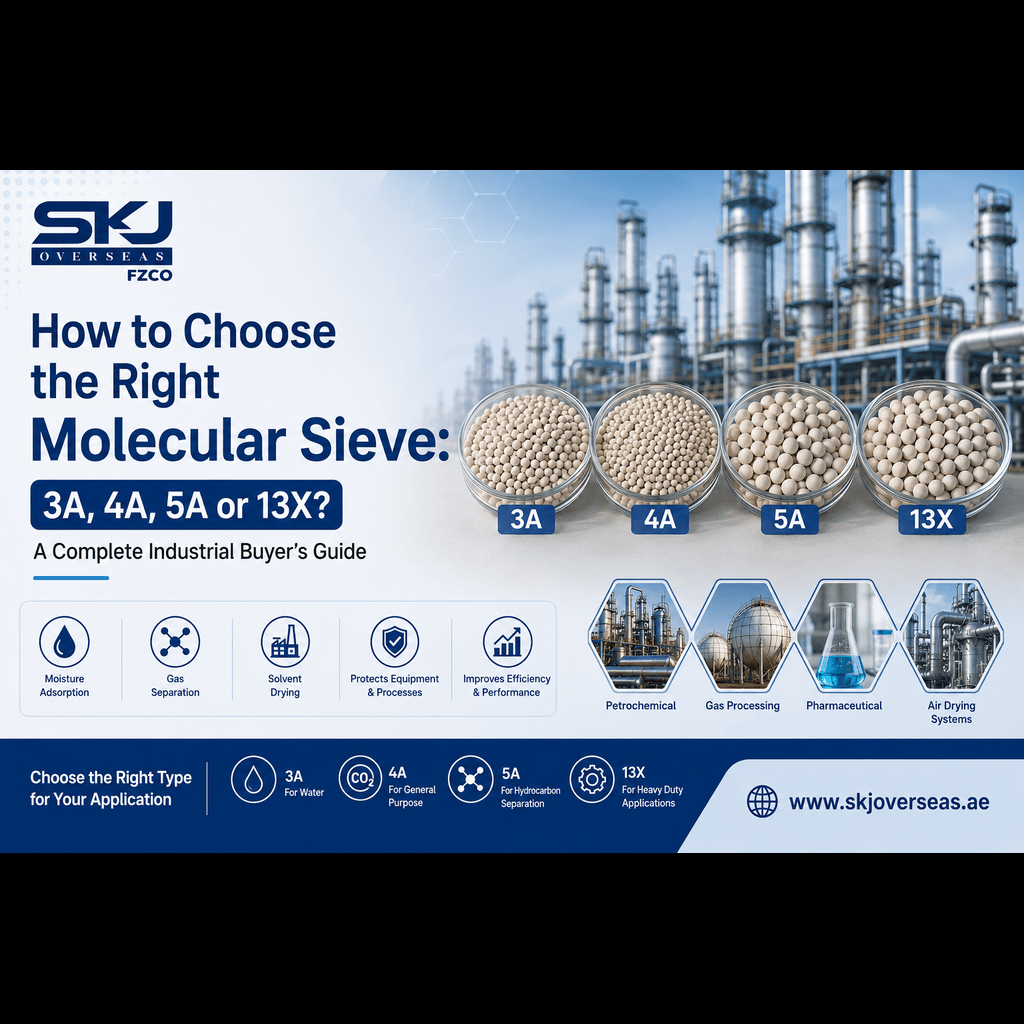
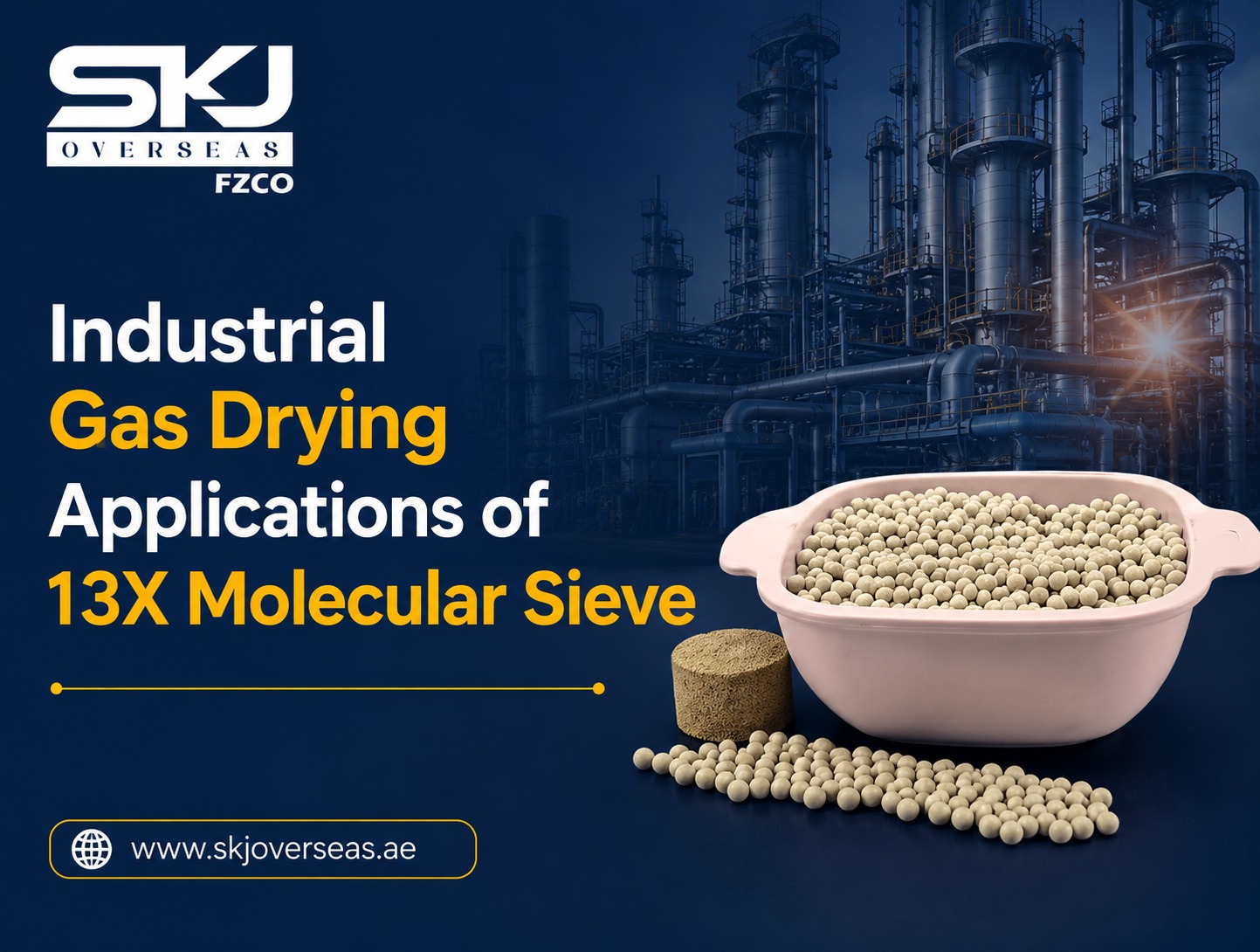
- Consistent bead or pellet sizing and verified pore structure (3A, 4A, 5A, or 13X grades for molecular sieve)
- Documented crush strength and low attrition loss, critical for long tower service life
- Batch testing data for moisture capacity and bulk density
- Local stock and fast delivery, to avoid production downtime
- Technical support for sizing adsorption towers correctly the first time
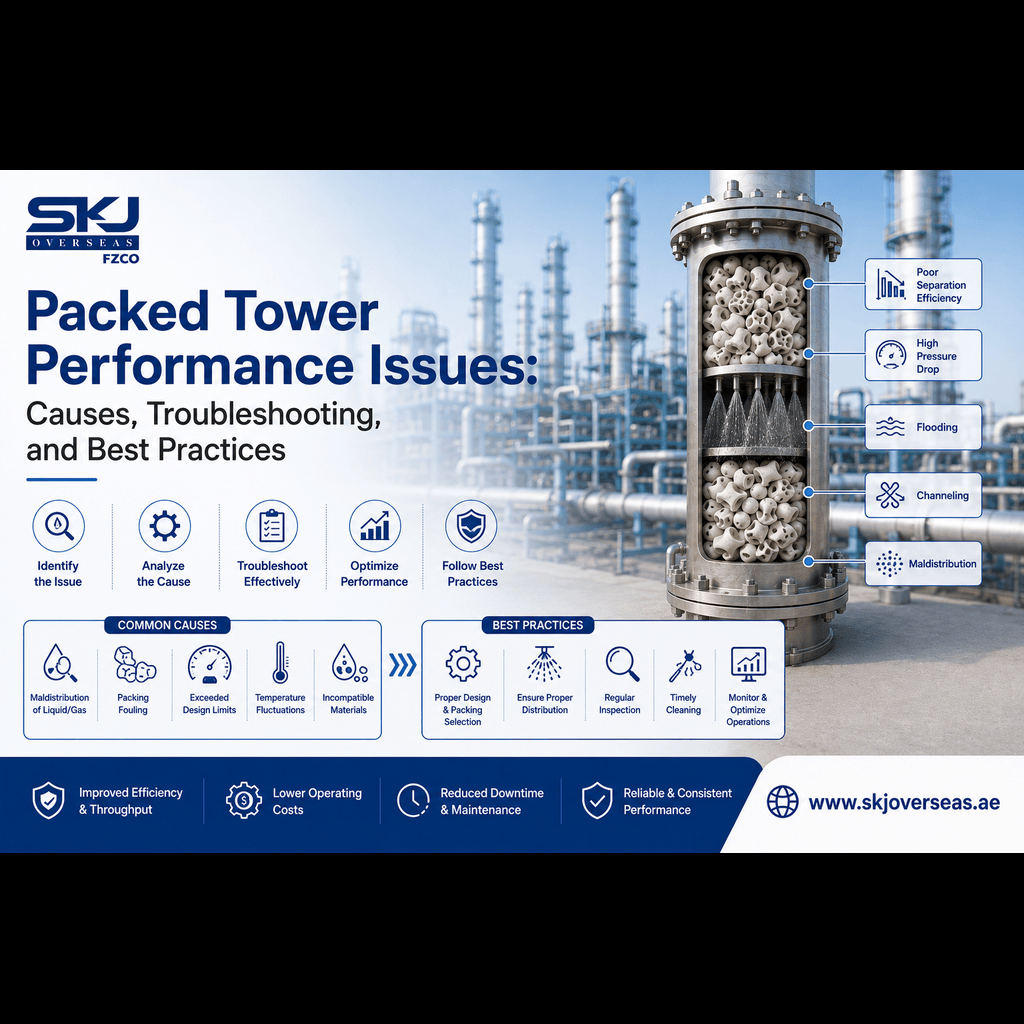
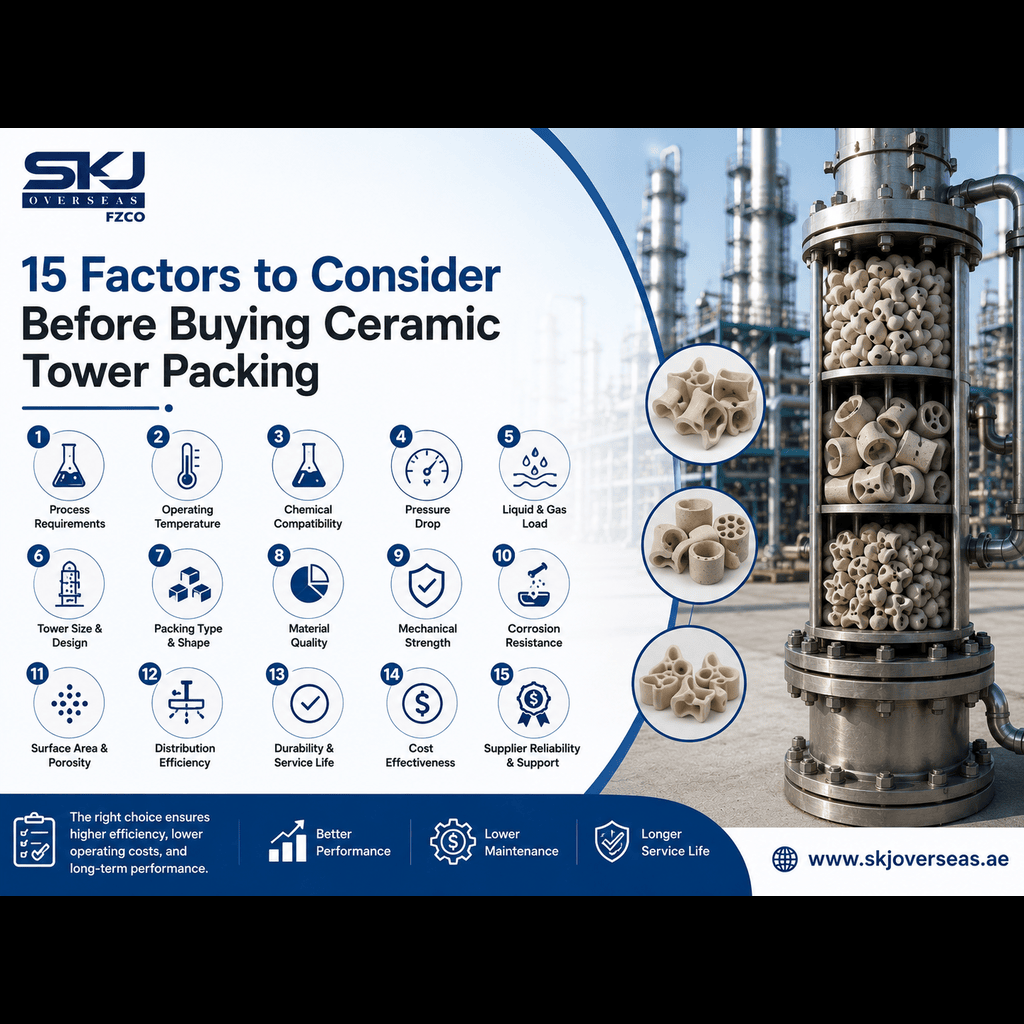
A reliable supplier should also understand the tower internals the desiccant sits inside, since bed support, distribution, and packing quality directly affect adsorption performance.
Why SKJ Overseas
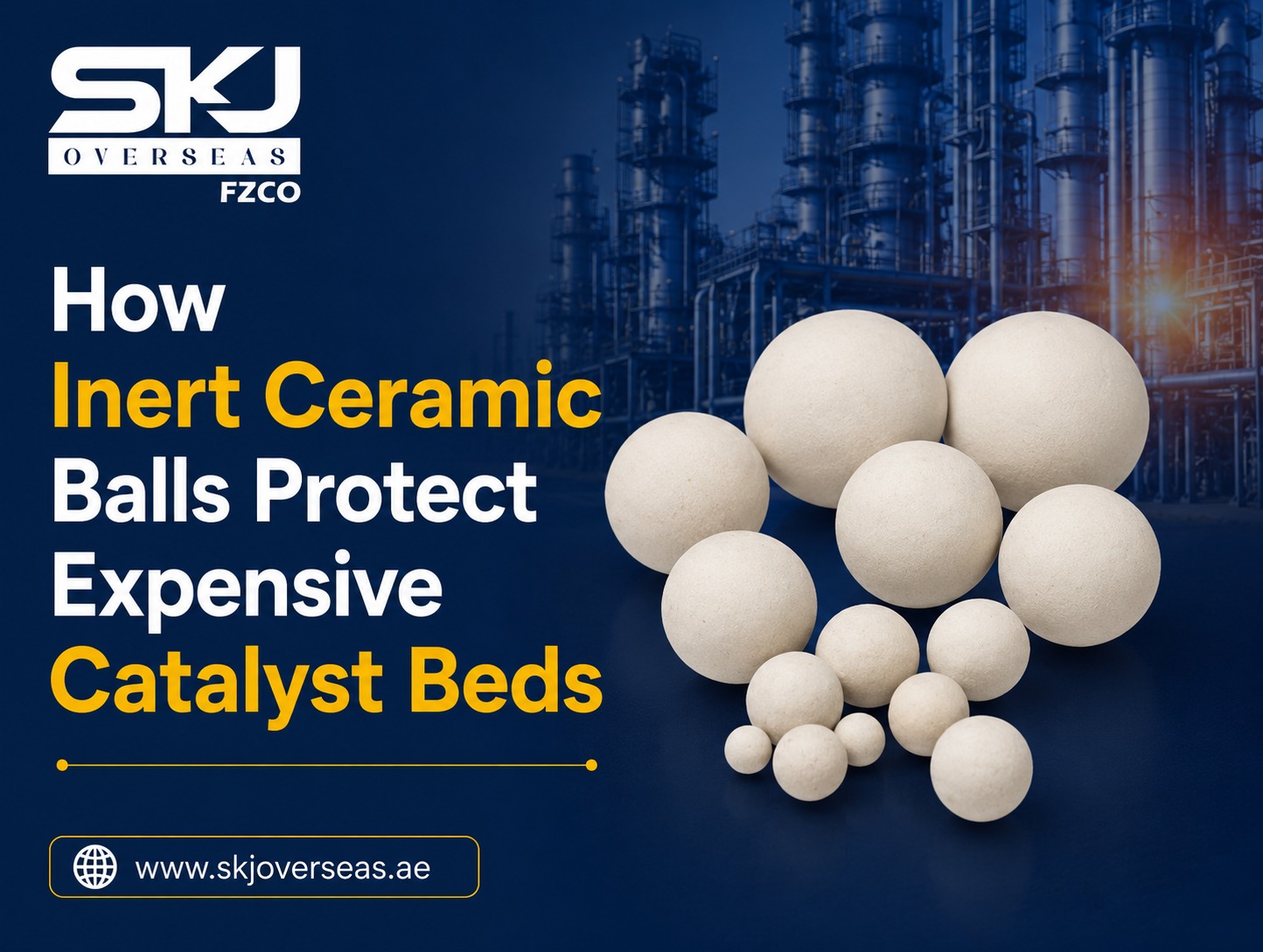
SKJ Overseas supplies industrial desiccants including molecular sieve and silica gel alongside its core business manufacturing and exporting ceramic tower packing from Dubai. This combination matters in real plant operations, because desiccant beds and packed absorption or stripping columns often sit in the same process line.
Serving chemical, oil and gas, and process industries, SKJ Overseas designs and exports ceramic tower packing for absorption and stripping columns, random and structured packing, and support grids that work alongside desiccant beds in drying and gas conditioning systems. Clients can source both the desiccant and the column internals from a single, accountable supplier giving SKJ Overseas the technical depth to advise on full system performance, not just individual product specifications.
FAQs About Molecular Sieve vs Silica Gel
1. Is molecular sieve better than silica gel for every application?
No. Molecular sieve outperforms silica gel at low humidity and high temperature, but silica gel is often the better choice when cost, higher total moisture capacity, or food and pharmaceutical approval matter more than reaching an ultra-low dew point.
2. Can molecular sieve and silica gel be used together in the same system?
Yes. Some gas processing and drying systems use silica gel or activated alumina as a bulk moisture removal stage, followed by molecular sieve as a polishing stage to reach very low final dew points cost-effectively.
3. How long does molecular sieve last compared to silica gel?
Molecular sieve generally holds its adsorption capacity through more regeneration cycles than silica gel, especially in high-temperature or high-cycle service, though actual life depends on gas composition, contamination, and regeneration conditions.
4. What pore size of molecular sieve should I choose?
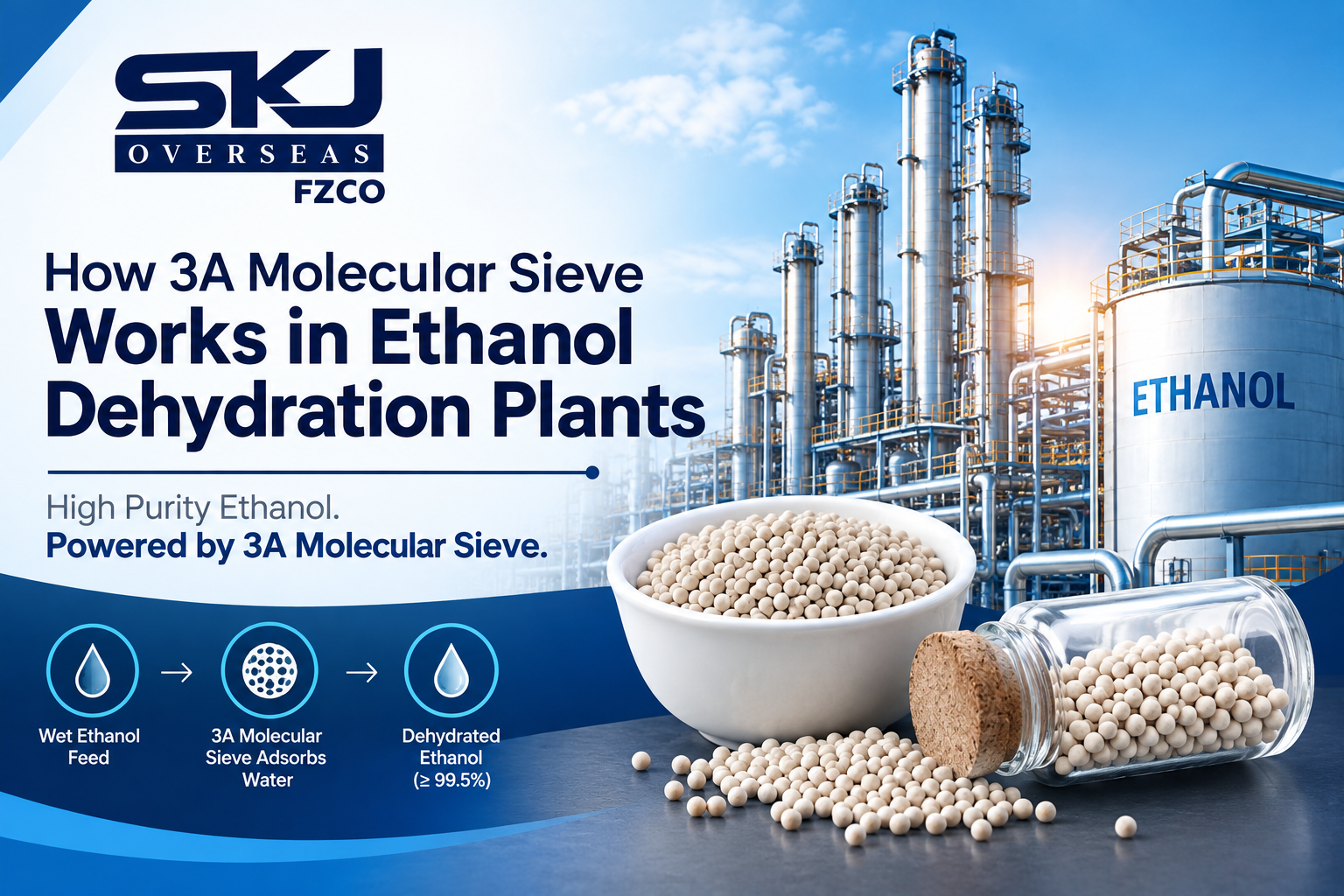
Pore size depends on what you need to remove. A 3A grade adsorbs only water and is common for ethanol dehydration; 4A adsorbs water and carbon dioxide; 5A adsorbs water, carbon dioxide, and larger molecules such as normal paraffins making grade selection essential before ordering.
5. Where can I buy molecular sieve and silica gel in Dubai or the UAE?
SKJ Overseas supplies molecular sieve, silica gel, and other industrial desiccants across Dubai and the wider UAE, alongside ceramic tower packing for the same process columns, with technical sizing support included.
Conclusion
Both molecular sieve and silica gel are proven desiccants, and the right choice comes down to your dew point target, operating temperature, budget, and regulatory requirements. Molecular sieve wins where trace moisture removal and heat resistance are critical; silica gel wins on cost and capacity for moderate-humidity applications.
If you’re specifying a desiccant or a ceramic tower packing solution for a drying, absorption, or stripping column in the UAE, talk to the SKJ Overseas technical team for product datasheets and a quotation tailored to your process conditions.