Choosing the wrong carbon form wastes money and weakens results. Powdered vs. Granular Activated Carbon is one of the most common questions in water treatment, gas cleaning, and chemical processing. The short answer: powdered carbon works fast and is dosed as needed, while granular carbon works in fixed beds and can be reused.
SKJ Overseas is a dedicated Ceramic Manufacturers in Dubai, serving process industries that use adsorbents, packing, and support media together. This guide compares the two carbon forms in plain terms so you can pick the right one for your plant.
What Is Activated Carbon?
Activated carbon is a highly porous form of carbon. It is made by heating a carbon-rich material, such as coal or coconut shell, and then “activating” it so it develops millions of tiny pores. These pores trap contaminants on their surface through adsorption.
Adsorption is not the same as absorption. Molecules stick to the surface of the carbon instead of soaking in. A single gram of activated carbon can have a surface area of 500 to 1,500 square meters, which is why it is so effective.
Powdered vs. Granular Activated Carbon: The Core Difference
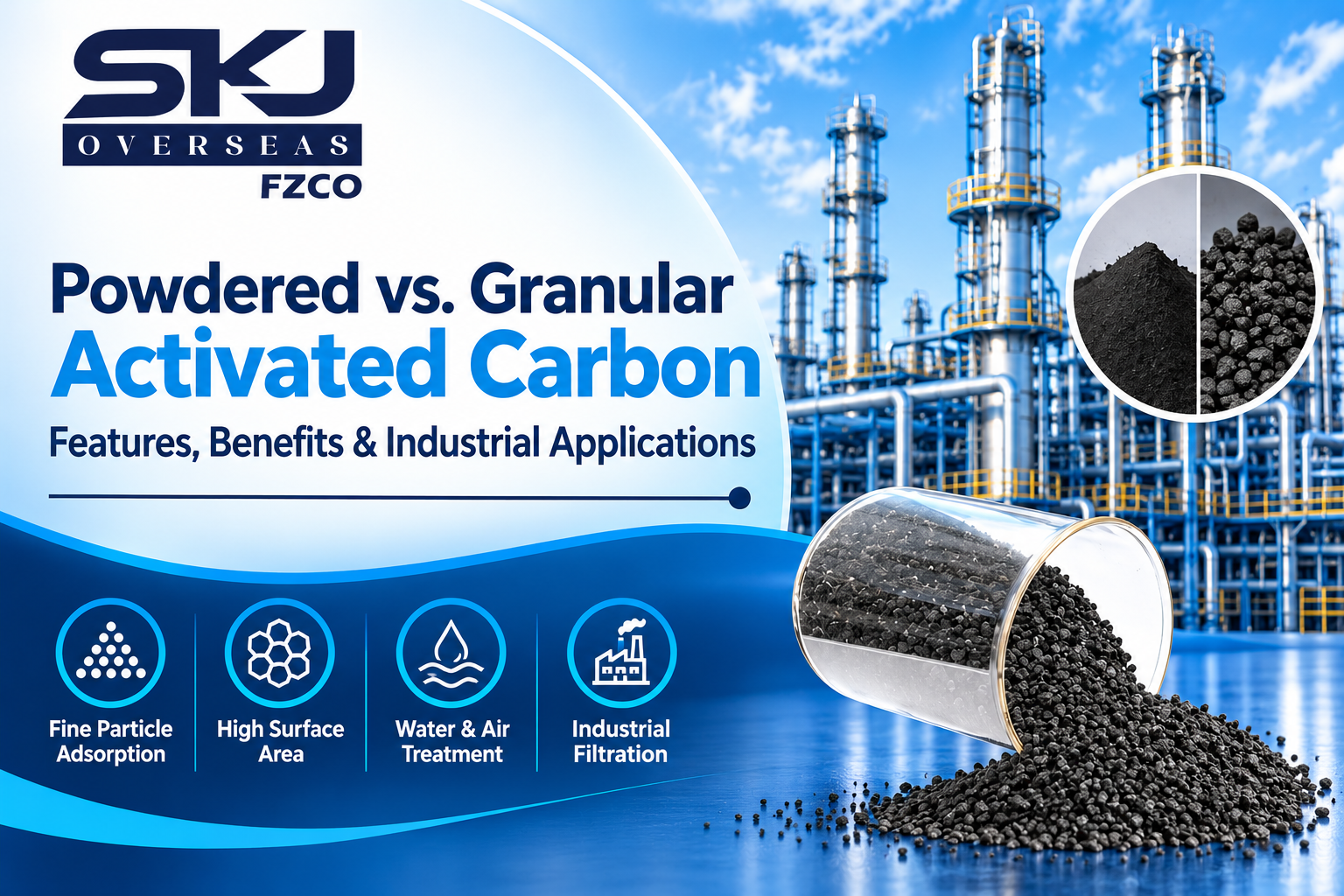
The main difference is particle size. Powdered activated carbon (PAC) is very fine, usually with particles smaller than about 0.18 mm. Granular activated carbon (GAC) is much coarser, commonly in the range of about 0.2 to 5 mm.
Size changes how the carbon is used.
- Powdered carbon is mixed into the liquid, does its work, and is then filtered out
- Granular carbon is packed in a column, and the liquid or gas flows through it
This one difference drives nearly every other point in the comparison.
Features of Powdered Activated Carbon
PAC has small particles and a very large outer surface. Contaminants reach the pores quickly, so PAC reacts fast.
- Fast adsorption: short contact time is enough
- Flexible dosing: add more or less as water quality changes
- Low upfront cost: no special vessel is needed in many plants
- Good for short or seasonal problems: such as taste, odor, or algae events
PAC is usually used once. After use, it leaves the system with the sludge or filter cake.
Features of Granular Activated Carbon
GAC particles are larger, so they sit in beds and let fluid pass through with moderate resistance. Contact is steady and continuous.
- Continuous treatment: well suited to constant flow
- Lower pressure drop than PAC slurries in filters: coarse grains leave open gaps
- Reactivation possible: spent carbon can be thermally reactivated and reused
- Higher capacity over time: a full bed holds a large amount of contaminant
GAC needs a vessel, support layers, and periodic bed changes. It then runs steadily for months.
Side-by-Side Comparison
The table below gives a general view. Exact performance depends on the carbon grade and the duty.
| Feature | Powdered (PAC) | Granular (GAC) |
| Particle size | Below about 0.18 mm | About 0.2 to 5 mm |
| Adsorption speed | Very fast | Slower per particle, steady in a bed |
| How it is used | Dosed into liquid, then filtered out | Packed in a fixed bed |
| Reuse | Usually single use | Often reactivated and reused |
| Equipment needed | Dosing and filtration | Vessel, supports, backwash |
| Best fit | Variable or short-term problems | Steady, continuous duty |
Why Coal-Based Carbon Is Popular in Industry
Activated carbon can be made from coal, coconut shell, or wood. Coal-based carbon is widely used in industry because it is hard, dense, and has a mix of pore sizes. This helps it capture a broad range of contaminants.
A reliable maker of Coal Based Granular & Powder Activated Carbon manufactures product to controlled specifications, such as particle size, hardness, ash content, and iodine number. These values show the quality of the carbon, so always ask for them.
Industrial Applications of Powdered Activated Carbon
PAC suits jobs that need quick action or flexible dosing.
- Taste and odor control in drinking water
- Emergency treatment of chemical spills
- Decolorization of sugar, chemicals, and food ingredients
- Wastewater polishing
- Mercury and organic removal from flue gas by injection
- Pharmaceutical and fine chemical purification
Industrial Applications of Granular Activated Carbon
GAC suits steady flows and long runs.
- Municipal and industrial water filtration
- Removal of chlorine and organics from process water
- Solvent recovery and VOC control in air and gas streams
- Odor control in waste treatment
- Gas purification in chemical plants
- Groundwater and remediation systems
How to Choose Between PAC and GAC
Ask four simple questions.
- Is the problem constant or occasional? Constant favors GAC. Occasional favors PAC
- How fast is the result needed? Fast action favors PAC
- Do you have space for a vessel? If not, PAC may be easier
- Can you reactivate or dispose of spent carbon? This affects total cost
Many plants use both. For example, PAC may handle seasonal peaks while GAC handles the base load.
Choosing a Coal Based Carbon Supplier
A dependable Coal Based Granular & Powder Activated Carbon supplier does more than sell by the bag. It should give you a specification sheet and a batch certificate. It should also help you match the grade to your process.
Check these points on the datasheet.
- Particle size or mesh range
- Iodine number, which indicates pore capacity
- Hardness or abrasion number
- Ash and moisture content
- Bulk density
Be careful with suppliers who offer only a low price and no test data.
Sourcing Activated Carbon in Dubai
Buyers looking for Coal Based Granular & Powder Activated Carbon in Dubai benefit from regional stock and short lead times. Local access also makes it easier to test samples before a full order.
Share your flow rate, contaminant type, and equipment size when you ask for advice. Your supplier can then suggest a suitable grade and bed design.
Export and Logistics Support
Process plants across the Middle East, Africa, and Asia source industrial materials from the UAE. SKJ Overseas works as a Ceramic And Tower Packing Exporter in Dubai, and plant teams value that export experience for packing, documentation, and delivery planning. Activated carbon should arrive sealed and dry, since it adsorbs moisture and odors from the air.
Where Ceramic Media Fits Alongside Carbon Beds
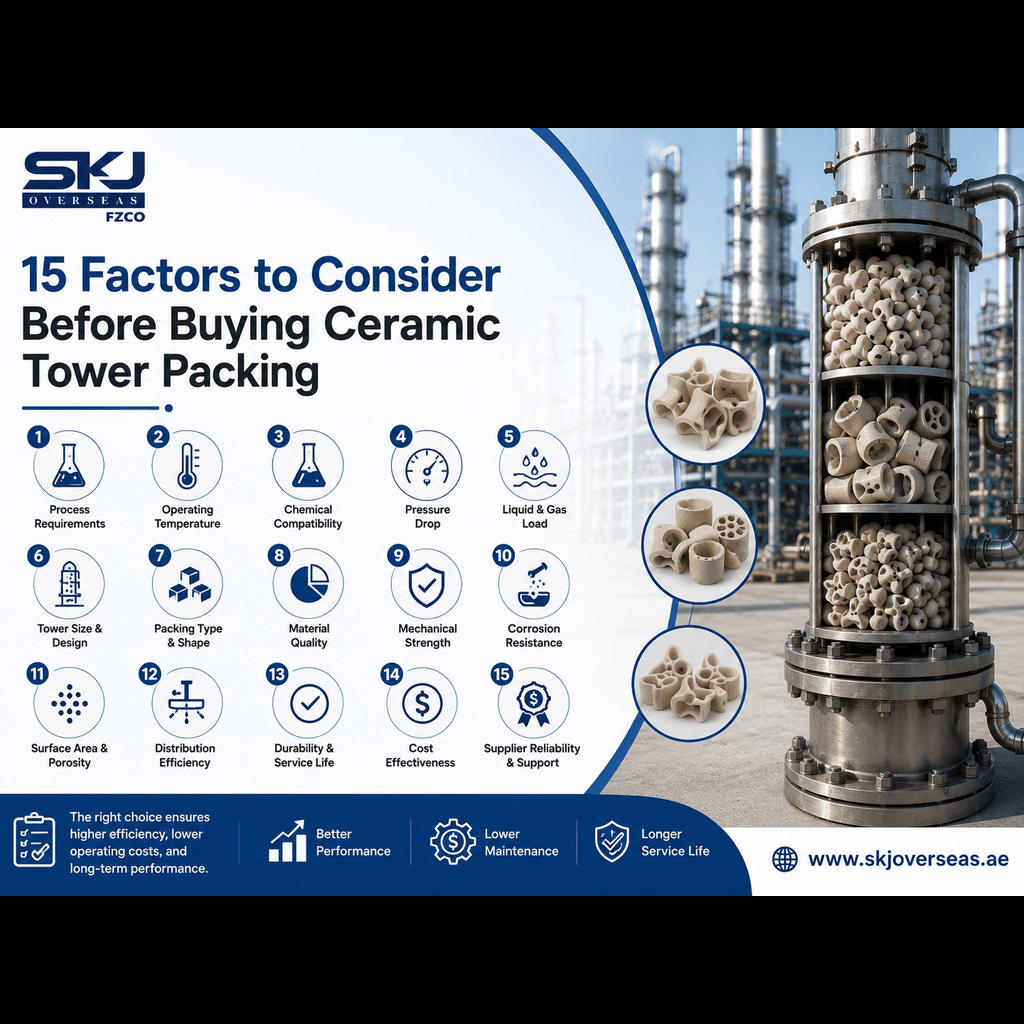
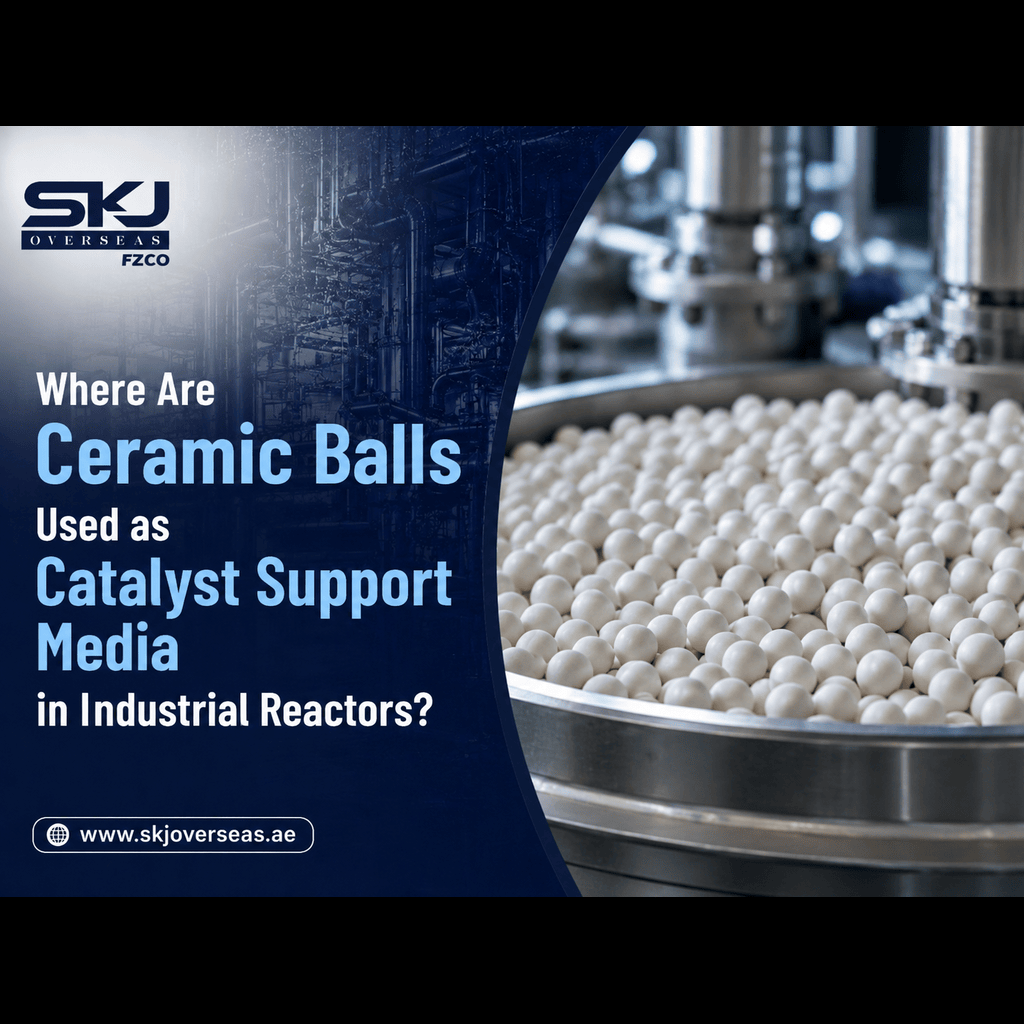
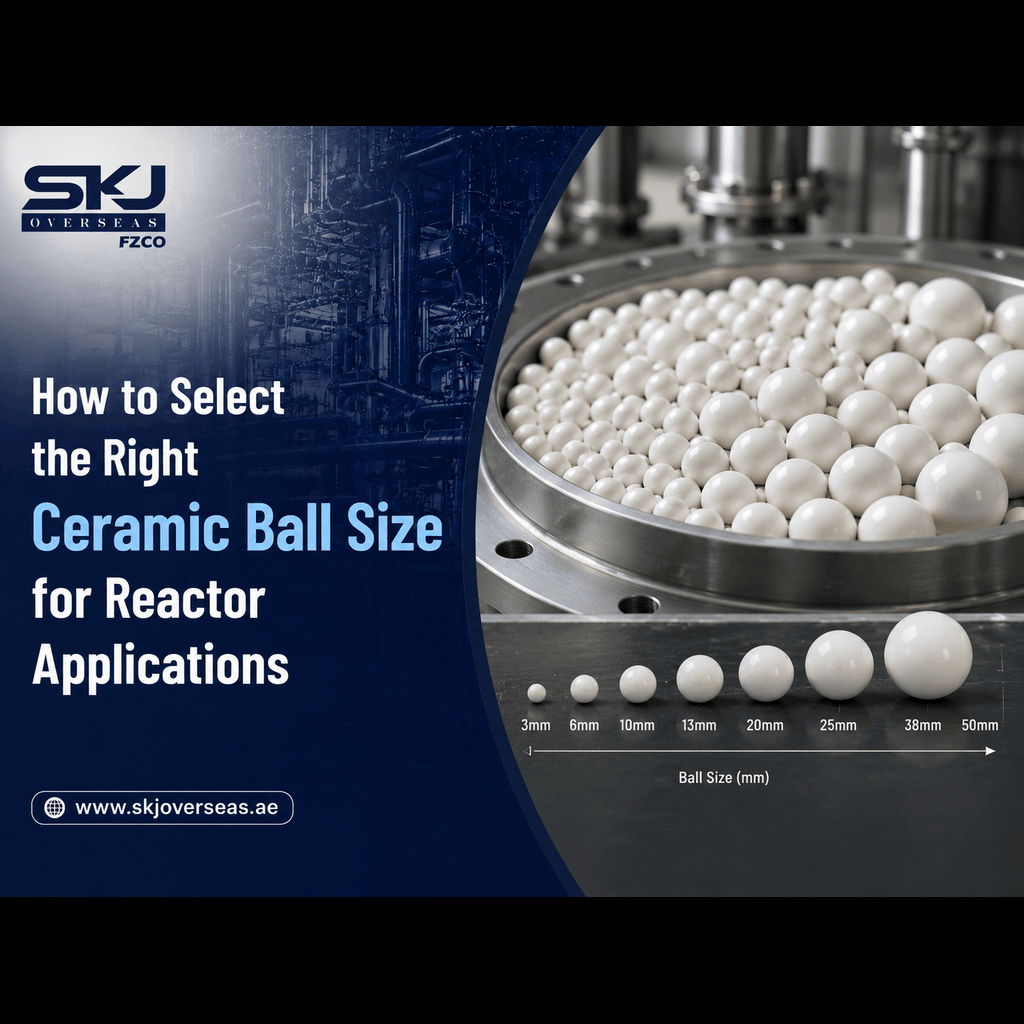
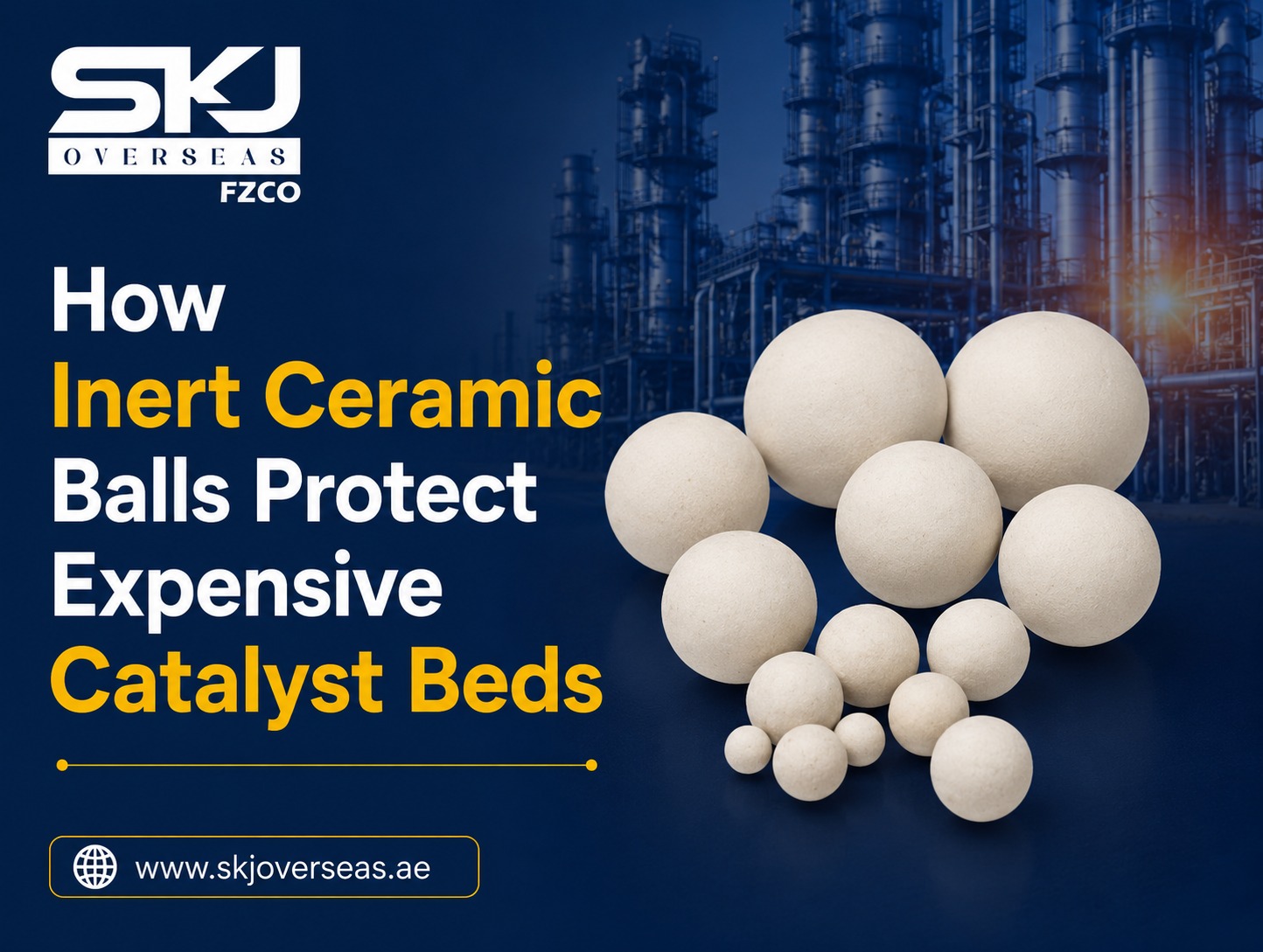
Carbon beds often use ceramic support layers. Inert ceramic balls placed under the carbon hold the bed, spread flow evenly, and protect the outlet screen. This is where SKJ Overseas adds value as a ceramic manufacturer.
Ceramic is chemically stable and does not shed material into the stream. That keeps the carbon bed clean and extends its life.
Handling and Safety Tips
Activated carbon needs a few basic precautions.
- Store it sealed, dry, and away from solvents
- Avoid dust inhalation when handling powdered carbon, and use suitable masks
- Wet carbon can remove oxygen from enclosed spaces, so follow confined-space rules
- Load beds evenly and backwash gently to avoid breaking grains
Frequently Asked Questions
1. What is the main difference between powdered and granular activated carbon?
Particle size. Powdered carbon is very fine and is dosed into liquid, then filtered out. Granular carbon is coarser and is packed in a bed.
2. Which is better, PAC or GAC?
Neither is better in every case. PAC suits fast, flexible, or seasonal needs. GAC suits steady, continuous flow and can often be reactivated.
3. Can activated carbon be reused?
Granular carbon can often be thermally reactivated. Powdered carbon is usually single use because it leaves with the sludge.
4. Why is coal-based activated carbon used so often?
It is hard, dense, and has a mix of pore sizes. This helps it capture many types of contaminants and handle wear in industrial use.
5. What should I check before buying activated carbon?
Ask for particle size, iodine number, hardness, ash, moisture, and bulk density. A reliable supplier provides these figures and batch certificates.
Talk to SKJ Overseas About Your Process Needs
The right carbon form and bed design protect water quality, product purity, and equipment. Our team can discuss your application and the ceramic support media that goes with it.
Contact us to request a quote, a technical datasheet, or a sample for your application.