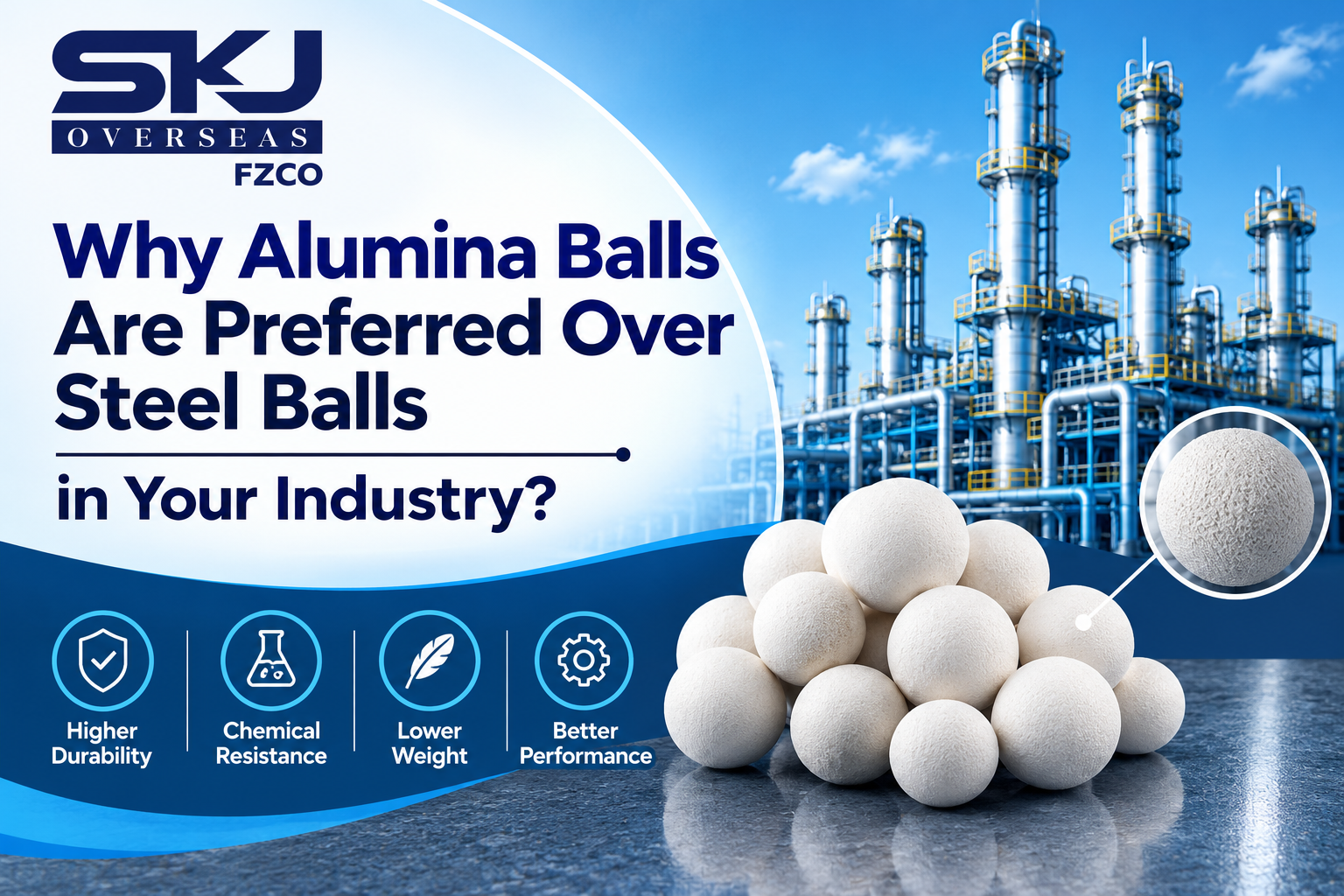
Plants switching grinding and support media often ask the same question once wear rates and contamination issues start piling up: why are Alumina Balls Are Preferred Over Steel Balls in so many modern industrial processes? The short answer is durability, purity, and chemical stability, three properties that directly affect product quality and long-term operating cost in ways steel simply cannot match in many applications. While steel still has its place in heavy, high-impact crushing, alumina has steadily taken over in processes where purity, wear resistance, and corrosion resistance matter most.
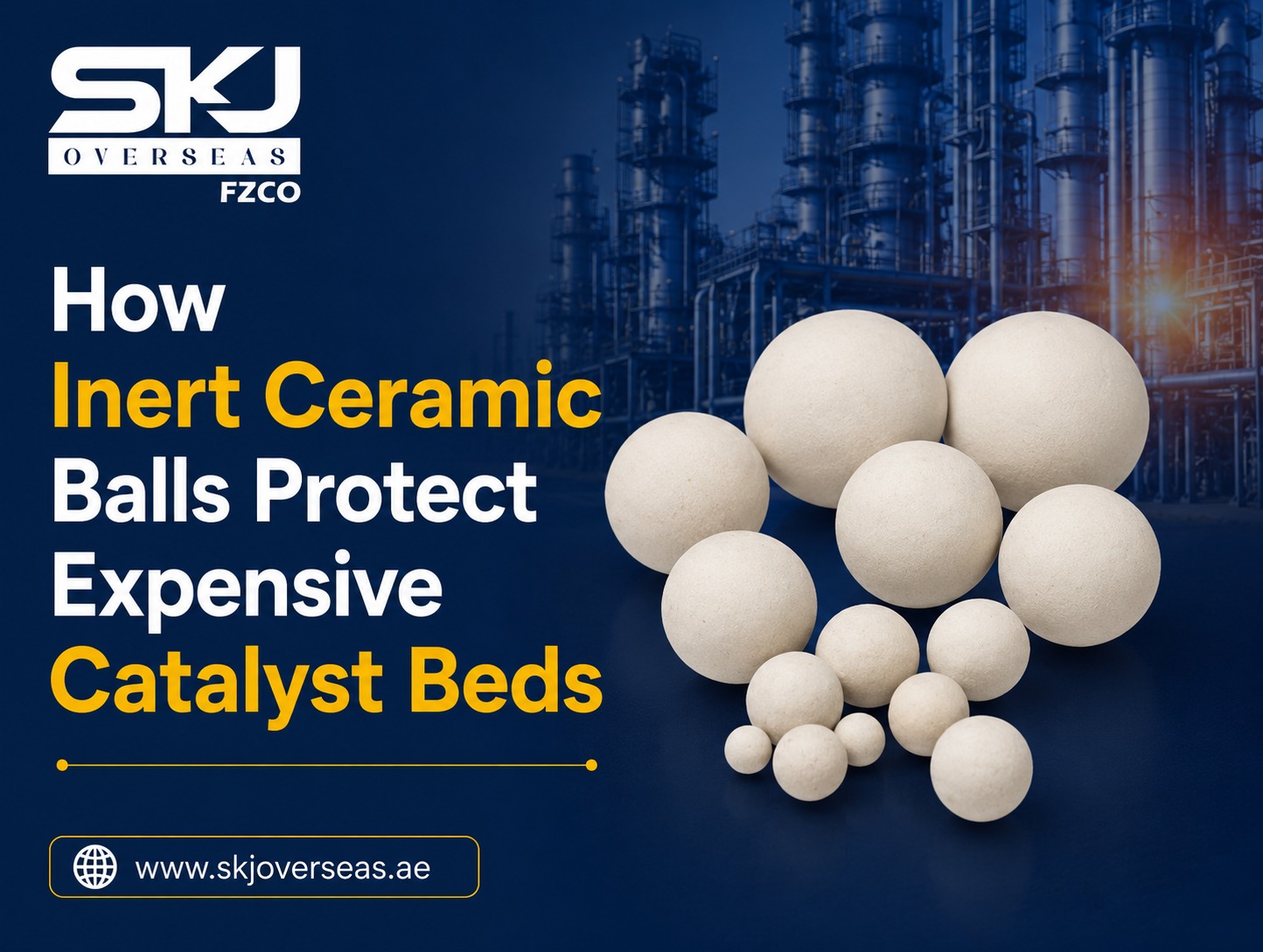
As an established Ceramic Manufacturers in Dubai and a trusted Ceramic and Tower Packing Exporter in Dubai, SKJ Overseas manufactures high alumina ceramic balls used across grinding, catalyst support, and filtration applications throughout the region. This guide breaks down exactly why alumina outperforms steel in these roles and where each material still makes sense.
Alumina Balls vs Steel Balls: The Core Property Differences
Before comparing specific applications, it helps to understand the fundamental material properties driving this shift. Alumina and steel differ significantly in hardness, density, chemical behavior, and purity, and each of these differences shapes where one material outperforms the other.
Key property comparison between the two materials:
- Hardness: alumina typically reaches around 9 on the Mohs scale, compared to roughly 7 to 8 for hardened steel
- Density: alumina balls are lighter, generally around 3.7 to 4.0 g/cm³ versus approximately 7.8 g/cm³ for steel
- Maximum temperature resistance: high alumina ceramic can withstand well above 1500°C, while steel typically softens above 500°C to 600°C
- Chemical resistance: alumina resists acids, alkalis, and salts, while steel corrodes under the same conditions
- Purity: high-grade alumina balls reach 92% to 99%+ Al2O3 content with minimal metallic impurities
Why Alumina Balls Are Preferred Over Steel Balls for Wear Resistance
One of the clearest reasons plants switch to alumina is wear performance. Because alumina’s hardness exceeds that of hardened steel, ceramic balls wear down far more slowly during continuous grinding or milling operations, which directly reduces how often the media needs replacing.
Lower wear also means more stable particle size distribution over the life of a grinding run, since the media itself is not contributing variable-sized debris into the product. Plants running continuous milling operations often find that the reduced wear rate alone justifies alumina’s higher upfront cost within a relatively short operating period.
Why Alumina Balls Are Preferred Over Steel Balls for Contamination Control
Steel balls introduce a specific risk that alumina avoids almost entirely: metallic contamination. As steel media wears down during grinding, it sheds iron and other metal particles directly into the product being processed, which is a serious problem in pigment, pharmaceutical, ceramic, and electronic material production where even trace metal contamination can ruin a batch.
High alumina ceramic balls do not introduce this risk, since their composition is chemically inert and does not shed reactive metallic debris into the process stream. This is why a dependable high alumina ceramic balls manufacturer is a critical partner for any plant producing high-purity materials where contamination control is non-negotiable.
Why Alumina Balls Are Preferred Over Steel Balls for Chemical Resistance
Steel corrodes when exposed to acids, alkalis, or saline environments, which shortens its service life and introduces corrosion byproducts into the process. Alumina remains chemically stable across nearly all acids and alkalis, with hydrofluoric acid as one of the few notable exceptions, making it the clear choice for any process involving aggressive chemical exposure.
This chemical stability extends service life significantly in applications such as catalyst bed support, acid regeneration towers, and chemical processing reactors, where steel components would degrade within a fraction of the time. A plant working with High Alumina Ceramic Balls in Dubai typically chooses this material specifically to avoid the recurring maintenance costs associated with corroding metal components.
Why Alumina Balls Are Preferred Over Steel Balls for High-Temperature Stability
High-temperature processes place demands on grinding and support media that steel cannot meet without significant performance loss. While steel begins to soften and lose structural integrity above roughly 500°C to 600°C, high alumina ceramic balls maintain their strength and shape well beyond 1500°C in many grades.
This temperature tolerance makes alumina the standard choice for kiln applications, furnace support media, and catalyst beds operating under continuous high-heat conditions. Steel simply cannot compete in these environments without frequent replacement due to thermal deformation.
Where Steel Balls Still Make Sense
Despite alumina’s advantages, steel retains a legitimate role in specific applications where its properties are actually the better fit. Steel’s higher toughness and impact resistance make it more suitable for coarse, high-impact crushing operations, where brittleness would cause ceramic media to fracture under heavy mechanical shock.
Applications requiring magnetic properties, such as certain automated separation or assembly processes, also favor steel since alumina offers no magnetic response. Choosing between the two materials ultimately depends on matching the media’s properties to the specific mechanical and chemical demands of your process, rather than assuming one material is universally superior.
Alumina Balls vs Steel Balls: Quick Comparison Table
| Factor | Alumina Balls | Steel Balls |
| Hardness | Higher, around Mohs 9 | Lower, around Mohs 7 to 8 |
| Wear rate | Very low | Higher, requires more frequent replacement |
| Contamination risk | Minimal, chemically inert | Introduces iron and metal debris |
| Chemical resistance | Excellent against acids and alkalis | Corrodes in acidic or saline conditions |
| Maximum temperature | Above 1500°C in high-grade alumina | Limited to roughly 500°C to 600°C |
| Impact toughness | Lower, more brittle | Higher, better for heavy impact |
| Magnetic properties | None | Magnetic |
| Best use case | Fine grinding, high-purity, corrosive or high-heat processes | Coarse crushing, high-impact, magnetic separation needs |
Common Industrial Applications of Alumina Balls
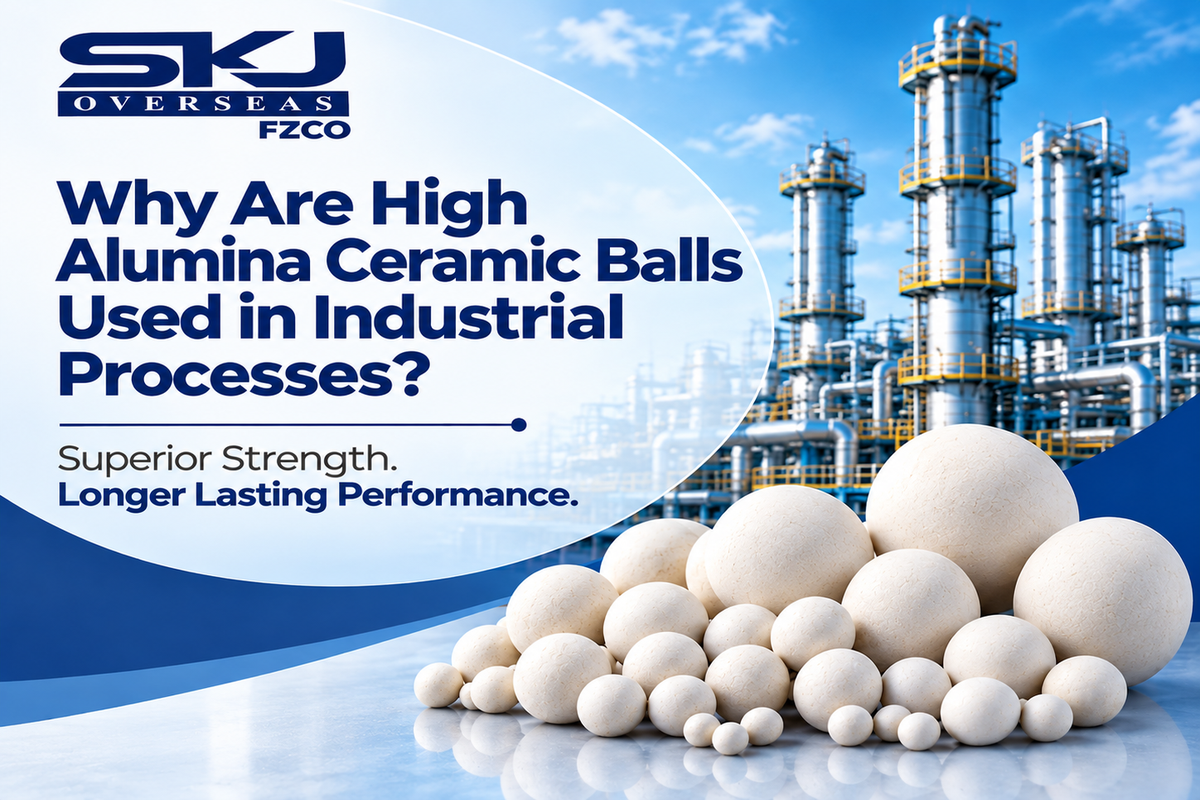
High alumina ceramic balls are specified across a wide range of demanding industrial roles:
- Fine grinding media for minerals, pigments, and ceramic raw materials
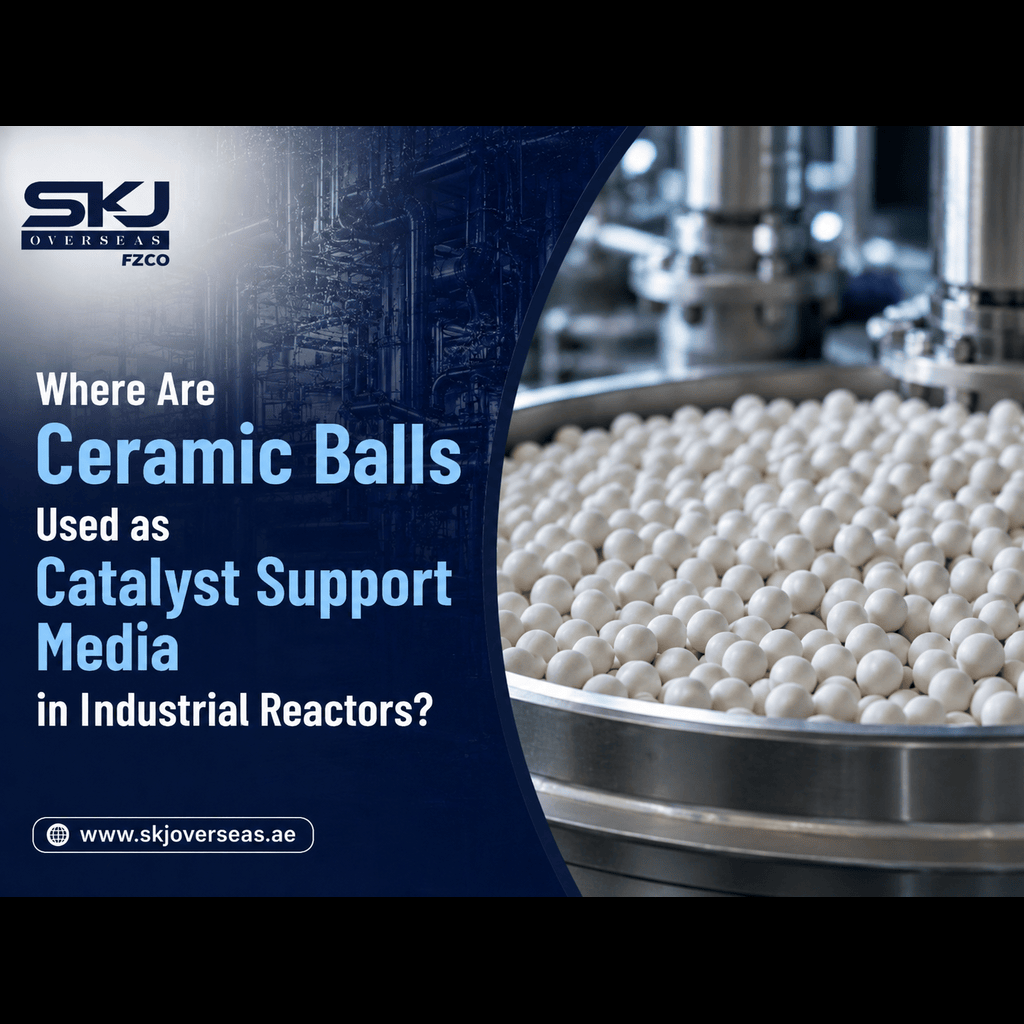
- Catalyst bed support in ammonia and hydrogen reformers
- Acid-resistant packing and inert filling media in chemical towers
- Wear-resistant components in valves, pumps, and seals
- Filtration and purification media in water and gas treatment systems
- High-temperature support media in kilns and furnaces
How to Choose the Right Alumina Grade for Your Application
Selecting the correct alumina grade depends on the intensity of mechanical stress, chemical exposure, and temperature your process involves.
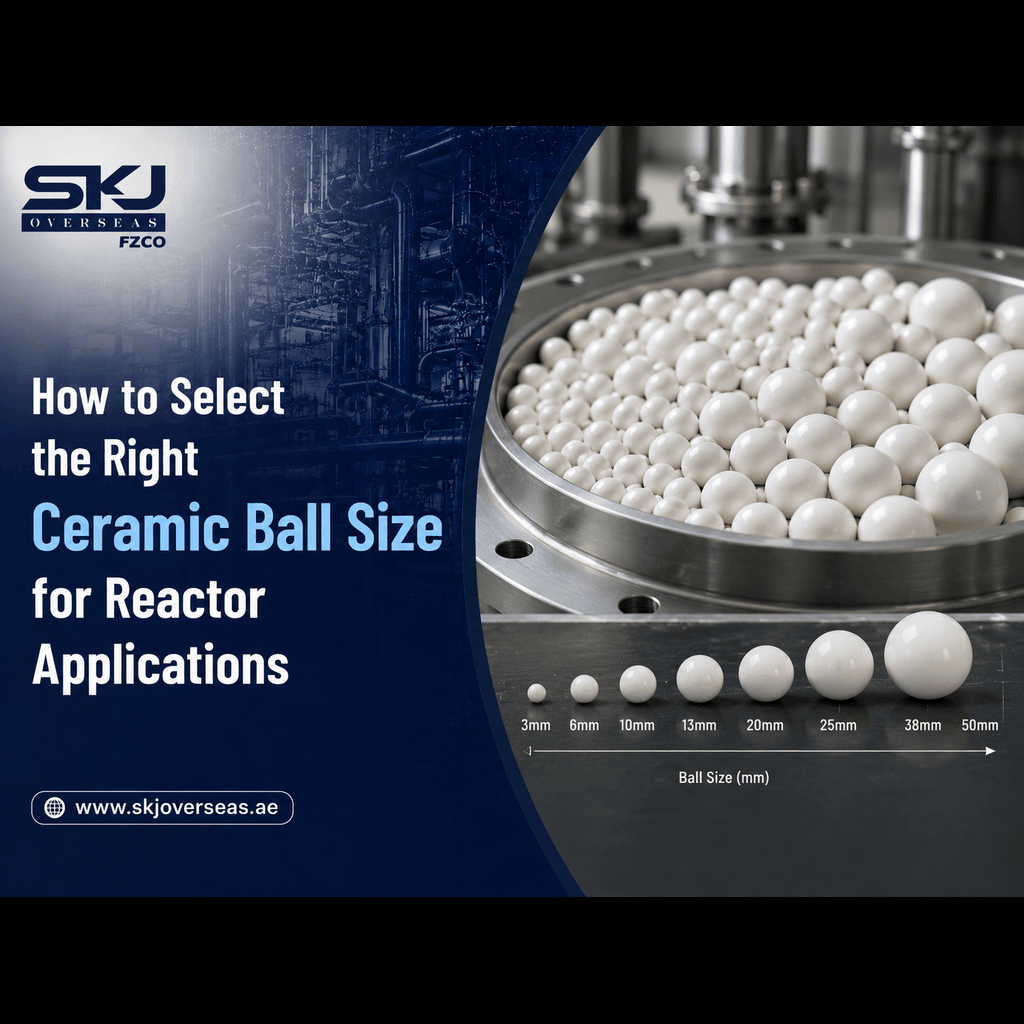
- For general-purpose grinding: 68% to 75% alumina grades offer reasonable wear resistance at a lower cost
- For fine grinding and moderate chemical exposure: 92% alumina balances strength, purity, and cost effectively
- For high-purity or high-temperature applications: 95% to 99%+ alumina grades deliver maximum wear resistance and thermal stability
Working with an experienced manufacturer ensures the grade selected actually matches your process conditions rather than relying on a generic, one-size-fits-all specification.
Why Sourcing Quality Alumina Balls Matters
Not every alumina ball on the market is manufactured to the same density, purity, and crushing strength standard, even when labeled with the same alumina percentage. Inconsistent firing or impure raw material can significantly reduce wear resistance and shorten service life well below what the data sheet promises.
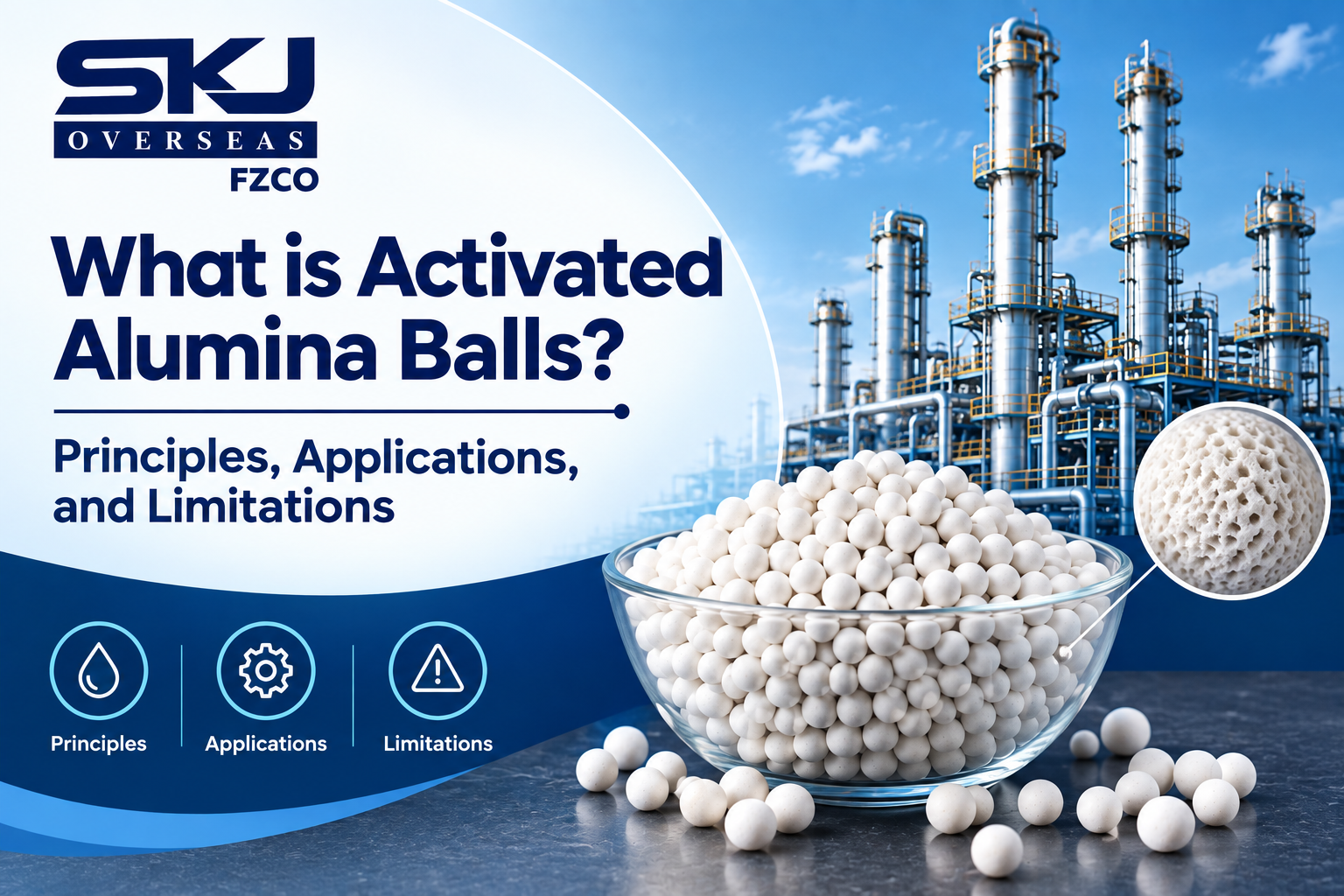
Plants seeking Activated Alumina Balls in dubai for drying and adsorption applications, or high alumina balls for grinding and catalyst support, should verify documented density, hardness, and purity testing before committing to a supplier. SKJ Overseas manufactures and tests its alumina product range to consistent quality standards, giving process engineers confidence that lab-tested properties will hold up under real operating conditions.
Key Takeaways
- Alumina Balls Are Preferred Over Steel Balls primarily due to lower wear rates, minimal contamination risk, and superior chemical resistance.
- Alumina withstands temperatures well above 1500°C, far exceeding steel’s practical limit of roughly 500°C to 600°C.
- Steel retains an advantage in heavy, high-impact crushing and applications requiring magnetic properties.
- Choosing the right alumina grade depends on matching mechanical stress, chemical exposure, and temperature to the specific grade’s properties.
- Sourcing from a manufacturer with verified density, hardness, and purity testing protects real-world performance.
Frequently Asked Questions
1. Are alumina balls more expensive than steel balls?
Yes, alumina balls typically cost more upfront than steel balls. However, their significantly lower wear rate and reduced contamination risk often result in lower total cost of ownership over the media’s full service life.
2. Can alumina balls be used in high-impact crushing applications?
Alumina is more brittle than steel, so it is generally better suited to fine grinding rather than heavy, high-impact crushing, where steel’s toughness makes it the more practical choice.
3. Why do pharmaceutical and pigment industries prefer alumina balls over steel?
Steel sheds iron and metallic debris as it wears, which can contaminate sensitive products. Alumina balls are chemically inert and do not introduce this contamination risk, making them the preferred choice for high-purity manufacturing.
4. Do alumina balls resist all chemicals?
Alumina resists nearly all acids, alkalis, and salts, with hydrofluoric acid as one of the few notable exceptions. This makes it significantly more chemically stable than steel in most industrial processing environments.
5. What temperature can alumina balls withstand compared to steel?
High-grade alumina balls can withstand temperatures above 1500°C, while steel typically begins to lose structural integrity above roughly 500°C to 600°C, making alumina the clear choice for high-heat applications.
Get High Alumina Ceramic Balls From SKJ Overseas
Choosing between alumina and steel balls comes down to matching the media to your process conditions, and getting it right protects both product quality and long-term operating cost. SKJ Overseas manufactures high alumina ceramic balls engineered for consistent wear resistance, purity, and performance across grinding, catalyst support, and filtration applications.
Contact us to request a quote, a technical datasheet, or a sample batch for your application.