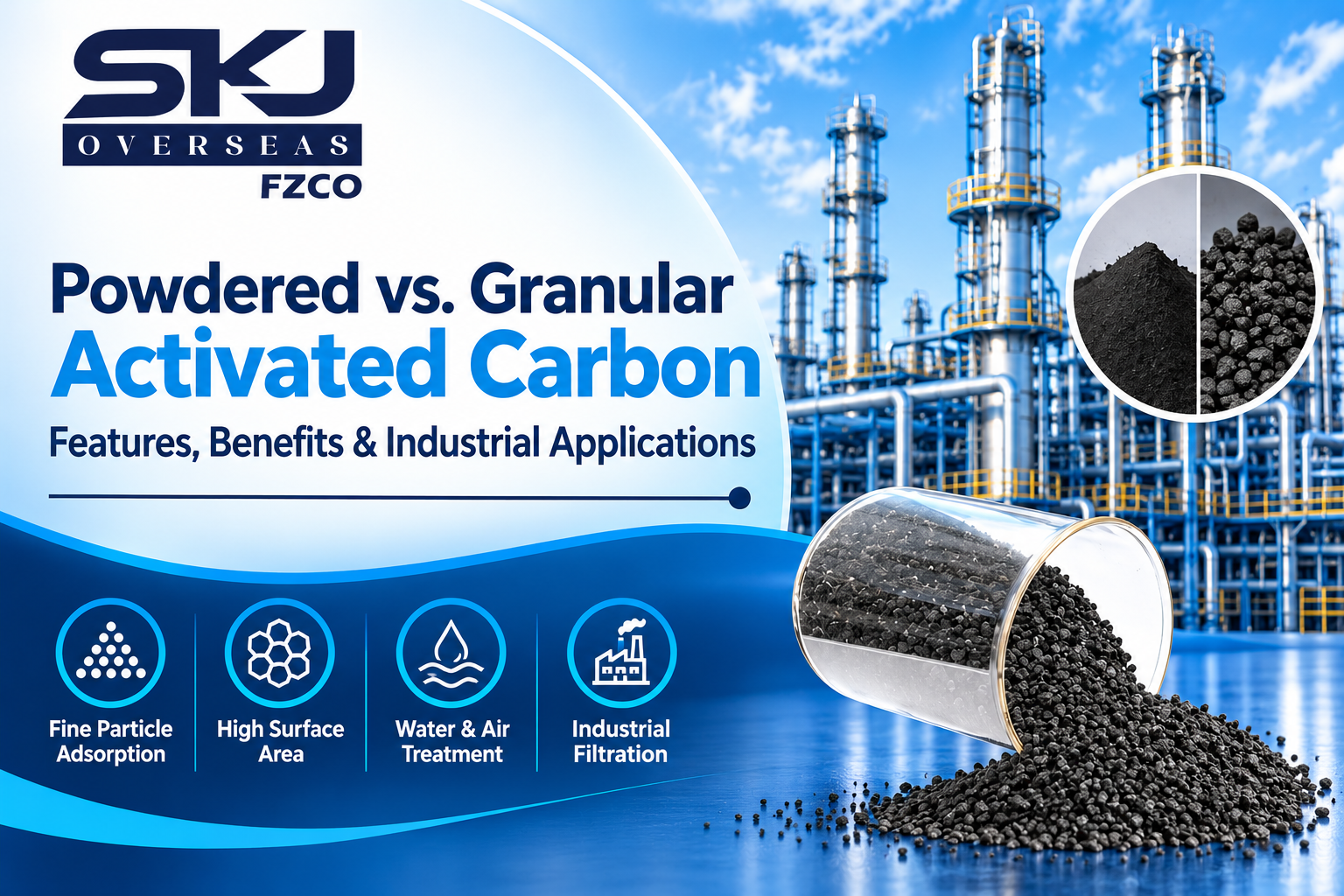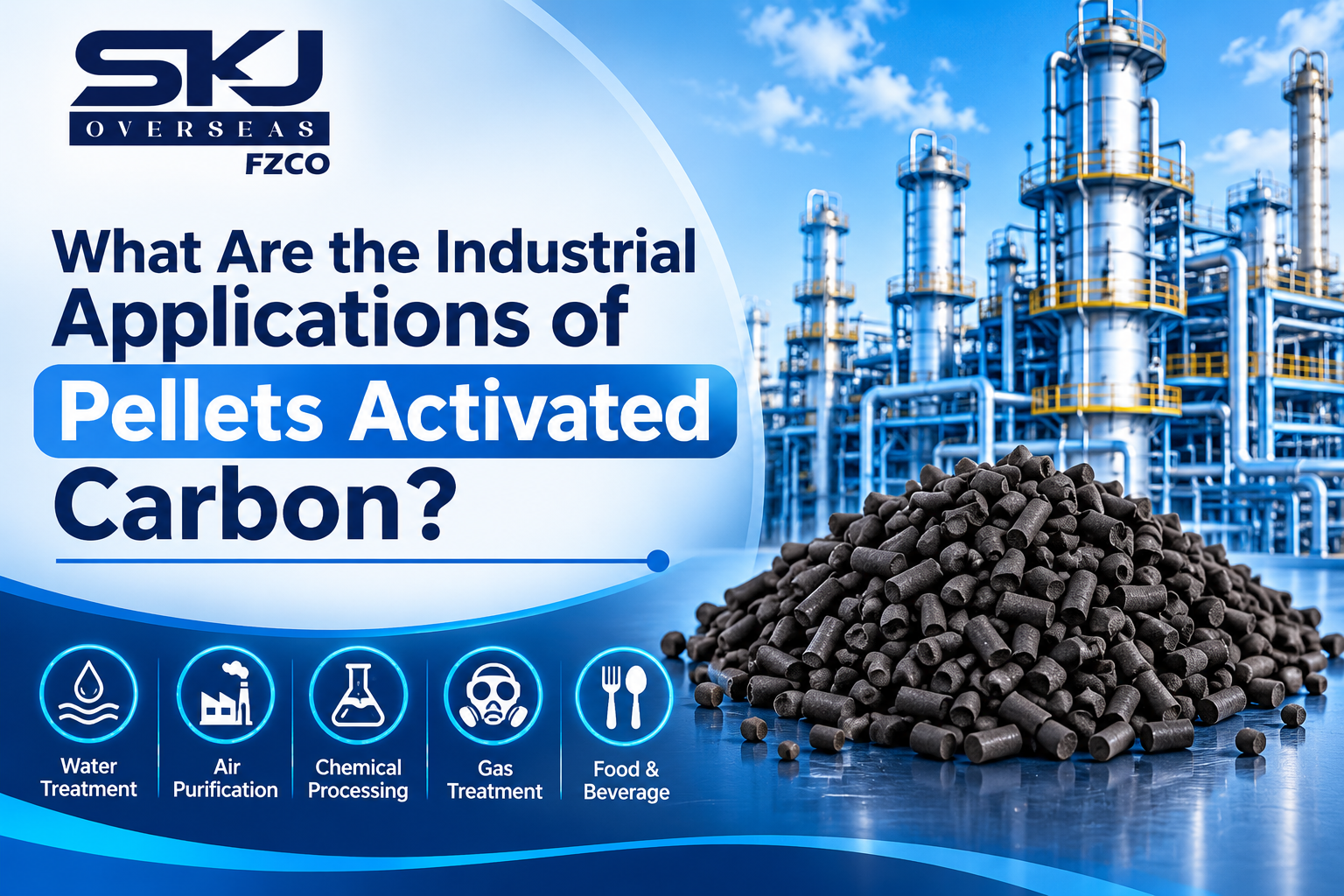
Many plants need to remove odors, solvents, and harmful gases from air and process streams. The most common answer is activated carbon in pellet form. The applications of Pellets activated carbon cover air purification, solvent recovery, gas cleaning, water treatment, and chemical processing, because its hard cylindrical shape lets gas flow through a bed with low resistance and little dust.
SKJ Overseas is a dedicated Ceramic Manufacturers in Dubai, serving process plants that use adsorbents, packing, and support media together. This guide explains what pellet carbon is, where it is used, and how to choose a grade.
What Is Pellets Activated Carbon?
Pellets activated carbon is made by crushing a carbon source, usually coal, mixing it with a binder, and extruding it into small cylinders. The pellets are then heated and activated, which opens millions of tiny pores inside each one.
These pores trap gas and liquid contaminants on their surface. This process is called adsorption, not absorption. Typical pellets are about 1 to 5 mm in diameter, and 3 to 4 mm is common. Exact sizes vary by maker.
Pellets vs Powder and Granular Carbon
Pellet carbon differs from other forms in several ways.
- Shape: uniform cylinders instead of irregular grains
- Hardness: high strength, so pellets resist breaking
- Dust: low dust, which keeps air and equipment cleaner
- Pressure drop: low resistance, since uniform pellets leave open gaps
- Best use: mostly gas and air treatment, though water use exists too
Powdered carbon is dosed into liquids and used once. Granular carbon is common in water beds. Pellets shine in gas-phase columns that run for long periods.
Key Applications of Pellets Activated Carbon in Air and Gas Treatment
Gas-phase treatment is the largest use. Hard pellets form a stable bed, and air passes through with little pressure loss.
- Odor removal in waste treatment plants, pump stations, and food plants
- Volatile organic compound (VOC) control from paint, coating, and printing lines
- Removal of hydrogen sulfide and other sulfur gases
- Air purification in ventilation and cleanroom systems
- Fume treatment in laboratories and chemical storage areas
In every case, polluted air passes through a packed bed, and the carbon holds the contaminants until it is replaced or regenerated.
Solvent Recovery in Chemical and Coating Plants
Plants that use solvents lose money when vapors escape. Pellet carbon captures those vapors from exhaust air. Heating or steaming the bed later releases the solvent, which can be condensed and reused.
This turns a pollution problem into a cost saving. Pellets work well here because they survive repeated heating and cooling cycles without turning to dust.
Gas Purification and Process Gas Cleaning
Chemical plants clean many gas streams before further use. Pellet carbon, sometimes impregnated with chemicals, removes sulfur compounds, mercury, and trace organics.
- Biogas and landfill gas cleaning before use as fuel
- Removal of sulfur gases from process streams
- Mercury removal from certain gas streams
- Protection of catalysts from poisons upstream
Impregnated grades are chosen for specific contaminants, so always tell your supplier which gas you need to remove.
Industrial Water and Wastewater Applications
Pellet carbon also treats water, although granular forms are more common in this field. It can remove taste, odor, color, and organic compounds. Some plants use it in fixed beds for process water polishing.
Check particle size and pressure drop for liquid service, since fine pellets can pack tightly. Your supplier can recommend suitable grades.
Food, Beverage, and Pharmaceutical Uses
Clean air and pure process streams matter in sensitive industries. Pellet carbon removes odors and trace vapors from air around production lines, storage, and packaging. It can also purify certain gases used in beverage and food processing.
Food-grade and low-ash grades exist for these duties. Ask for the right grade and the supporting documents.
Typical Properties to Check
Not all pellets perform the same. Use this list when you review a datasheet.
- Diameter: common sizes are 3 to 4 mm
- Hardness or abrasion number: higher means less breakage
- Iodine number: shows pore capacity for small molecules
- CTC adsorption (carbon tetrachloride): indicates capacity for solvent-type vapors
- Bulk density: affects how much carbon fits in the vessel
- Ash and moisture content: lower ash and moisture are usually better
Always request a datasheet and a batch certificate. Without these figures, you cannot compare products fairly.
Choosing Pellets Activated Carbon Manufacturers
Quality begins at the plant. Raw material choice, binder quality, and activation control all change hardness and capacity. When comparing Pellets activated carbon manufacturers, ask for test data, batch records, and sample availability.
A trustworthy maker also explains limits. For example, carbon cannot hold every gas equally well, and humidity and temperature change performance. Honest guidance protects your bed.
Working With Pellets Activated Carbon Suppliers
A dependable supplier does more than sell by the drum. Good Pellets activated carbon suppliers help match the grade to your contaminant and advise on bed size, contact time, and replacement schedule.
Check packaging as well. Carbon adsorbs moisture and odors from the air, so it should arrive sealed in moisture-proof drums or bags.
Sourcing Pellets Activated Carbon in Dubai
Buyers looking for Pellets activated carbon in Dubai benefit from regional stock and short lead times. Local access also makes sample testing simpler before a full order.
Share your gas type, flow rate, concentration, and temperature when you ask for advice. A supplier can then suggest a suitable grade and bed design.
Where Ceramic Media Fits Around Carbon Beds
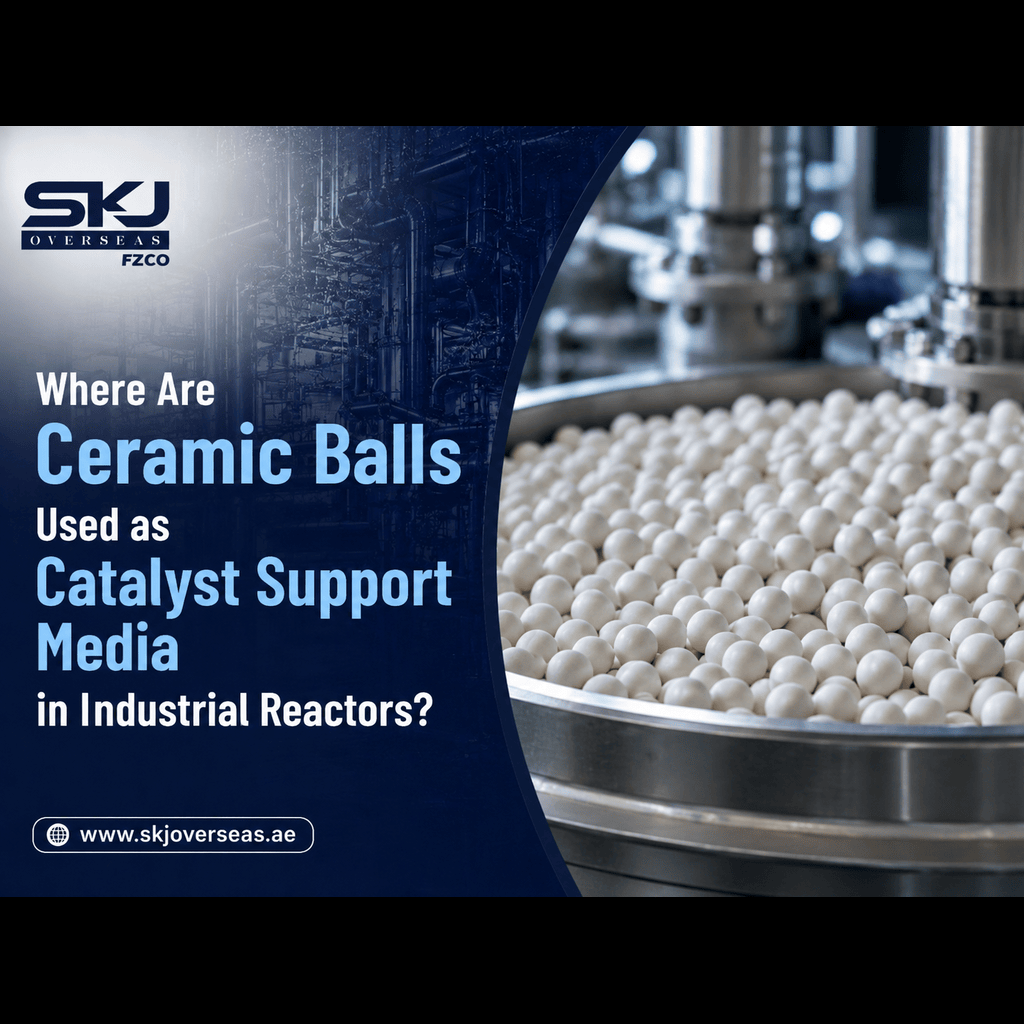
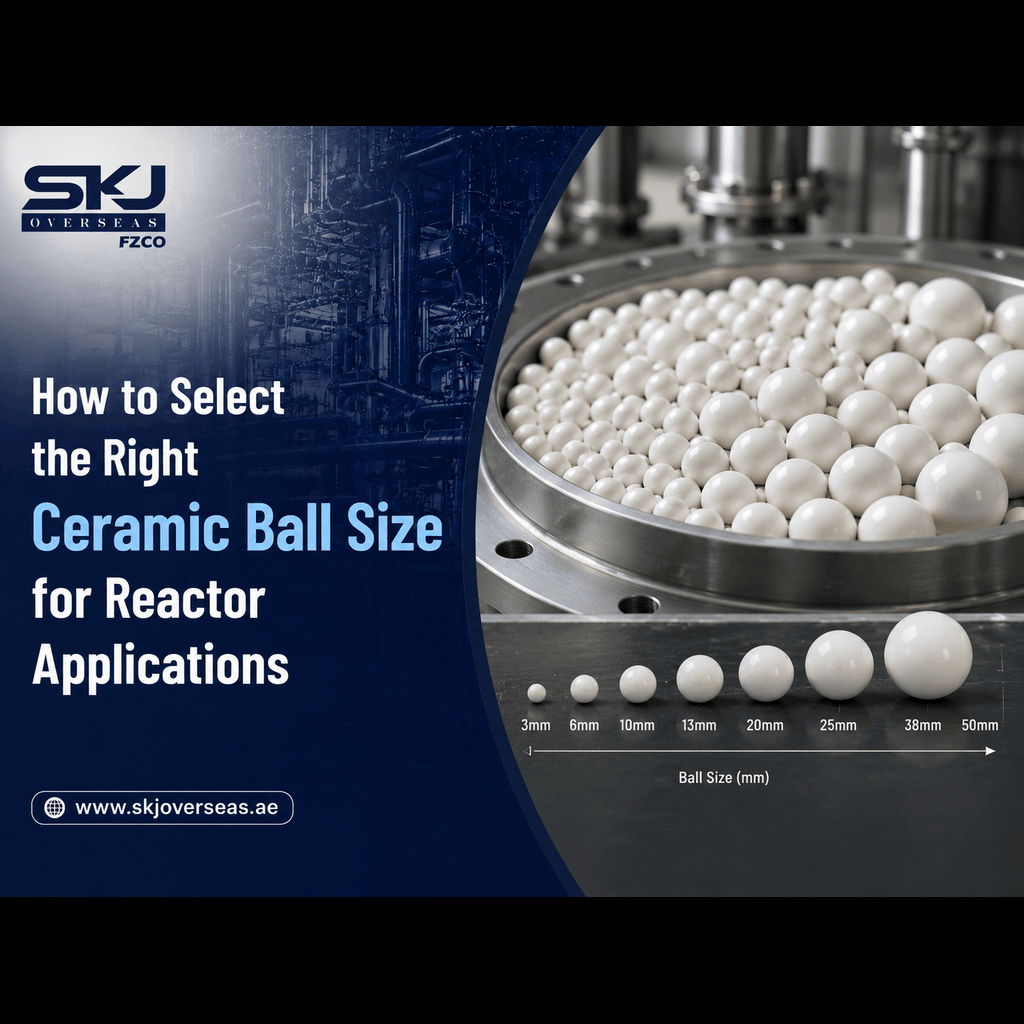
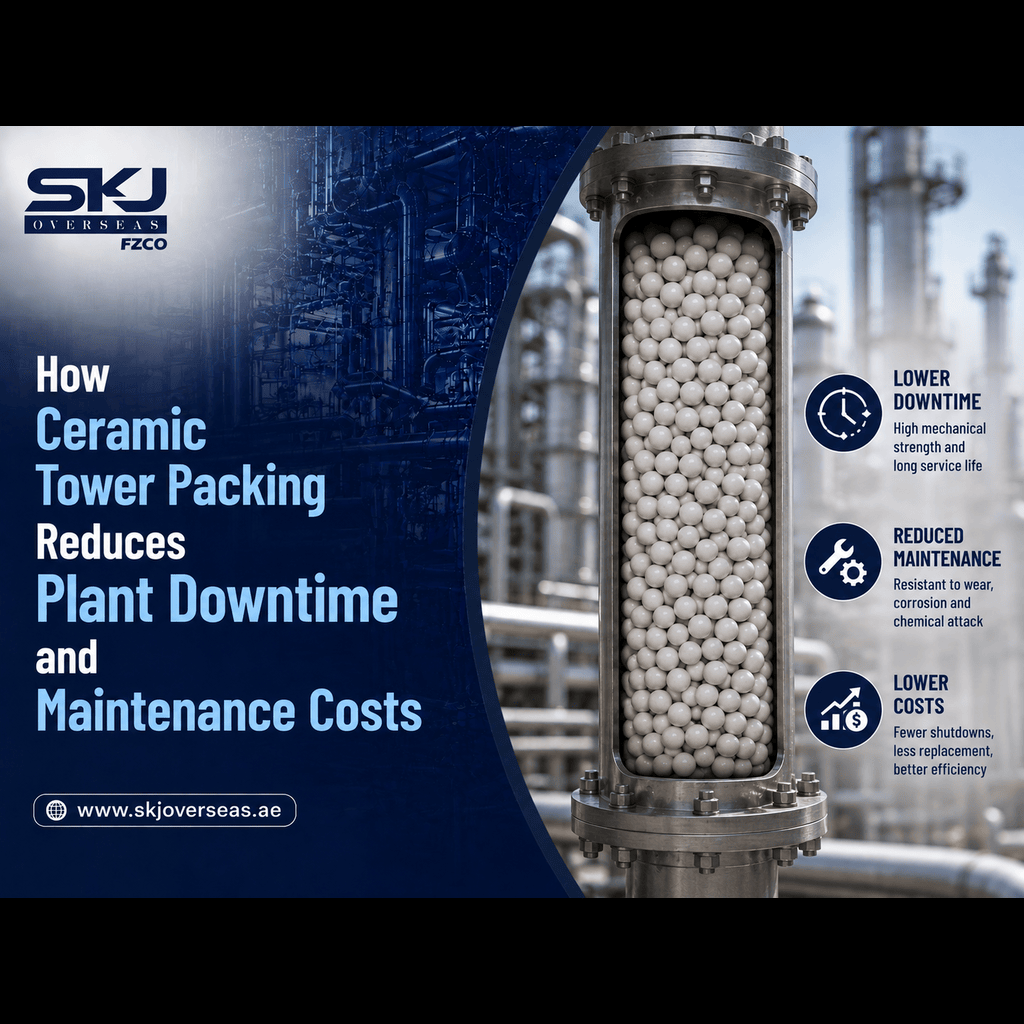
Carbon beds often use ceramic support layers. Inert ceramic balls below the carbon hold the bed, spread flow evenly, and protect the outlet screen. Ceramic is chemically stable and does not shed material into the gas stream.
This is where SKJ Overseas adds value as a ceramic manufacturer. We make the support media, not the carbon itself.
Export and Logistics Support
Process plants across the Middle East, Africa, and Asia source industrial materials from the UAE. SKJ Overseas works as a Ceramic And Tower Packing Exporter in Dubai, handling packing, documents, and delivery planning together.
Handling and Safety Tips
- Store carbon sealed, dry, and away from solvents
- Wet carbon can remove oxygen in enclosed spaces, so follow confined-space rules
- Load beds evenly, and avoid dropping pellets from a height
- Watch bed temperature, since adsorption of some vapors releases heat
- Replace or regenerate the bed when breakthrough begins
Key Takeaways
- The applications of Pellets activated carbon include air purification, solvent recovery, gas cleaning, water treatment, and sensitive-industry air control.
- Hard, uniform pellets give low dust and low pressure drop.
- Impregnated grades target specific contaminants.
- Hardness, iodine number, and ash content show real quality.
- Ceramic support layers help keep carbon beds stable.
Frequently Asked Questions
1. What are the main industrial applications of pellets activated carbon?
They include odor control, VOC and solvent recovery, gas purification, air filtration, and some water treatment. Pellets suit gas-phase beds best.
2. How is pellet carbon different from granular carbon?
Pellets are uniform cylinders with high hardness, low dust, and low pressure drop. Granular carbon has irregular grains and is more common in water beds.
3. Can pellet carbon remove hydrogen sulfide?
Yes, especially impregnated grades made for sulfur gases. Tell your supplier the gas and concentration so they can recommend the right grade.
4. Can pellet carbon be reused?
Often yes, in solvent recovery and other cycles, using heat or steam. In other uses, spent carbon is replaced. The method depends on the contaminant and the grade.
5. What should I check before buying?
Ask for diameter, hardness, iodine number, bulk density, ash, moisture, and batch certificates. A reliable supplier provides these openly.
Talk to SKJ Overseas About Your Process Needs
The right carbon grade and bed design protect air quality, product purity, and equipment. Our team can discuss your application and the ceramic support media that goes with it.
Contact us to request a quote, a technical datasheet, or a sample for your application.