Many industrial systems face the same problem: they need a lot of surface area in a small space, with very little resistance to flow. The purpose of using ceramic structure honeycomb is to solve exactly that. It gives gases and liquids thousands of straight, thin-walled channels to pass through, while staying stable at high heat.
SKJ Overseas is a dedicated Ceramic Manufacturers in Dubai, producing ceramic honeycomb in-house for industrial customers. This guide explains why engineers use honeycomb ceramic, what jobs it does, and how to choose the right specification.
What Is Ceramic Structure Honeycomb?
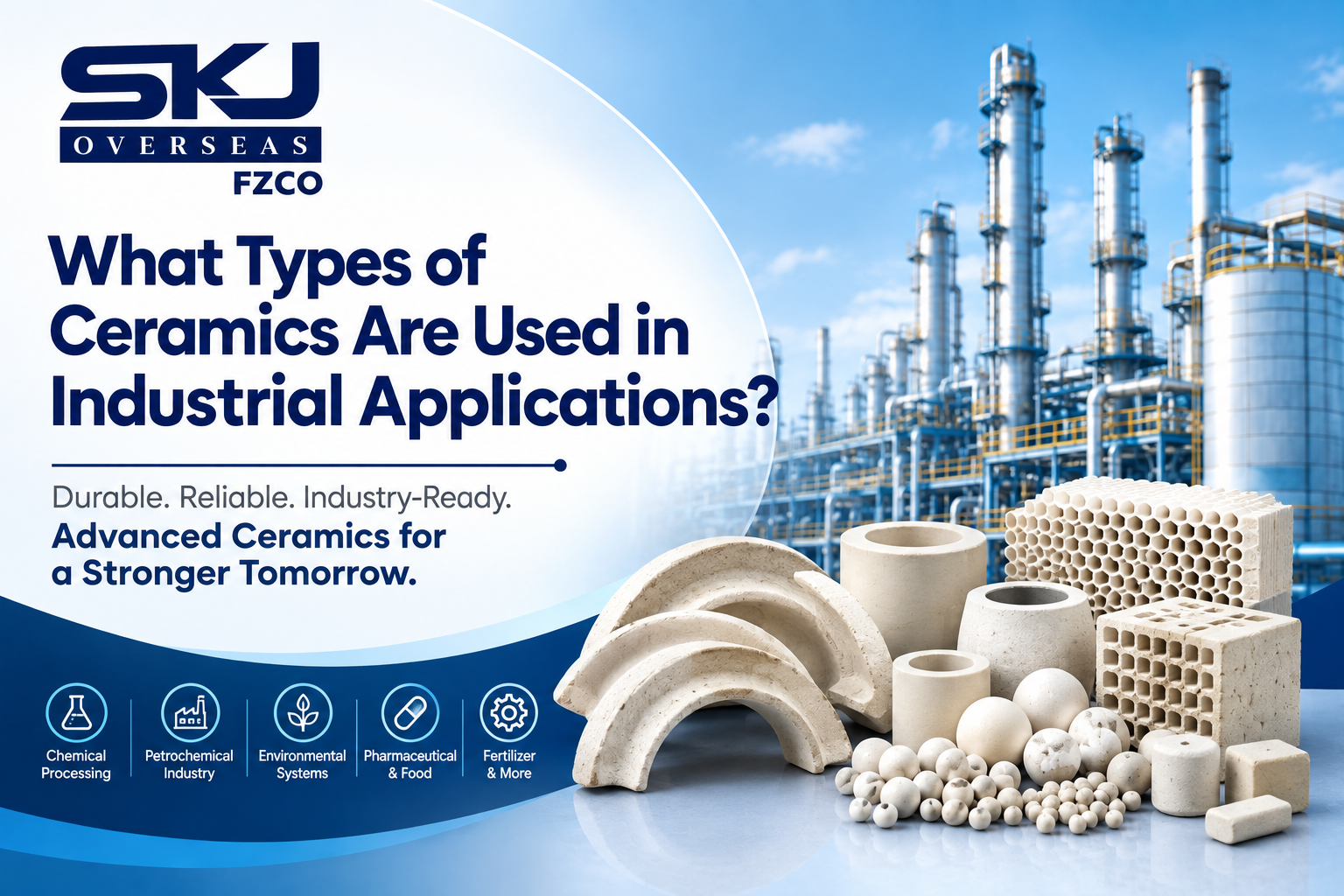
Ceramic structure honeycomb is a block of fired ceramic with many parallel channels running through it. Seen from the end, it looks like a grid of tiny cells. Most products are made from cordierite, a ceramic known for low thermal expansion.
The walls between channels are very thin. This is what creates the large surface area. The straight channels also let fluid pass with little resistance, which keeps energy use low.
The Purpose of Using Ceramic Structure Honeycomb in One Line
The purpose of using ceramic structure honeycomb is to provide high surface area, low pressure drop, and heat resistance in one compact part. Everything else follows from that. Catalysts, filters, and heat storage beds all need those same three qualities.
In plain terms, honeycomb lets a process do more work in less space, with less energy wasted pushing fluid through.
Purpose 1: Supporting Catalysts
A catalyst works only where it touches the gas or liquid. Honeycomb ceramic is coated with a thin catalyst layer, and the many channels expose a large area of that layer to the passing stream.
This is why honeycomb is the standard base in vehicle catalytic converters and in many industrial emission control units. The ceramic does not react itself. It simply holds the catalyst in the best possible position.
Purpose 2: Filtering and Cleaning Exhaust
In filtration, channels are arranged so that gas passes through porous walls, which trap particles. This is how diesel particulate filters work.
Industrial plants use similar designs to meet emission rules. Cordierite handles repeated heating and cooling, which matters when filters are cleaned by burning off collected soot.
Purpose 3: Storing and Returning Heat
Ceramic absorbs heat well and releases it slowly. In regenerative thermal oxidizers, honeycomb beds store heat from hot exhaust and then return it to incoming air. This reduces the fuel needed to keep the system hot.
The straight channels help here too. Gas flows evenly through the bed, so heat transfer is steady and pressure drop stays low.
Purpose 4: Improving Combustion and Radiant Heat
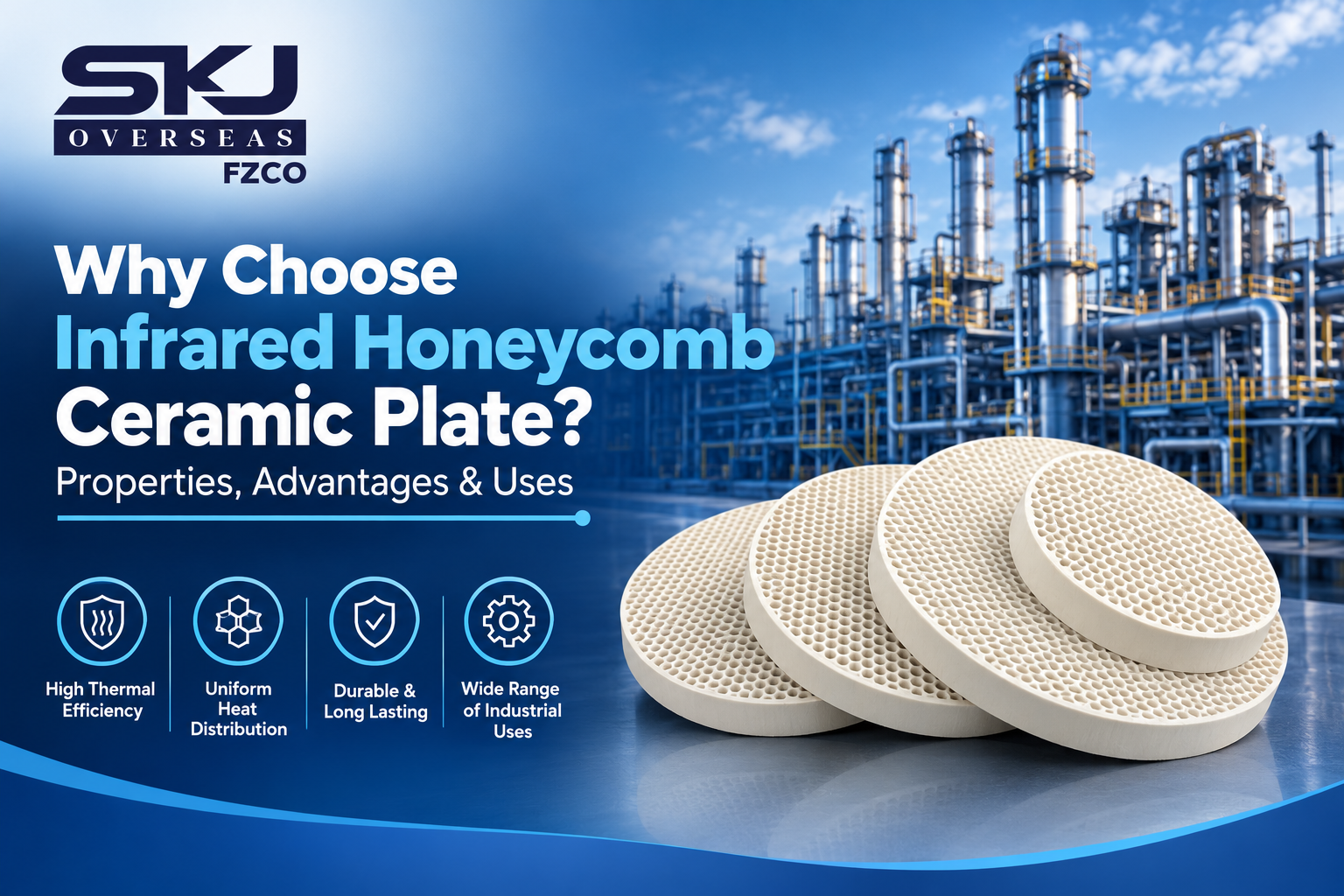
Honeycomb ceramic also appears in burners. In infrared burner plates, gas and air burn at the surface of a perforated ceramic plate, which glows and radiates heat evenly. This design supports clean, efficient combustion in heaters, grills, and ovens.
Purpose 5: Reducing Weight and Resistance
Compared with solid ceramic blocks, honeycomb has far less material for the same outer size. That makes parts lighter and easier to install. Compared with random packing, the straight channels give lower resistance to flow.
Why Engineers Choose Honeycomb Over Other Options
Several features explain the choice:
- High surface area: thin walls and many channels expose more material to the stream
- Low pressure drop: straight channels save fan or blower energy
- Thermal shock resistance: cordierite’s low expansion handles rapid temperature change
- Chemical stability: ceramic does not corrode like many metals
- Lightweight: easy to handle, install, and replace
- Customizable: cell density, size, and shape can match the equipment
Ceramic Honeycomb vs Other Contact Media
The table below gives a general comparison. Exact performance depends on the product and the design.
| Feature | Random Ceramic Packing | Metal Honeycomb | Ceramic Structure Honeycomb |
| Flow path | Irregular | Straight | Straight |
| Pressure drop | Moderate | Low | Low |
| Surface area per volume | Moderate | High | High |
| Corrosion resistance | Excellent | Limited in harsh duty | Excellent |
| Heat tolerance | Very high | High | Very high |
| Best use | Mixing gas and liquid | Light-duty catalyst bases | Catalysis, filtration, heat storage |
Random packing is better when gas and liquid must mix and spread. Honeycomb is better when flow should stay straight and resistance should stay low.
How to Match the Purpose of Using Ceramic Structure Honeycomb to Your Process
Choose the specification by the job it must do.
- Catalyst support or fine filtration: higher CPSI, for more surface area
- High flow or dusty gas: lower CPSI, for less resistance and less blocking
- Heat storage: focus on thermal stability, density, and bed height
- Equipment fit: match the diameter and shape to the housing exactly
Share your gas flow, temperature, and gas composition with your supplier. They can then confirm cell density, size, and body type.
Why Manufacturing Quality Matters
Two honeycombs can look the same and perform very differently. Wall thickness, material composition, and firing control all affect strength and thermal shock resistance. A poorly fired part can crack early or deliver uneven flow.
When comparing Ceramic Structured Honeycomb manufactures, ask for documented cell density tolerances and thermal shock test data. SKJ Overseas produces its honeycomb range directly and checks each batch before dispatch, so the datasheet matches what arrives on site.
Handling and Installation Tips
Honeycomb is strong in service but still brittle, so handle it with care.
- Keep parts in their packing until installation
- Lift with support under the whole block, not by the edges
- Seal the edges correctly so gas does not bypass the channels
- Heat up and cool down at the rate recommended by the supplier
These steps protect the thin walls and extend service life.
Choosing a Reliable Ceramic Structured Honeycomb Supplier
A good Ceramic Structured Honeycomb supplier does more than ship parts. It should provide a datasheet, answer sizing questions, and offer samples before a large order.
Check that the supplier can supply custom sizes and cell densities. This matters because most equipment has its own housing dimensions and flow needs.
Sourcing Ceramic Structured Honeycomb in Dubai
Buyers looking for Ceramic Structured Honeycomb in Dubai benefit from direct contact with the manufacturer. Local support means faster samples, clearer technical answers, and shorter lead times during a planned shutdown.
SKJ Overseas also works as a Ceramic And Tower Packing Exporter in Dubai, shipping ceramic products to plants across the Middle East, Africa, and Asia. Packing, documents, and delivery planning are handled together, so your team deals with one source.
Frequently Asked Questions
1. What is the purpose of using ceramic structure honeycomb?
It provides a large surface area and low flow resistance in a compact, heat-stable part. This makes it ideal for catalyst support, filtration, and heat storage.
2. What is ceramic honeycomb made of?
Most products are made from cordierite, a ceramic with low thermal expansion. This gives strong resistance to sudden temperature changes.
3. What does CPSI mean?
CPSI means cells per square inch. A higher number means more channels and more surface area, while a lower number means less resistance to flow.
4. Is ceramic honeycomb better than random packing?
It depends on the job. Honeycomb suits straight, low-resistance flow such as catalysis and heat storage. Random packing suits towers where gas and liquid must mix and spread.
5. Can ceramic honeycomb be made in custom sizes?
Yes. Manufacturers can usually adjust cell density, diameter, and shape to match your equipment. Share your flow, temperature, and housing size to get the right specification.
Talk to SKJ Overseas About Ceramic Structure Honeycomb
Choosing the right cell density and size protects your system from poor flow, early cracking, and wasted energy. SKJ Overseas manufactures ceramic structure honeycomb for catalytic, filtration, and heat recovery applications.
Contact us to request a quote, a technical datasheet, or a sample for your application.