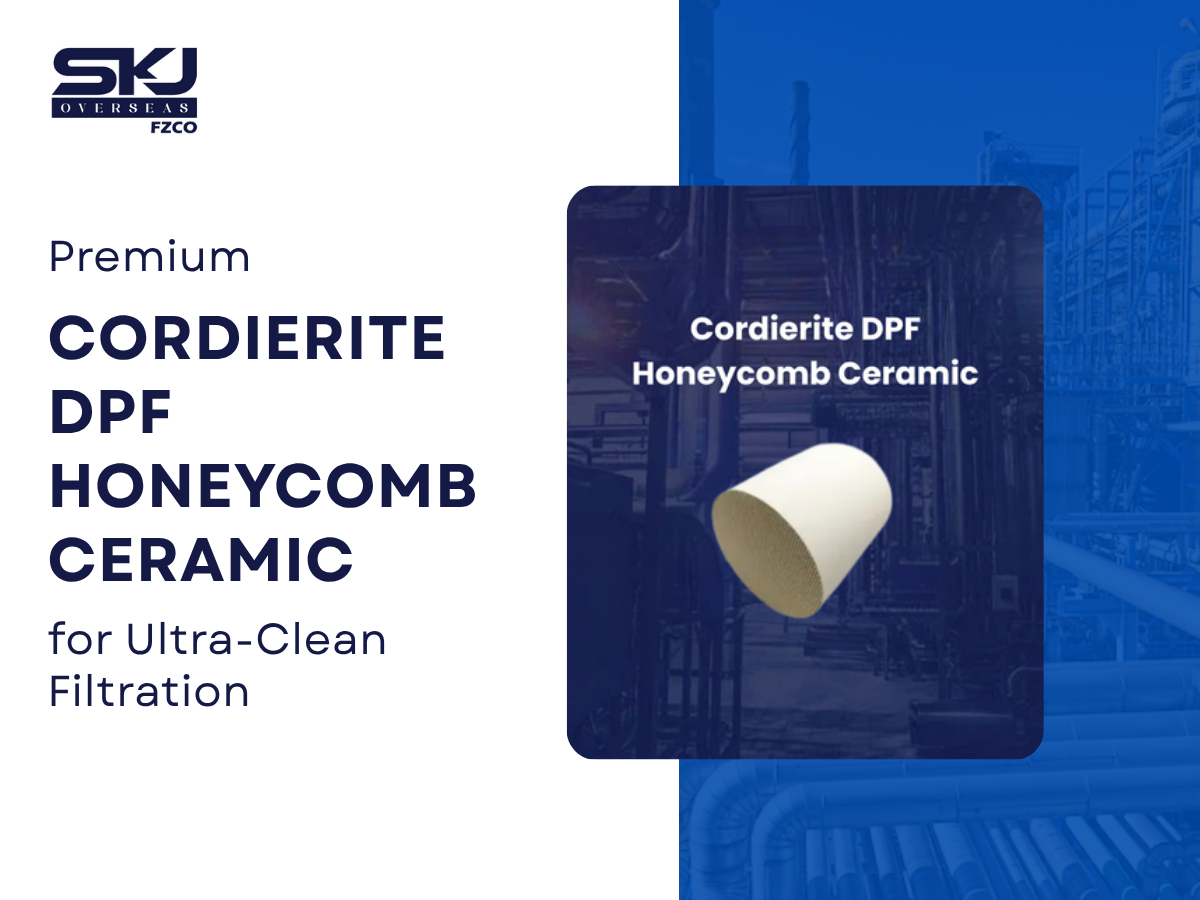
A Cordierite DPF Honeycomb Ceramic is a heat resistant filter core that traps soot from diesel exhaust while letting gas flow through with minimal resistance. It sits inside the diesel particulate filter, and its honeycomb channel structure is what allows a vehicle or generator to meet emission limits without choking engine performance. Get the material or cell density wrong and you either lose filtration efficiency or push back pressure too high.
Here’s how the filter actually works, and what separates a well made one from a filter that fails early.
What a DPF Honeycomb Ceramic Actually Does
A diesel particulate filter, or DPF, exists to catch the fine soot particles diesel engines produce during combustion. The honeycomb ceramic core inside it is made mostly from cordierite, a magnesium aluminum silicate chosen specifically for its heat tolerance. As exhaust gas moves through the block’s tiny parallel channels, particulate matter gets trapped on the porous walls while cleaned gas continues out the tailpipe.
A few properties make this possible:
- High thermal stability, so the filter survives repeated heating without warping
- Low thermal expansion, which keeps the structure dimensionally steady under heat swings
- Strong mechanical strength, needed to handle constant vibration and exhaust pressure
- High filtration efficiency, typically trapping the large majority of soot particles
Why Cordierite Beats Most Alternatives for This Job
Manufacturers reach for cordierite over other ceramics mainly because of thermal shock resistance. Diesel exhaust temperatures swing fast, sometimes from ambient to well over 600°C within seconds, and a filter that cracks under that stress is a filter that fails. Cordierite absorbs that stress instead of fracturing.
It also costs less than silicon carbide, which matters at scale, and its lighter weight helps rather than hurts fuel economy. None of this comes at the expense of durability. A properly fired cordierite core still holds up through years of daily regeneration cycles.
How the Filter Cycles Through Two Phases
Understanding the process helps explain why maintenance matters so much:
- Filtration phase. Exhaust gas passes through the honeycomb walls, and soot particles get physically trapped inside the porous structure.
- Regeneration phase. Trapped soot is periodically burned off at high temperature, clearing the channels and restoring flow.
This cycle repeats for as long as the vehicle or generator runs, which is why a filter’s ability to handle repeated thermal cycling is not optional. It’s the entire point of the design.
Cordierite vs Silicon Carbide: A Quick Comparison
| Factor | Cordierite | Silicon Carbide |
| Max operating temperature | Around 1200°C | Higher, over 1600°C |
| Thermal shock resistance | Excellent | Very good |
| Cost | Lower | Higher |
| Weight | Lighter | Heavier |
| Best fit | Automotive, light industrial diesel systems | Very high soot load, heavy duty applications |
Where This Filter Type Shows Up
DPF honeycomb ceramics aren’t limited to passenger cars. You’ll find them wherever diesel combustion needs emission control:
- Automobiles. Cars, trucks, and buses running diesel engines.
- Construction machinery. Excavators, bulldozers, and cranes operating under heavy load.
- Marine engines. Vessels working in emission regulated coastal zones.
- Industrial generators. Stationary diesel backup power systems.
What to Check Before Buying
Not every filter core performs the same way once it’s actually installed, so a few checks before you commit save real trouble later:
- Cell density. Usually between 100 and 300 cells per square inch, matched to your engine’s soot load and flow requirement.
- Wall thickness. Needs to balance filtration efficiency against pressure drop.
- Certification and test data. Ask for material composition reports and thermal shock test results.
- Regeneration compatibility. Confirm whether your system uses passive or active regeneration, since that affects filter design.
Established Cordierite DPF Honeycomb Ceramic manufacturers document all of this upfront, which is exactly what separates a filter that lasts years from one that clogs early and gets replaced twice as often.
Maintenance Habits That Extend Filter Life
- Let regeneration cycles complete fully instead of interrupting them.
- Monitor back pressure regularly, since a rising reading usually signals a clogging filter.
- Use quality fuel and oil, since contamination accelerates soot buildup.
- Stick to the manufacturer’s recommended service intervals rather than guessing.
Sourcing From the Right Supplier
Two filter cores can look nearly identical and still perform completely differently once installed. The difference usually traces back to firing consistency, porosity control, and how tightly a supplier holds its tolerances. Working with experienced Cordierite DPF Honeycomb Ceramic suppliers who document every batch removes most of that risk.
SKJ Overseas manufactures cordierite honeycomb cores with in house kilns and batch level testing, so specifications stay consistent whether you’re ordering a handful of units or a bulk industrial order.
Worth Reading Next
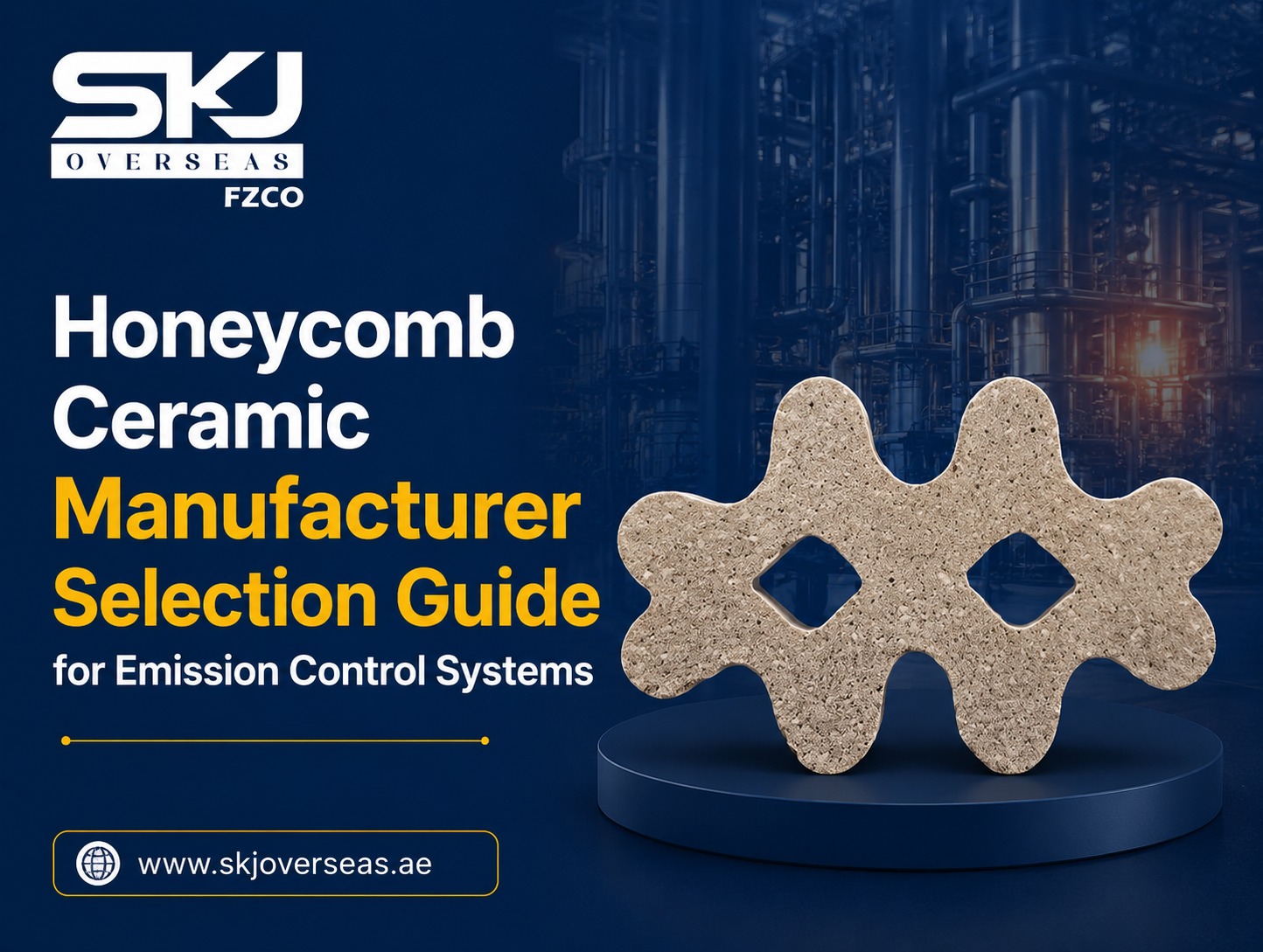
If you’re comparing suppliers more broadly rather than looking at this one application, our ceramic honeycomb manufacturer selection guide walks through certifications, red flags, and material choices worth checking before you commit to any honeycomb ceramic supplier.
Sourcing in Dubai and the Wider Region
Demand for Cordierite DPF Honeycomb Ceramic in Dubai has grown alongside tighter regional emission rules for both vehicles and industrial diesel equipment. Local sourcing shortens delivery timelines and makes it easier to verify batch quality before a large order ships internationally.
Frequently Asked Questions
1. What is the main function of a DPF honeycomb ceramic?
It traps soot particles from diesel exhaust, reducing harmful particulate emissions before gas exits the tailpipe.
2. Why is cordierite preferred over other ceramics for diesel filters?
It offers strong thermal shock resistance, lower cost, and a lighter structure, which together suit repeated heating and cooling cycles well.
3. Can a DPF honeycomb ceramic be reused after cleaning?
Yes. With correct regeneration and occasional professional cleaning, the same core can be reused for years without losing efficiency.
4. What are the signs of a clogged diesel particulate filter?
Reduced engine power, higher fuel consumption, and dashboard warning lights are the most common indicators.
5. How do I know which cell density my application needs?
It depends on engine size and soot output. Higher cell density suits smaller, cleaner burning engines, while lower density handles higher flow volumes.
Final Thoughts
A diesel particulate filter is only as good as the ceramic core inside it. Cordierite earns its place through thermal shock resistance, cost efficiency, and a service life that holds up under constant regeneration cycles, but only when it’s manufactured with tight, consistent quality control.
If you’re specifying a filter for a new build or replacing an underperforming one, SKJ Overseas can walk you through cell density, material grade, and sizing based on your actual operating conditions. Reach out for a quote and get a core built for your engine, not a generic catalog part.