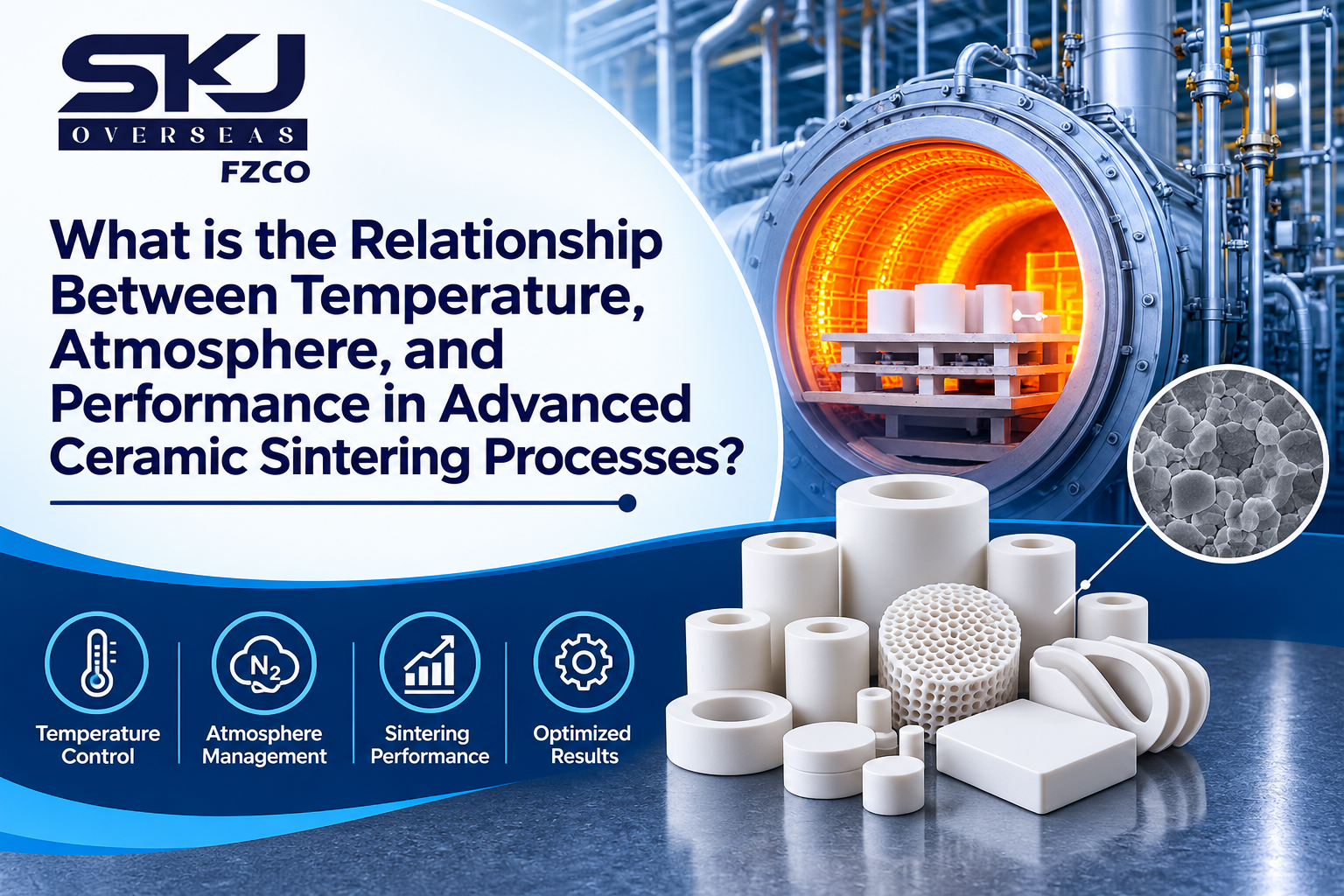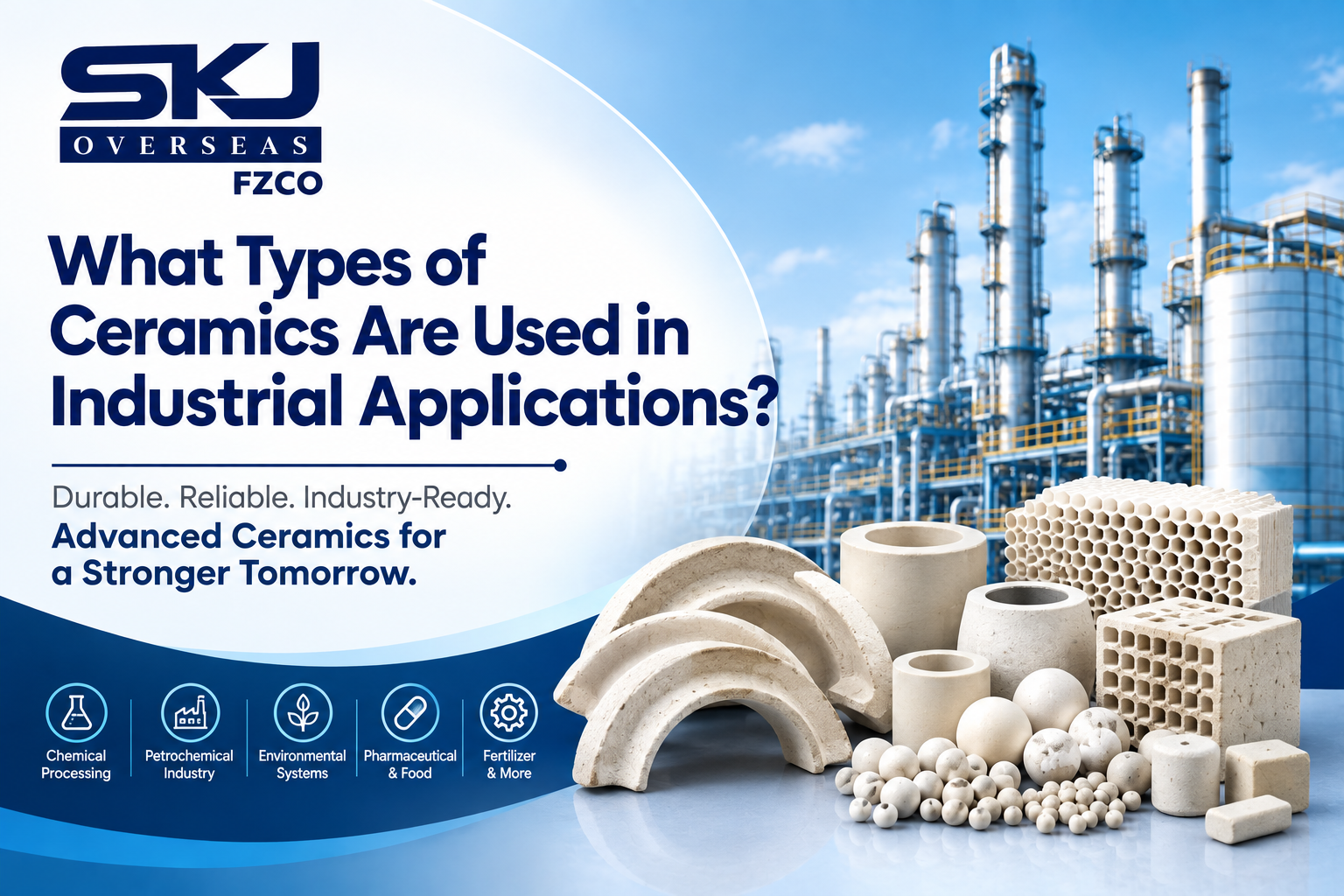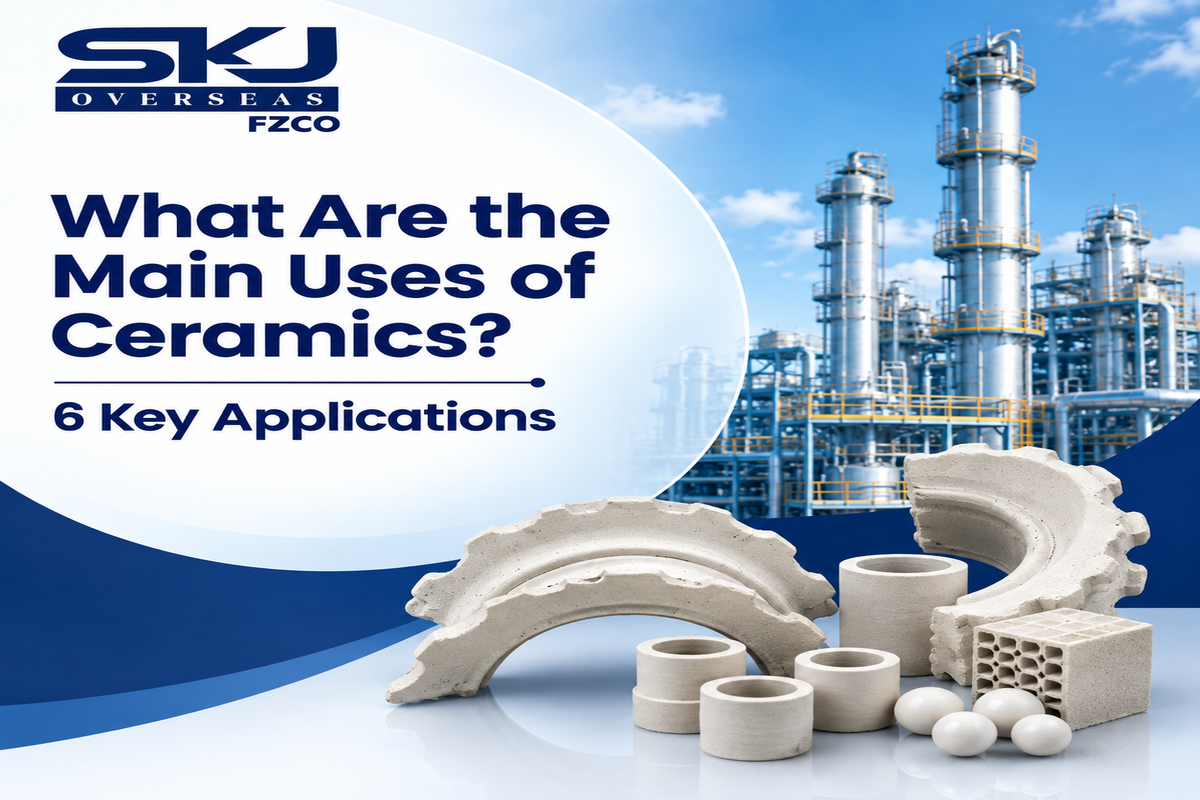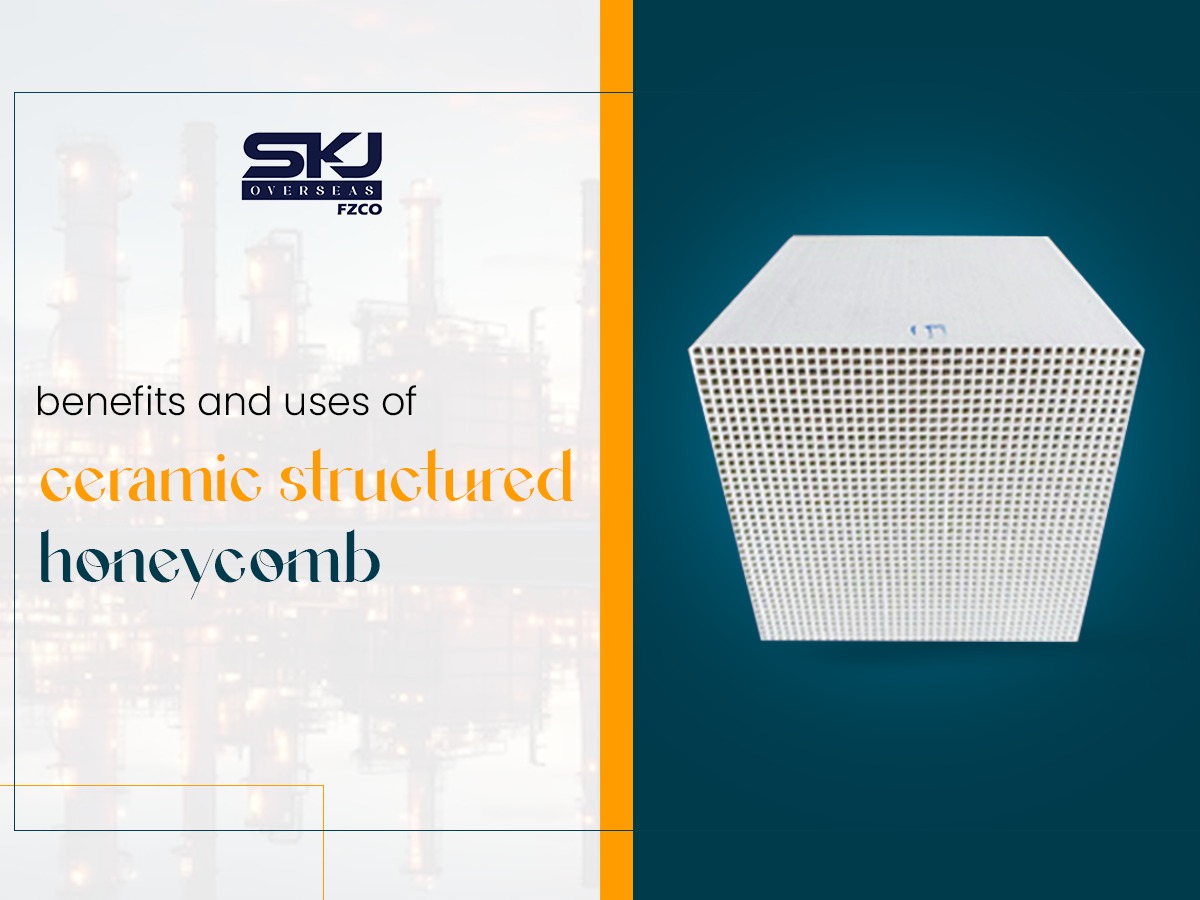
Few ceramic products pack as much performance into such a lightweight structure as this one. The Benefits and Uses of Ceramic Structured Honeycomb span emissions control, chemical processing, heat transfer, and more, all made possible by a precisely engineered cell structure that maximizes surface area while minimizing material weight and backpressure. This single design principle is why the material shows up in industries as different as automotive manufacturing and chemical synthesis.
SKJ Overseas manufactures ceramic structured honeycomb as a dedicated Ceramic Manufacturers in Dubai, and supplies it through its role as a specialized Ceramic and Tower Packing Exporter in Dubai serving process industries across the region. This guide breaks down what makes this material perform so well, where it delivers the most value, and how to choose the right specification for your application.
What Gives Ceramic Structured Honeycomb Its Performance Advantage
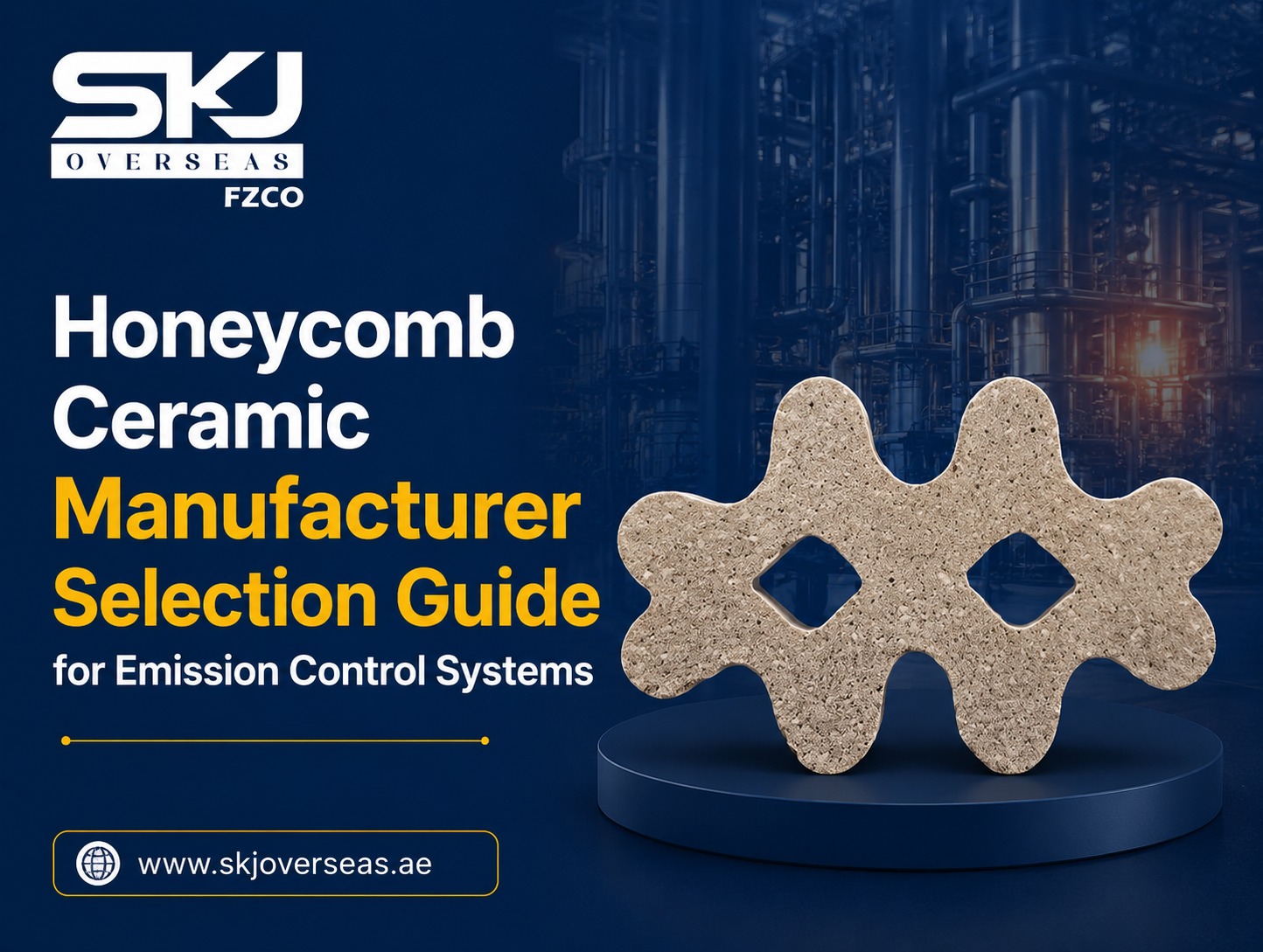
Ceramic structured honeycomb is most commonly produced from cordierite, a magnesium aluminum silicate ceramic chosen specifically for its low thermal expansion and strong resistance to thermal shock. The material is extruded into a repeating cell structure with thin inner walls, which dramatically increases surface area while keeping the overall component lightweight and easy to handle.
This structure is typically measured in cells per square inch, or CPSI, which can range from roughly 50 to 600 depending on the application’s flow and surface area requirements. Higher CPSI values pack more cells into the same cross-section, increasing surface area for catalytic or heat transfer applications, while lower CPSI values favor higher flow rates with less resistance.
Core properties behind its performance include:
- High porosity that allows efficient gas or liquid flow with low backpressure
- Strong thermal shock resistance, tolerating rapid temperature swings without cracking
- Good compressive strength suited to harsh operating pressures
- Chemical stability in corrosive processing environments
- Low thermal expansion for dimensional stability across temperature changes
Key Benefits of Ceramic Structured Honeycomb
Exceptional Surface Area in a Compact Footprint
The thin-wall cell geometry packs an enormous amount of surface area into a relatively small physical volume, which is the single biggest reason this material outperforms simpler packing or filter shapes in catalytic and filtration roles. More surface area in the same space means more contact between the material and the gas, liquid, or catalyst coating it needs to interact with.
Low Backpressure Supports Efficient Flow
Despite the dense cell structure, the straight-through channel design keeps backpressure low compared to random packing shapes performing a similar function. This matters significantly in applications like exhaust filtration, where excessive backpressure directly reduces system efficiency and increases energy consumption.
Thermal Shock Resistance Extends Service Life
Many industrial processes involve rapid heating and cooling cycles that would crack conventional ceramic shapes over repeated exposure. Cordierite’s low thermal expansion gives ceramic structured honeycomb strong resistance to this thermal cycling stress, extending its usable service life in demanding, temperature-variable environments.
Lightweight Construction Simplifies Installation
Compared to solid ceramic blocks or metal alternatives performing similar functions, honeycomb structures are significantly lighter, which reduces structural load in the equipment housing them and simplifies handling during installation or replacement. This weight advantage matters in applications ranging from vehicle exhaust systems to building facade panels.
Chemical Stability Protects Against Corrosive Service
Ceramic structured honeycomb resists chemical attack from the acids, alkalis, and reactive gases commonly encountered in industrial processing, protecting the component’s structural integrity over years of continuous exposure. This stability is a major reason the material remains dependable in chemical reactor and emissions control applications where metal components would corrode.
Primary Uses of Ceramic Structured Honeycomb
Automotive Emissions Control
One of the most widespread uses is as the substrate inside catalytic converters and diesel particulate filters, where the honeycomb structure provides the surface area needed to coat with catalyst material and trap exhaust particulates effectively. This application alone drives much of the global demand for precisely manufactured honeycomb ceramic products.
Chemical Processing and Reactors
Chemical plants use ceramic structured honeycomb inside reactors and processing equipment to support catalytic reactions and chemical synthesis processes. Its chemical stability and high surface area make it well suited to reactions requiring consistent, repeated contact between a catalyst and the process stream.
Power Generation and Emissions Compliance
Power plants and industrial facilities rely on ceramic honeycomb structures for exhaust gas filtration, helping meet increasingly strict emissions compliance requirements. The combination of low backpressure and high filtration surface area supports efficient operation without placing excessive strain on exhaust systems.
Heat Transfer and Thermal Storage
The same structure that supports catalytic and filtration applications also makes ceramic honeycomb effective as a heat transfer and thermal storage medium, particularly in regenerative thermal oxidizer systems. Its ability to absorb and release heat efficiently, combined with strong thermal shock resistance, suits applications involving repeated heating and cooling cycles.
Aerospace and Electronics Components
High-temperature structural and thermal stability requirements in aerospace and electronics applications also benefit from ceramic honeycomb construction, where lightweight strength and dimensional stability under heat are critical performance factors.
Environmental Air and Water Purification
Beyond emissions control, ceramic structured honeycomb also supports broader air and water purification systems, where its porous structure provides the surface area needed for filtration or supporting biological treatment processes.
Construction and Building Applications
Ceramic honeycomb structures also find a place in construction, where their lightweight strength and thermal insulation properties suit facades, partitions, and ventilation applications. This use case takes advantage of the same cellular engineering principle applied in industrial settings, adapted for building performance requirements.
How Cell Density Affects Performance
Selecting the right cell density is one of the most important decisions when specifying ceramic structured honeycomb for a project.
- Lower CPSI (50 to 200): favors higher flow rates and lower backpressure, suited to applications prioritizing throughput
- Mid-range CPSI (200 to 400): balances surface area and flow, common in general catalytic and filtration applications
- Higher CPSI (400 to 600): maximizes surface area for applications requiring intense catalytic contact or fine filtration
Diameter selection, typically ranging from 10mm to 600mm depending on the equipment it serves, should be matched to the housing dimensions and flow volume of the specific system.
Why Manufacturing Quality Matters for Ceramic Structured Honeycomb
Even small variations in cordierite composition, wall thickness, or firing consistency can significantly affect a honeycomb component’s thermal shock resistance and structural strength in real operating conditions. A product that looks correct on a spec sheet can still underperform if firing control was inconsistent during production.
When evaluating a Ceramic Structured Honeycomb supplier, confirm documented composition data, cell density tolerances, and thermal shock testing before committing to a purchase. A trustworthy Ceramic Structured Honeycomb manufactures partner should be able to provide this data directly rather than relying on general performance claims alone.
Sourcing Ceramic Structured Honeycomb From a Verified Source in Dubai
Working with a regionally established Ceramic manufactures in Dubai source reduces lead times and gives engineers direct access to technical support during specification or a replacement cycle. This proximity matters most when equipment downtime depends on how quickly a replacement component can arrive and be installed.
SKJ Overseas manufactures ceramic structured honeycomb with documented composition and cell density specifications, giving process engineers and construction teams a single, quality-tested source across both industrial and building applications.
Key Takeaways
- The Benefits and Uses of Ceramic Structured Honeycomb stem from its high surface area, low backpressure, and strong thermal shock resistance.
- Primary applications include automotive emissions control, chemical processing, power generation filtration, heat transfer, and construction.
- Cell density, typically 50 to 600 CPSI, should be matched to the specific flow, surface area, and filtration requirements of the application.
- Cordierite’s low thermal expansion is what gives the material its resistance to cracking under rapid temperature change.
- Sourcing from a manufacturer with documented composition and testing data protects real-world performance.
Frequently Asked Questions
1. What material is ceramic structured honeycomb typically made from?
Most ceramic structured honeycomb is made from cordierite, a magnesium aluminum silicate ceramic valued for its low thermal expansion and strong resistance to thermal shock.
2. What does CPSI mean in ceramic honeycomb specifications?
CPSI stands for cells per square inch, a measurement of cell density that typically ranges from 50 to 600 depending on the application. Higher CPSI increases surface area, while lower CPSI favors higher flow with less backpressure.
3. Why is ceramic honeycomb used in catalytic converters?
Its thin-wall cell structure provides an exceptionally high surface area in a compact space, giving catalyst coatings maximum contact with exhaust gases while keeping backpressure low enough for efficient engine performance.
4. Can ceramic structured honeycomb handle rapid temperature changes?
Yes. Cordierite’s low thermal expansion gives the material strong thermal shock resistance, allowing it to withstand repeated rapid heating and cooling cycles without cracking in applications like exhaust systems and reactors.
5. Is ceramic structured honeycomb used outside of automotive applications?
Yes. Beyond automotive emissions control, it is widely used in chemical reactors, power generation filtration, heat transfer systems, aerospace components, water and air purification, and construction applications such as facades and partitions.
Talk to SKJ Overseas About Ceramic Structured Honeycomb
Choosing the right ceramic honeycomb specification depends on matching cell density, diameter, and composition to your exact application. SKJ Overseas manufactures ceramic structured honeycomb engineered for consistent performance across industrial and construction uses.
Contact us to request a quote, a technical datasheet, or a consultation for your specific requirement.