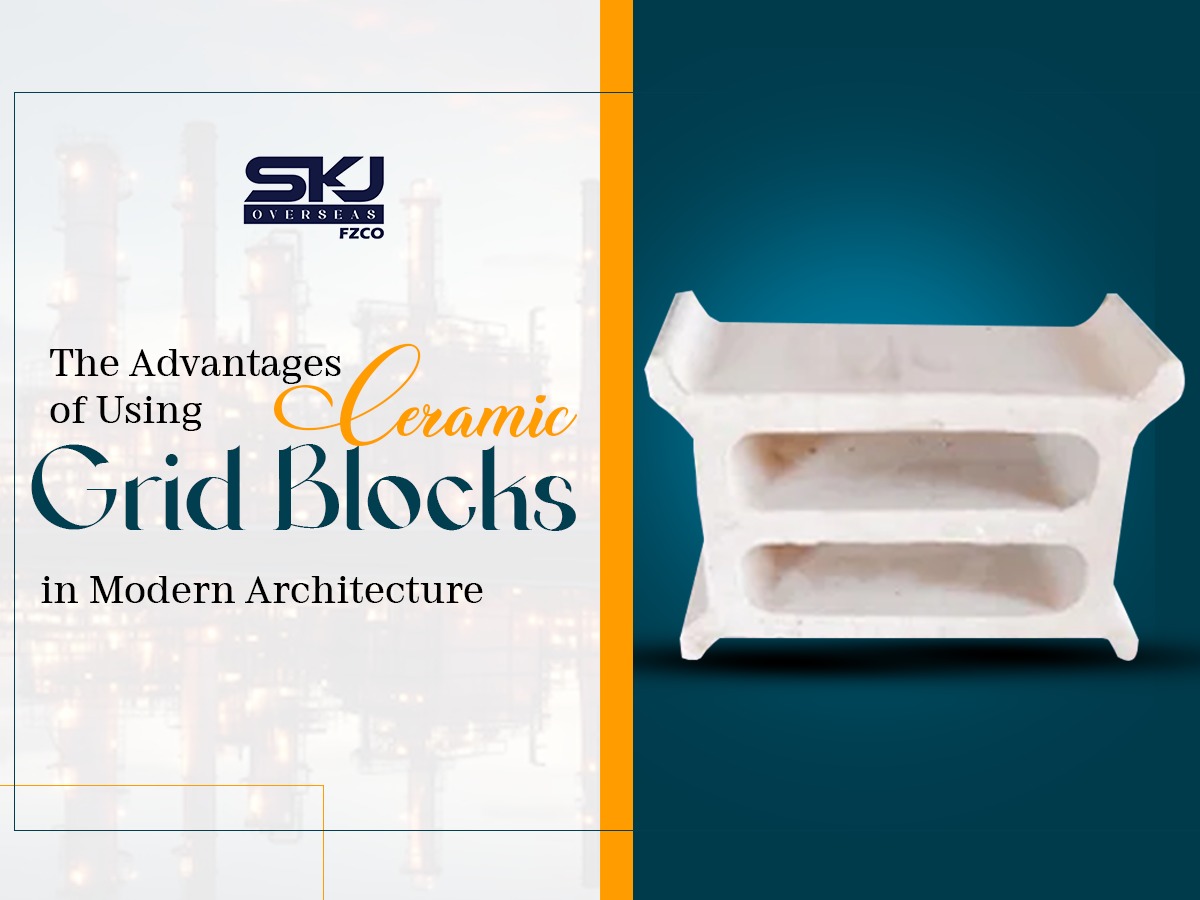
Architects and builders are under growing pressure to choose materials that balance sustainability, durability, and design freedom. This is where Ceramic Grid Blocks in Modern Architecture have earned a strong reputation, offering a natural, low-impact alternative to concrete and plastic building elements without compromising on strength or visual appeal. From facades and partitions to ventilated screens, these blocks give designers a way to meet both aesthetic and environmental goals in the same project.
As an established Ceramic Manufacturer in Dubai and a recognized Ceramic and Tower Packing Exporter in Dubai, SKJ Overseas brings decades of ceramic production expertise to architectural applications. This guide explains what makes Ceramic Grid Blocks a smart choice for modern construction and how to select the right type for your project.
What Are Ceramic Grid Blocks?
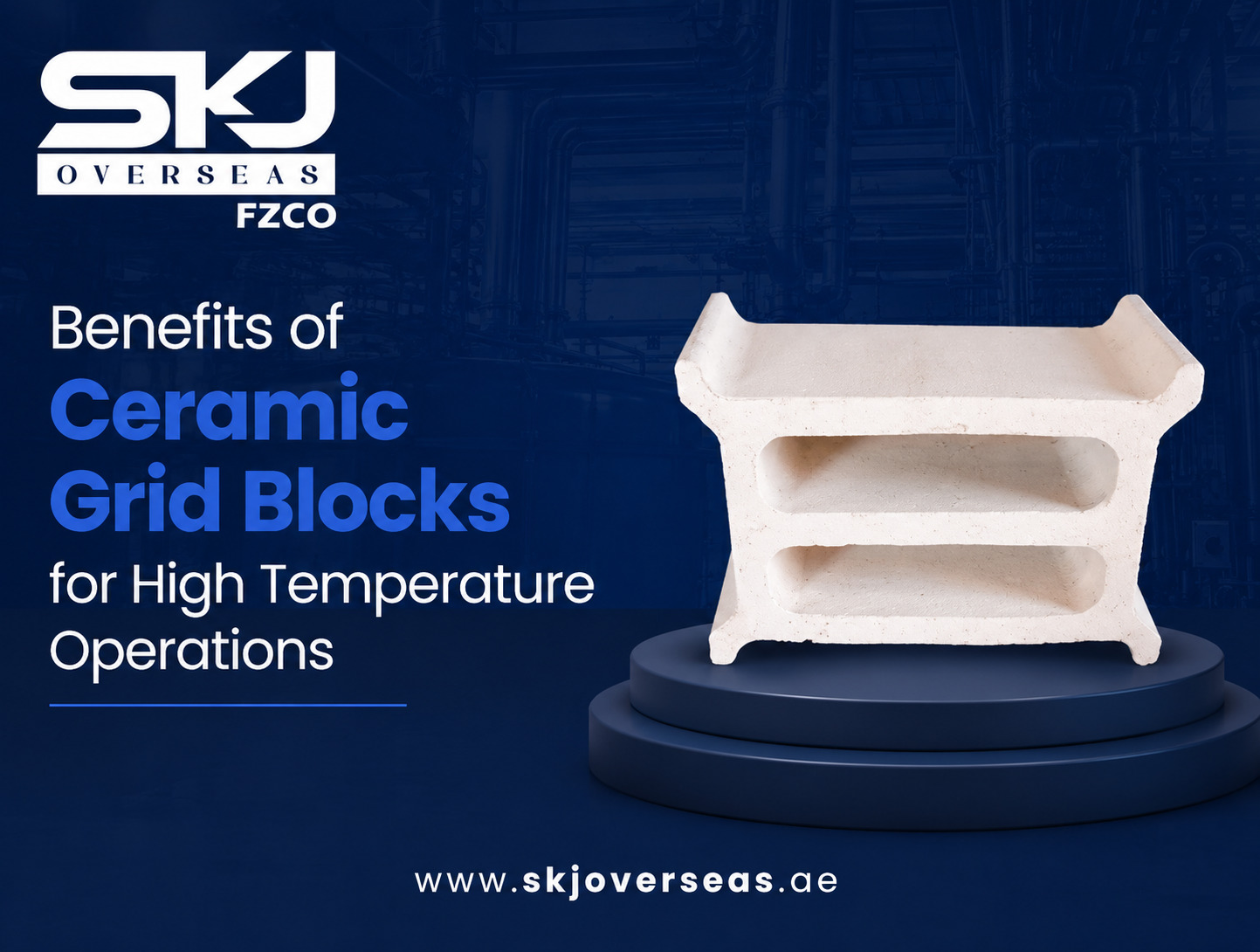
Ceramic Grid Blocks are fired clay building units shaped with an open, repeating grid pattern rather than a solid face. The perforated structure reduces material weight while allowing light, air, and visual texture to pass through the surface. This makes them useful for both structural and decorative purposes, depending on how they are specified in a project.
Unlike standard clay bricks, grid blocks are designed with function built into their shape. The openings can be arranged in geometric, linear, or custom patterns, giving architects a way to control shading, airflow, and privacy without adding separate mechanical systems.
Common physical characteristics include:
- Made from natural clay fired at high temperature for durability
- Open grid pattern that allows partial light and air transmission
- Lightweight compared to solid masonry blocks of similar size
- Available in multiple finishes, colors, and pattern densities
Why Ceramic Grid Blocks Are Used in Modern Architecture
1. Sustainability and Reduced Environmental Impact
One of the strongest arguments for Ceramic Grid Blocks in Modern Architecture is their environmental footprint. Clay is an abundant, non-toxic raw material, and firing it into a grid block requires a simpler process than manufacturing steel or certain plastic composites. Because the open design also uses less material per unit than a solid block, projects can reduce total material consumption without weakening the structure.
2. Natural Light and Passive Ventilation
The grid pattern allows diffused daylight to enter a building while blocking direct glare, which reduces dependence on artificial lighting during the day. The same openings support passive airflow, helping interior spaces stay cooler without relying entirely on mechanical air conditioning. This combination makes Ceramic Grid Blocks especially popular in warm climates like the Gulf region, where passive cooling design has a direct impact on energy costs.
3. Durability and Weather Resistance
Fired ceramic resists moisture, UV exposure, and temperature swings far better than many synthetic cladding materials. Ceramic Grid Blocks do not warp, fade, or degrade the way some plastics and painted surfaces do over years of outdoor exposure. This durability translates into lower maintenance costs across the life of a building, which is a growing priority for developers managing long-term operating budgets.
4. Design Flexibility and Aesthetic Appeal
Architects value Ceramic Grid Blocks for the visual texture they add to an otherwise flat facade. The repeating pattern creates depth and shadow play that changes throughout the day as sunlight angles shift. Because blocks can be arranged in custom layouts, the same base product can support a minimalist grid or a more elaborate geometric composition, depending on the design brief.
5. Thermal Performance and Energy Efficiency
Ceramic has natural thermal mass properties, meaning it absorbs heat slowly and releases it gradually rather than transmitting it directly into interior spaces. When used as a secondary screen layer over windows or walls, Ceramic Grid Blocks can meaningfully reduce solar heat gain. This lowers cooling loads and supports energy-efficient building certifications that many commercial projects now require.
6. Acoustic and Privacy Benefits
Beyond light and heat, the grid structure also breaks up direct sound transmission and sightlines, offering a level of acoustic dampening and visual privacy that solid glass facades cannot provide. This makes them a practical choice for balconies, stairwells, and partition walls in both residential and commercial buildings.
Common Applications in Modern Buildings
Ceramic Grid Blocks appear across a wide range of architectural project types:
- Ventilated facades and rainscreen cladding systems
- Courtyard and balcony privacy screens
- Interior partition walls with light transmission
- Parking structure exteriors requiring airflow and shade
- Garden walls and outdoor landscaping features
- Public building facades seeking a natural, textured finish
Ceramic Grid Blocks vs Other Facade Materials
| Feature | Concrete Blocks | Metal Screens | Ceramic Grid Blocks |
| Environmental impact | Higher | Moderate | Lower |
| Weather resistance | Good | Prone to corrosion | Excellent |
| Maintenance needs | Low to moderate | Higher | Low |
| Thermal performance | Moderate | Poor | Strong |
| Aesthetic flexibility | Limited | Moderate | High |
Concrete blocks remain a lower-cost option for basic structural walls, while metal screens can achieve intricate patterns but are more prone to corrosion in coastal or humid environments. Ceramic Grid Blocks tend to offer the best long-term balance of appearance, performance, and reduced upkeep.
How to Choose the Right Ceramic Grid Blocks for a Project
Selecting the right grid block depends on the building’s climate, structural requirements, and design intent.
- For hot climates: prioritize denser grid patterns that provide more shading and thermal buffering
- For coastal projects: choose finishes tested for moisture and salt air resistance
- For decorative interior use: lighter, more open patterns maximize light transmission
- For structural facade applications: confirm load-bearing specifications with the manufacturer before installation
Working with an experienced ceramic grid block manufacturer ensures the blocks you select match both the technical demands of the building and the visual outcome the design team is targeting.
Why Sourcing Quality Matters
Not all ceramic grid blocks are fired to the same standard, and inconsistent firing can lead to cracking, color variation, or reduced strength over time. A reliable ceramic grid block supplier in Dubai should be able to provide consistent batch quality, verified dimensional tolerances, and finishes suited to local climate conditions.
Architects and contractors should also ask about kiln temperature control and raw material sourcing, since both factors directly affect how well the finished blocks hold their shape and color under years of sun exposure. A supplier with documented quality checks at each production stage reduces the risk of on-site surprises such as mismatched batches or uneven surface texture across a large facade installation.
SKJ Overseas manufactures Ceramic Grid Blocks with the same quality control standards applied across its wider ceramic product range, giving architects and contractors confidence that the material will perform as specified once installed. This consistency matters most on large-scale commercial projects, where even small variations between blocks can become visually obvious once installed across an entire building facade.
Installation Considerations for Architects and Contractors
Getting the most out of Ceramic Grid Blocks in Modern Architecture depends on more than just selecting the right pattern. Proper spacing between units affects both the structural load path and the amount of light or air the finished wall allows through. Contractors should also plan for thermal expansion joints, since ceramic behaves differently from the surrounding structural frame under temperature changes.
Working closely with the manufacturer during the design phase can help avoid costly on-site adjustments. Many suppliers, including SKJ Overseas, can provide technical drawings and installation guidance tailored to the specific grid pattern and building type being used.
Key Takeaways
- Ceramic Grid Blocks in Modern Architecture offer a sustainable, durable alternative to concrete and metal facade materials.
- Their open grid pattern supports natural light, passive ventilation, and improved thermal performance.
- Fired clay construction resists weathering, reducing long-term maintenance costs.
- The blocks work across facades, partitions, screens, and landscaping applications.
- Sourcing from a quality-focused manufacturer protects against inconsistent firing and structural issues.
Frequently Asked Questions
1. Are Ceramic Grid Blocks suitable for load-bearing walls?
Some Ceramic Grid Blocks are engineered for structural use, but many are designed primarily for facades, screens, and partitions. Always confirm load-bearing specifications with the manufacturer before using them in a structural application.
2. How do Ceramic Grid Blocks help with energy efficiency?
Their open pattern allows passive airflow and diffused light, reducing the need for artificial cooling and lighting. The natural thermal mass of ceramic also slows heat transfer into interior spaces, lowering overall cooling demand.
3. Do Ceramic Grid Blocks require special maintenance?
Fired ceramic is highly weather resistant and generally needs minimal maintenance beyond occasional cleaning. Unlike painted or metal surfaces, it does not require repainting or rust treatment over time.
4. Can Ceramic Grid Blocks be customized for a specific design?
Yes. Many manufacturers offer custom pattern density, color, and finish options, allowing architects to tailor the blocks to a specific aesthetic or shading requirement for the project.
5. Are Ceramic Grid Blocks a sustainable building material?
Yes. They are made from natural clay, require less material per unit due to their open design, and reduce energy consumption through passive light and airflow benefits, making them a strong choice for eco-conscious construction projects.
Partner With SKJ Overseas for Ceramic Grid Blocks
Looking for a trusted ceramic grid block manufacturer for your next architectural project? SKJ Overseas supplies Ceramic Grid Blocks engineered for durability, thermal performance, and design flexibility across residential and commercial developments.
Contact SKJ Overseas today to request a quote, product catalog, or sample for your construction project.